
Choosing a yoga teacher training in Bali comes down to comparing a short list of concrete things: format, duration, curriculum, location, accommodation, meals, total cost and the credential you hold at the end. Most people researching this in 2026 are weighing several 200-hour programs against each other, because 200 hours is the common foundation-level format and the usual starting point for teaching.
This guide explains what those 200 hours involve, how Bali programs differ, what to compare before booking, and what a residential training actually asks of you. It uses our 200-hour training at Amertham as one current residential example, with figures and dates current as of October 2026.
Yoga Teacher Training in Bali at a Glance
| Factor | What is common in Bali |
|---|---|
| Foundation format | 200-hour training — the entry-level qualification most studios recognize |
| Advanced format | 300-hour training, taken after a 200-hour program |
| Typical duration | Around three to four weeks for residential programs; longer when hybrid or part-time |
| Delivery options | Residential in-person, hybrid, or fully online — these are materially different experiences |
| Common settings | Ubud and central Bali, coastal areas, highland and nature-focused locations |
| Accommodation | Often included in residential programs; room type is usually what changes the price |
| Meals | Varies by school. Check which meals, and on which days |
| Credential | A school-issued completion certificate. Yoga Alliance registration is a separate, individual process |
| Main decision factors | Curriculum, teaching approach, format, setting, inclusions, total cost, dates and change terms |
Bali programs are not interchangeable. Treat the table as the shape of the decision rather than a description of every school.
What Is a 200-Hour Yoga Teacher Training in Bali?

A 200-hour yoga teacher training is the foundation-level program for people who want to teach yoga, and it is the level most studios treat as the entry qualification. In Bali it is usually delivered as a residential intensive over about three weeks, with students living and training at the same property.
What “200-hour” actually refers to
The number refers to total contact hours, not hours of physical practice. Those hours are distributed across asana, theory, anatomy, teaching methodology and supervised practice teaching. A program that spends them almost entirely on asana is a different proposition from one that balances the categories, which is why the hour count alone tells you little.
What students typically study
Most 200-hour curricula cover physical practice, breathwork, anatomy, philosophy, meditation and the practical skills of teaching. The balance between those areas is where programs genuinely differ. For a fuller breakdown, see what a 200-hour yoga teacher training covers.
YTT 200, RYS 200 and RYT 200 explained
These three are routinely used as if interchangeable, and they are not:
- YTT 200 is the training program itself — the course you enroll in and attend (Yoga Teacher Training)
- RYS 200 means a Registered Yoga School at the 200-hour level. It is a property of the school, not of you.
- RYT 200 is an individual Yoga Alliance registration held by a teacher who meets the applicable requirements. (Registered Yoga Teacher)
Students who successfully complete a program receive the applicable school-issued completion certificate. Individual registration is a separate step with its own requirements and fees, and should be checked against Yoga Alliance’s current rules. Our guide to Yoga Alliance 200-hour teacher training explains the distinction in more detail.
What Should a Bali Yoga Teacher Training Cover?
A complete 200-hour curriculum covers nine distinct areas. When comparing programs, check that each is present rather than assuming it:
- Asana — the postures, taught for alignment rather than performance.
- Pranayama — breathwork, usually taught alongside morning practice.
- Anatomy and functional movement — how bodies move, and what that means for who you teach.
- Philosophy — the ideas and texts the practice sits within.
- Meditation — technique and instruction, not only personal practice.
- Teaching methodology — how to instruct, cue and hold a room.
- Sequencing — ordering postures so a class builds coherently.
- Practice teaching — supervised teaching with feedback, where most of the learning happens.
- Assessment — how and when competence is evaluated.
Practice teaching and assessment are the two most commonly thin areas, and the two worth asking about directly.
How Do You Choose the Right Yoga Teacher Training in Bali?
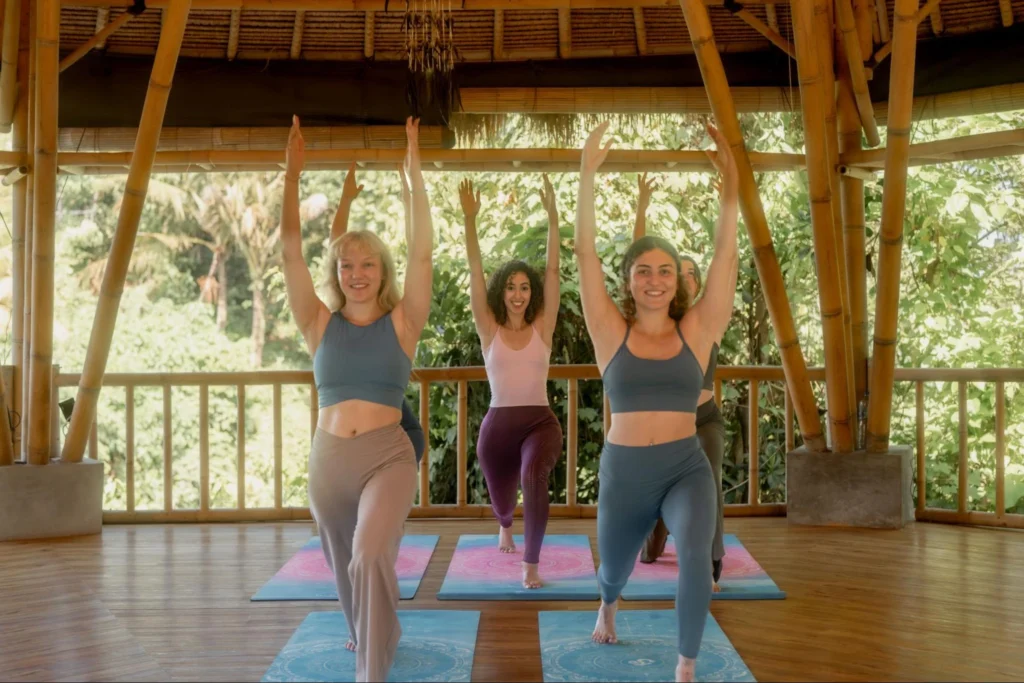
Eight factors decide this, and they are worth working through in order rather than reacting to whichever program markets hardest.
Training format
Residential, hybrid or online. Residential means living at the training property throughout — immersive, and requiring three continuous weeks away.
Curriculum
Which styles are taught, and how the nine areas above are balanced. Multi-style and single-lineage curricula produce different teachers.
Teaching approach
How much supervised teaching you do, and whether you receive individual feedback on it.
Accommodation and meals
Room types, how many share, and exactly which meals are included on which days. This varies more between schools than almost anything else.
Location
Proximity to amenities, and how quiet the setting is. Across three intensive weeks this affects your rest and focus more than it affects your photographs.
Current registration and credential information
What certificate is issued, and the school’s current Yoga Alliance status. Verify against current sources rather than marketing copy.
Total cost
Program fee plus flights, transfers, uncovered meals, insurance, entry costs and personal spending. Compare totals, not headline rates.
Dates and cancellation or change terms
Read the deposit, payment, date-change and cancellation conditions before paying. They matter most precisely when you hope they will not.
Which Bali Location Fits Your Training Goals?
Setting shapes how a residential training feels. The trade-off is between access and quiet.
- Ubud and central Bali — the established yoga hub, with the most studios and amenities nearby.
- Coastal areas — beach access and a more social atmosphere, with more activity around the property.
- Quieter nature-based settings — fewer distractions, less on the doorstep.
- Highland settings — cooler and typically more peaceful.
Which suits you depends on whether you want to step into a yoga scene or away from everything for three weeks. If the second describes you, our overview of nature-based yoga teacher training is a useful starting point.
Amertham: A 200-Hour Residential YTT in a Jungle Setting
What is Amertham?
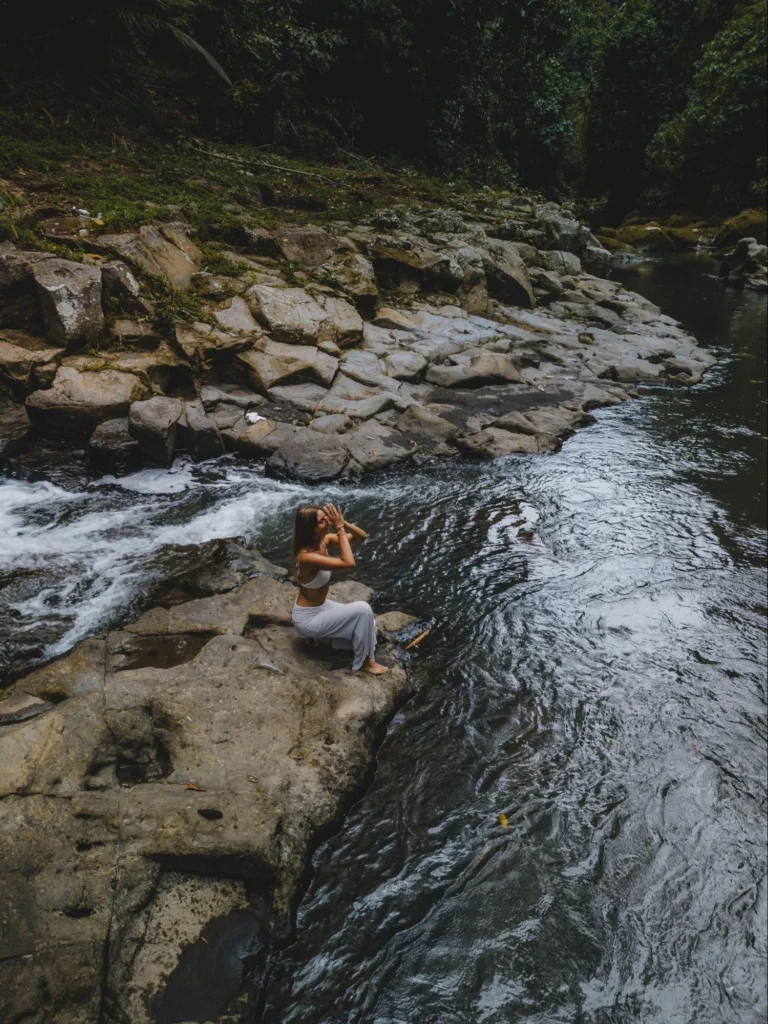
Amertham is our residential 200-hour yoga teacher training venue in Bali. The program runs 20 nights — approximately three weeks — with students staying and training at the same property. Amertham is a secluded jungle sanctuary set above a deep river gorge, surrounded by dense greenery and the sound of flowing water. It is designed to support focused practice and reflection. There are more than ten waterfall locations within 10 km of Amertham, with three of Bali’s largest natural parks roughly a 20-minute drive away. Within roughly a 20-minute drive.
How the three-week Amertham training is structured
The curriculum moves through a different emphasis each week. Week one builds a Hatha yoga foundation. Week two moves into Vinyasa Flow. Week three covers Ashtanga alongside teaching development. The program concludes with practical and theoretical examinations.
Alongside the three styles, the training also includes shatkarma, mantra, meditation, Yoga Nidra, Ayurveda, kirtan, sound healing and Voice Activation, as well as alignment, adjustments, biomechanics and injury-prevention considerations, teaching methodology, practice teaching, pranayama and yoga philosophy.
Who can join Amertham?
Our Amertham training is open to all levels, including complete beginners. You do not need to plan on becoming a yoga teacher to join. Some students come primarily to deepen their personal practice. Some enroll to deepen a personal practice rather than to teach afterward.
What is included at Amertham?
The package covers 20 nights of accommodation, the 200-hour training, breakfast, lunch and dinner, yoga equipment, learning materials and community events. Four room categories are offered: a four-bed female dorm, a three-bed female triple, a two-bed female-only twin, and a private room with a double bed. All four list a shower, air conditioning, hot water and Wi-Fi. Students also receive a welcome bag containing training materials, a neti pot, mala beads and a sarong.
Students who meet the current full-payment and early-bird conditions also receive lifetime access to our Online 200HR materials, subject to the current offer terms, which includes recorded lessons, teaching resources, templates and downloadable materials.
| Explore the 200-Hour Training at Amertham
If Amertham’s residential format and jungle setting align with what you are looking for, review our current training dates, room options, inclusions, and availability on the Amertham program page. View Amertham Training Dates & Room Options. |
What Does a Typical Residential YTT Day Involve?
A residential training day starts early and is structured from morning to evening. The usual rhythm is an early practice session, breakfast, a theory block through mid-morning, lunch, afternoon sessions on teaching methodology and alignment, then a closing evening practice before dinner.
Days are full rather than strenuous, and the structure is what carries most students through. Schedules are not fixed either — the daily schedule may change at the teacher’s discretion, so check our current Amertham program page before planning around a specific timetable.
How Much Does Yoga Teacher Training in Bali Cost?
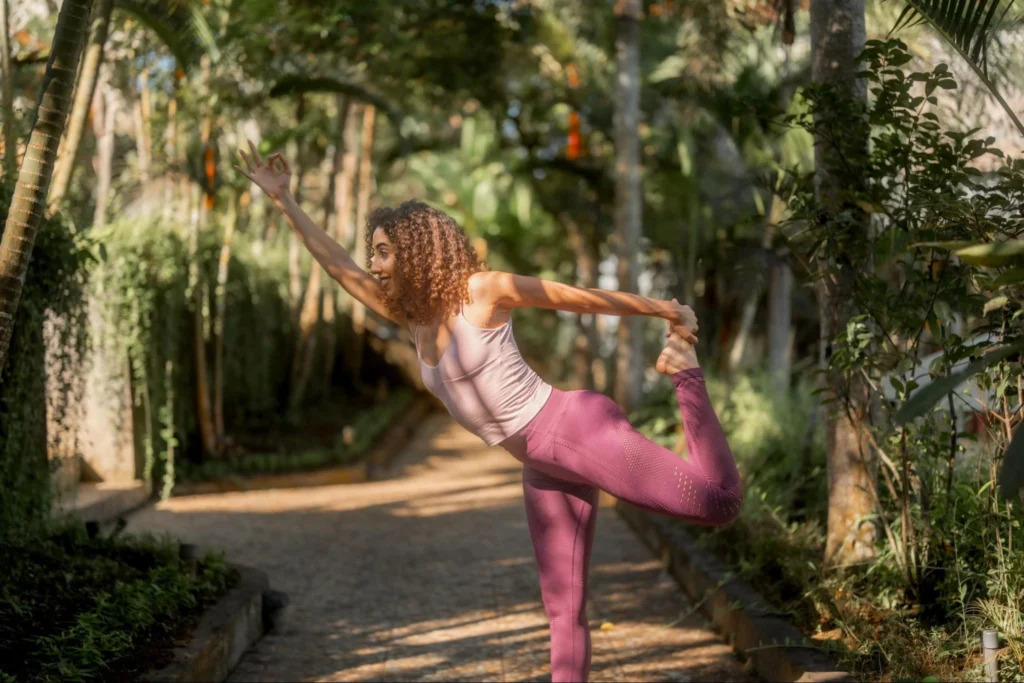
Cost depends on the school, the format, the room type, which meals are included and what else sits inside the package. Two programs advertising similar headline figures can differ considerably once accommodation, meals and materials are accounted for.
Your total also includes items no school covers: flights, airport transfers, travel insurance, entry-related costs and personal spending.
Amertham, as one current example. Our published Amertham room rates at the time of this October 2026 update are:
| Room | Regular | Early bird |
|---|---|---|
| Dorm | $2,500 | $2,125 |
| Triple | $2,810 | $2,390 |
| Twin | $3,200 | $2,720 |
| Private | $3,900 | $3,315 |
The early-bird figures are not a single price for every room, and early-bird terms carry their own conditions. Pricing and availability can change, so check our current Amertham pricing and room availability before planning around any figure here.
What Is Included in a Residential Bali YTT?
Inclusions are where comparable-looking programs separate. The questions that matter: is accommodation included and for how many nights, which meals on which days, are equipment and materials supplied, and what falls outside the package entirely.
Can Beginners Do Yoga Teacher Training in Bali?
Usually yes, though requirements differ by school and should be checked individually. Many Bali programs accept students with no teaching background, because teaching methodology is taught within the program rather than assumed.
Two distinctions matter. An advanced asana practice is not automatically required, since foundation-level curricula start at the foundation. And practice experience is a different thing from teaching experience — a 200-hour program exists to build the second. Our Amertham training is open to all levels, including complete beginners.
Hatha, Vinyasa or Ashtanga: Which Style Should You Choose?
In brief: Hatha generally works with postures held longer, with attention to alignment and breath. Vinyasa links movement to breath in continuous sequences. Ashtanga follows a set sequence practiced in a consistent order.
If you are choosing between them, compare Hatha, Vinyasa and Ashtanga teacher training for a fuller treatment. Some programs take a multi-style approach instead: Amertham incorporates all three across its three weeks, which suits students who do not yet know which they prefer.
What Should You Know About Yoga Alliance Before Booking?
Completing a training and registering as a teacher are two separate steps. A school registered at the 200-hour level (RYS 200) is not the same as you holding an individual registration (RYT 200), and completing a program does not register you automatically.
Individuals apply for registration, which carries its own fees, and its requirements change. Check the current position with Yoga Alliance directly, and understand Yoga Alliance 200-hour training and registration before assuming what a certificate entitles you to.
What Are Amertham’s Upcoming 2026 Training Dates?
We currently list the following Amertham intakes for 2026:
- 23 November – 12 December 2026
- 14 December 2026 – 2 January 2027
We also publish additional Amertham training dates for 2027 on our program page. Availability is not shown as a live figure and changes, so check our current Amertham schedule and availability before planning your travel.
Questions to Ask Before Booking a Bali YTT
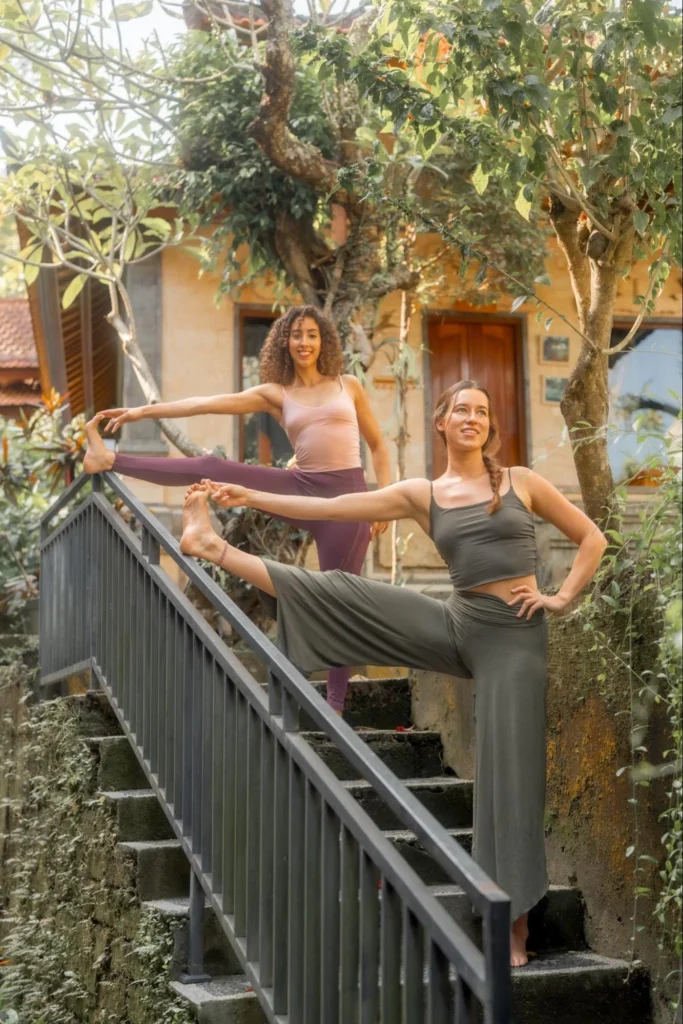
Ten questions, applicable to any school you are considering:
- Does the curriculum match what I want to learn, and how is it balanced?
- Are beginners accepted, and what are the published entry requirements?
- What is actually included in the fee?
- Which meals are provided, and on which days?
- What room options exist, how many share, and what does each cost?
- What is my total trip budget once flights, transfers and insurance are added?
- What certificate is issued, and what does it entitle me to?
- What are the current dates, and which are still open?
- What happens if I need to change my dates?
- Is the environment suited to how I actually study and rest?
FAQs
How long is a 200-hour yoga teacher training in Bali?
Most residential programs in Bali run around three to four weeks. Our Amertham training runs for 20 nights, approximately three weeks, delivered in person with students staying at the training property. Hybrid and online formats spread the same 200 hours over a longer period, which suits people who cannot take three continuous weeks away.
Can beginners join yoga teacher training in Bali?
Often yes, though it depends on the school and should be checked individually. Many programs accept students without teaching experience, since teaching methodology forms part of the curriculum. Our Amertham training is open to all levels, including complete beginners, including complete beginners, and states that teaching ambitions are not required to join.
How much does yoga teacher training in Bali cost?
It depends on the school, format, room type and what the package includes. At Amertham, published room rates at the time of this October 2026 update run from $2,500 regular for a dorm place to $3,900 regular for a private room, with early-bird rates lower. Pricing changes, so confirm current figures on the program page.
Is accommodation usually included in Bali YTT programs?
In residential programs it generally is, but the number of nights and the room categories vary, so check both. The Amertham package includes 20 nights of accommodation, matching the length of the training, across four room types ranging from a shared dorm to a private room.
What do you learn in a 200-hour YTT?
A complete curriculum covers asana, pranayama, anatomy and functional movement, philosophy, meditation, teaching methodology, sequencing, supervised practice teaching and assessment. The balance between these areas differs between schools, and practice teaching is the component most worth asking about before you book.
What is the difference between YTT 200 and RYT 200?
YTT 200 is the training program you attend. RYT 200 is an individual Yoga Alliance registration held by a teacher who meets the applicable requirements. Completing a program earns you the school’s completion certificate; individual registration is a separate application with its own requirements and fees.
Does Amertham include meals and accommodation?
Yes. The Amertham package includes 20 nights of accommodation at the training property, together with breakfast, lunch and dinner, alongside the training itself, yoga equipment and community events. The training manual is not included.
Where can I check Amertham’s current training dates?
You can find our current and upcoming Amertham intakes for 2026 and 2027 on the Amertham program page, together with current room options and pricing. Dates and availability change, so for the latest dates, room options, and availability, check our Amertham program page, which carries the current booking information.
Is Amertham the Right Bali Yoga Teacher Training for You?
Amertham may suit you if several of the following describe what you are looking for:
- A residential 200-hour program where you stay and train in one place.
- A quiet, nature-focused setting rather than a program embedded in a town.
- A starting point as a beginner, or a structured next step as a practitioner.
- A multi-style curriculum rather than a single lineage.
- Comfort with an intensive three-week schedule and daily practice.
If a town setting, a part-time format or a single-style training fits you better, that is worth knowing before you book rather than after.
| Explore Amertham’s 200-Hour Yoga Teacher Training
Review our current Amertham dates, room options, pricing and program details before making your decision. Explore Amertham 200-Hour YTT. Or explore all our yoga teacher training programs. |