
Bali has drawn seekers, healers, and meditators from every corner of the world for decades. Whether you are looking for a short immersion to reset your nervous system or a full meditation teacher training to share the practice with others, this guide covers everything you need to know about finding the right meditation retreat in Bali.
There are places in the world where stillness comes easily — where the air, the landscape, and the culture all conspire to quiet the mind. Bali is one of them. The island’s deep Hindu spiritual tradition, its lush natural environment, and the extraordinary warmth of its people have made it one of the world’s foremost destinations for meditation, yoga, and inner healing.
From silent Vipassana programs in Ubud’s rice terraces to multi-week meditation teacher trainings in the cool highland village of Pelaga, Bali offers a meditation retreat for every intention, every level of experience, and every budget. This guide will help you understand your options, choose the right type of retreat, and explore what House of Om offers for those ready to go deeper.
Why Bali for a meditation retreat?
The question is almost easier to reverse: why not Bali? No other destination in the world combines the depth of spiritual culture, the quality of teaching, the natural beauty, and the sheer accessibility of meditation in quite the way Bali does.
- Spiritual culture woven into daily life: Bali is the only Hindu island in the Indonesian archipelago. Offerings, temple ceremonies, and rituals are not tourist attractions — they are the living fabric of Balinese life. This creates an environment in which spiritual practice feels natural, supported, and deeply meaningful.
- Natural environment: Meditating beside a jungle river, in a rice field, or at sunrise overlooking a volcanic crater lake is simply not the same as meditating in a studio. Bali’s landscape does something to the nervous system that is difficult to replicate elsewhere.
- World-class teachers: Bali has attracted exceptional meditation and yoga teachers from across the globe. Many of the world’s most experienced practitioners choose to live and teach here, making the quality of instruction available genuinely extraordinary.
- Community of practice: Retreating alone is powerful. Retreating within a community of like-minded practitioners amplifies every dimension of the experience. Bali’s thriving wellness community means you will find your people here, often from all over the world.
- Unmatched value: A 7-day all-inclusive meditation retreat in Bali — accommodation, meals, all sessions included — typically costs $800–$1,500. The same experience in the USA or Europe would cost two to three times as much.
Types of Meditation Retreats Available in Bali
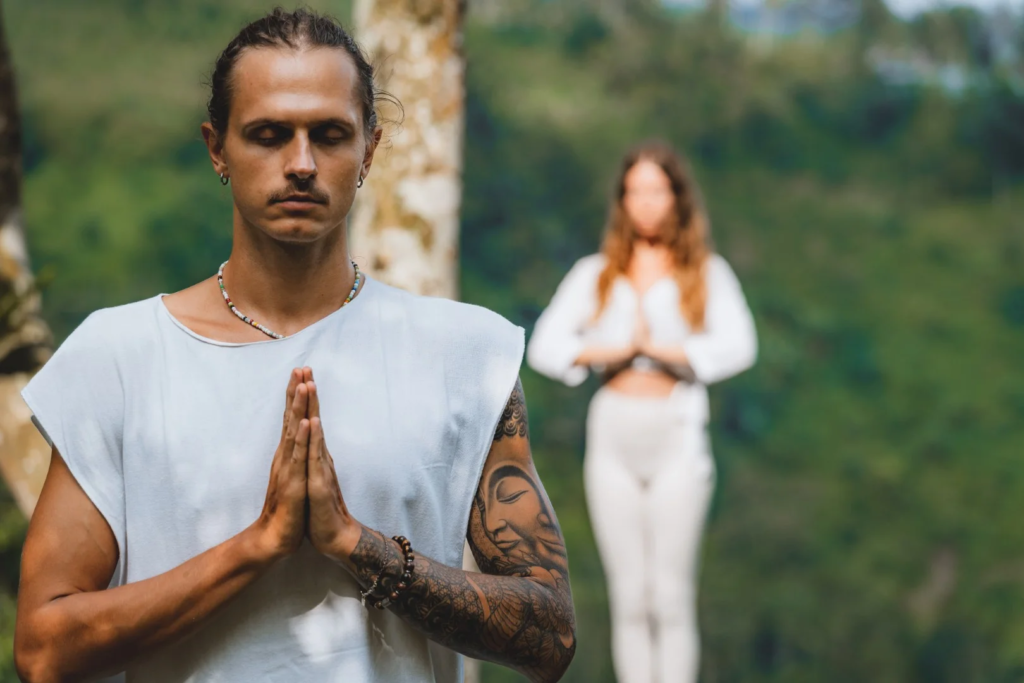
Bali’s meditation landscape is remarkably varied. Understanding the main retreat types helps you match the experience to your intention:
| Retreat Type | What to Expect |
| Silent Vipassana | Noble silence, intensive sitting and walking meditation, no phone or reading. Deeply demanding and profoundly transformative. Typically 7–10 days. |
| Mindfulness & Insight | Guided meditation, dharma talks, gentle yoga, journalling. Accessible to beginners. Focus on cultivating present-moment awareness. 3–7 days. |
| Yoga & Meditation | A blend of asana practice and seated meditation. Ideal if you want to move as well as sit. Very common in Bali; many formats available. |
| Meditation Teacher TT | Certification programs for those who want to teach meditation formally. Yoga Alliance or other recognised accreditation. |
| Sound & Energy Healing | Sound baths, gong meditation, singing bowl therapy, chakra work. Powerful for nervous system reset. Often shorter (3–5 days). |
| Balinese Spiritual | Incorporates traditional Balinese ceremonies, temple visits, water purification, and balian (healer) sessions alongside meditation practice. |
The best locations for meditation retreats in Bali
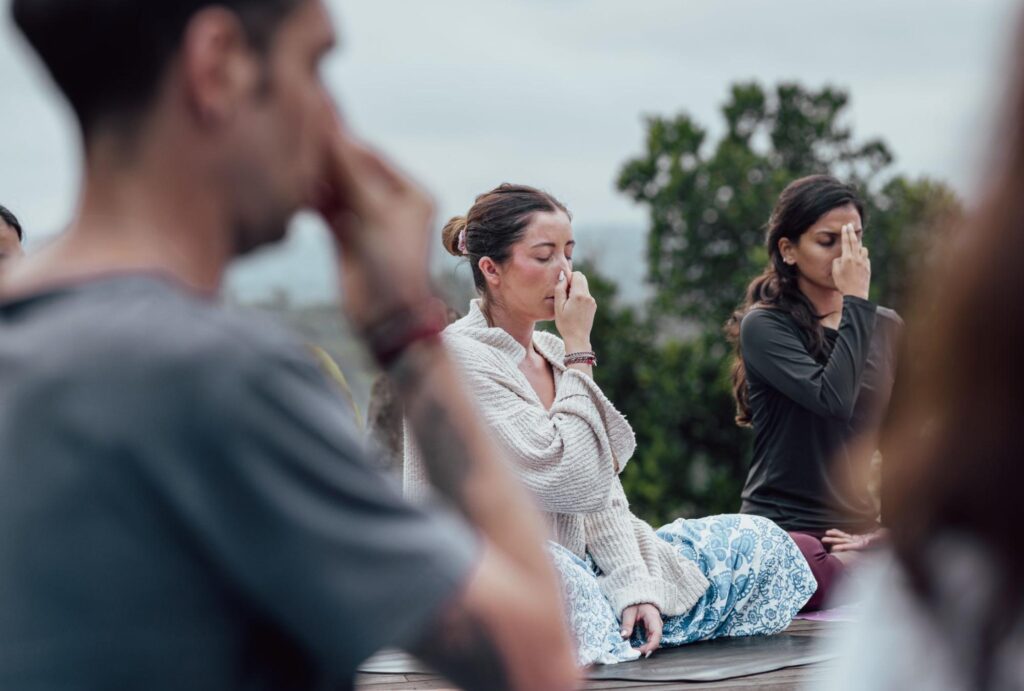
Bali is a small island but its different regions offer distinctly different meditation environments:
Ubud is the spiritual and cultural heartland of Bali and one of the island’s best-known destinations for meditation. Set amongst rice fields, sacred temples, and the lush Campuhan Ridge, Ubud offers a peaceful environment that supports reflection and practice. The town has a slower pace, a strong wellness community, and a wide range of retreat centres, studios, and experienced teachers.
Pelaga sits in the cool highlands north of Ubud, at approximately 1,000 metres above sea level. Away from the tourist trail, this quiet agricultural village offers an environment of rare tranquillity — misty mornings, terraced farmland, and complete immersion in Balinese village life. It is home to House of Om’s Pelaga programs, including the Meditation Teacher Training, and represents one of the most undiscovered and genuinely transformative retreat environments on the island.
Canggu and Seminyak offer a more urban, beach-facing retreat experience — well suited to shorter programs or those wanting a balance of wellness and leisure. Less immersive than Ubud or Pelaga, but accessible and well-equipped with quality studios and short-format retreat offerings.
House of Om: meditation retreats and teacher training in Bali
For those who want to go beyond a meditation retreat and develop the knowledge and confidence to guide others, House of Om offers immersive meditation and yoga teacher training programs in Bali. Whether you’re looking to deepen your personal practice or begin your teaching journey, you’ll find a range of internationally recognised training options designed to support your growth in a supportive community.
House of Om offers meditation-focused experiences alongside Yoga Alliance-recognised yoga teacher training programs, with opportunities to study in Bali as well as online. Each programe combines practical training, personal development, and community-based learning, helping students build a sustainable practice both on and off the mat.
As program availability, locations, durations, and start dates may change throughout the year, we recommend visiting our Programs page for the latest information and upcoming intakes.
What to expect from a meditation teacher training in Bali
A meditation teacher training is distinct from a retreat. Where a retreat invites you to practise and receive, a teacher training asks you to understand the practice deeply enough to transmit it to others. House of Om’s Meditation Teacher Training in Pelaga covers:
- The history, philosophy, and lineages of meditation — from Vedic and Buddhist traditions to contemporary mindfulness
- The science of meditation: neuroscience, psychophysiology, and the evidence base for practice
- Core meditation techniques: breath awareness, body scan, open monitoring, loving-kindness, yoga nidra, and mantra
- Teaching methodology: how to guide a sitting, create a safe container, sequence a session, and support students with different needs
- Pranayama and the breath-mind connection: how breathwork supports and deepens meditation practice
- Subtle body and energy anatomy: chakras, nadis, prana-vayus, and their relationship to meditative states
- Integration and lifestyle: how to support students in maintaining practice beyond the retreat environment
- Practicum: supervised teaching practice with peer feedback and faculty mentoring
Graduates leave with an internationally recognised certification and — more importantly — a personal practice transformed by 25 days of immersive study in one of the world’s most powerful meditation environments.
“Bali’s philosophy of Tri Hita Karana — harmony with the Divine, with one another, and with nature — is itself a meditation practice. Here, the environment does half the work for you.”
How to choose a meditation retreat in Bali
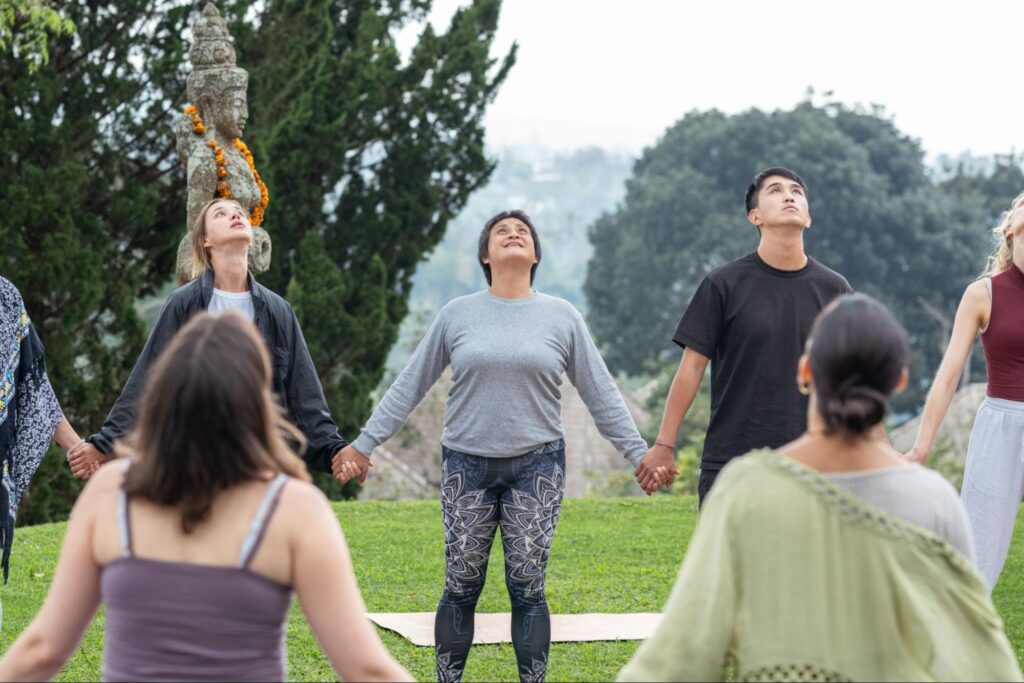
With hundreds of options available, a few simple criteria help narrow the field:
- Clarify your intention: Are you coming to rest and reset, or to develop a serious practice? A 3-day silent retreat and a 25-day teacher training serve very different needs. Know which one is calling you.
- Choose the right duration: Three to five days is enough for a meaningful reset. Seven to ten days allows real depth to develop. Twenty-plus days transforms you. Be honest with yourself about how much time and openness you are bringing.
- Check what is included: All-inclusive programs (accommodation, meals, all sessions) represent better value and remove logistical friction. Ask specifically what the quoted price covers.
- Vet the teachers: Look for facilitators with genuine personal practice, substantive training lineage, and real experience teaching others. Length of time teaching matters. So do graduate reviews.
- Consider the location: Ubud offers community and culture. Pelaga offers solitude and immersion. Choose the environment that supports your specific intention.
- Trust your resonance: Ultimately, you will know when something is right. Read the school’s values, read graduate testimonials, and notice how you feel when you engage with the school. That response is data.
What Does a Meditation Retreat in Bali Cost?
The cost of a meditation retreat in Bali varies depending on the program length, accommodation, what’s included, and whether you’re joining a retreat or a teacher training. Short retreats are generally more affordable, while immersive residential teacher training programs require a larger investment due to their longer duration and comprehensive curriculum.
When comparing programs, look beyond the advertised price. Consider what is included, such as accommodation, meals, guided sessions, study materials, mentoring, certification (where applicable), and ongoing support after the program.
Find your meditation retreat in Bali with House of Om
All Programs · 300hr YTT India ·
Final thoughts
A meditation retreat in Bali is an opportunity to invest in your inner wellbeing and create space for reflection, renewal, and growth. The stillness cultivated among Bali’s rice fields and highland landscapes does not end when the retreat does; it becomes something you carry with you into your daily life, your relationships, your work, and your ongoing practice.
FREQUENTLY ASKED QUESTIONS
What is the best area in Bali for a meditation retreat?
While Ubud is widely known as Bali’s spiritual and cultural heart, the Pelaga highlands offer a quieter and more immersive environment for those seeking a peaceful meditation experience. Located north of Ubud, Pelaga is surrounded by lush mountain landscapes, traditional Balinese village life, and a sense of stillness that naturally supports meditation and personal reflection.
Away from Bali’s busier tourist areas, Pelaga provides the space to step away from everyday distractions, reconnect with yourself, and immerse yourself more fully in meditation. It is also home to House of Om’s meditation and yoga teacher training programs, making it an ideal setting for those looking to deepen both their personal practice and professional learning.
Do I need meditation experience to join a retreat in Bali?
Many meditation retreats in Bali welcome beginners and provide an opportunity to explore meditation in a supportive and structured environment. However, meditation teacher training programs are generally better suited to students who already have an established meditation practice and a genuine interest in deepening their understanding.
For House of Om’s Meditation Teacher Training, some prior meditation experience is recommended, as the program explores meditation practices in greater depth while helping students develop the knowledge and confidence to guide others. If you are unsure whether the training is the right fit for your experience level, we recommend contacting the school directly.
What is the difference between a meditation retreat and a meditation teacher training?
A meditation retreat invites you to practise: to sit, receive, and allow the experience to settle. A meditation teacher training asks you to understand the practice well enough to transmit it to others — covering the philosophy, science, techniques, and pedagogy of meditation. Teacher trainings are longer, more structured, and result in a certification.
Is Bali safe for solo travellers on a meditation retreat?
Yes. Bali is consistently rated among the safest destinations in Southeast Asia for solo travellers. Residential retreat environments provide an additional layer of community and security. The Balinese culture is exceptionally warm and welcoming, and retreat centres are well practised at supporting international guests travelling alone.