
Becoming a yoga instructor is less mysterious than it looks from the outside. The path generally runs through four things: building a personal practice, completing a recognized teacher training, learning to actually teach rather than only to practice, and passing whatever assessments your program sets.
Thailand has become one of the more common places to do that training, partly because programs there are often residential, meaning you study, practice, and live in one place for the duration.
This guide walks through the pathway step by step, then looks at what a Thailand teacher training involves in practice.
What Does It Take to Become a Yoga Instructor?
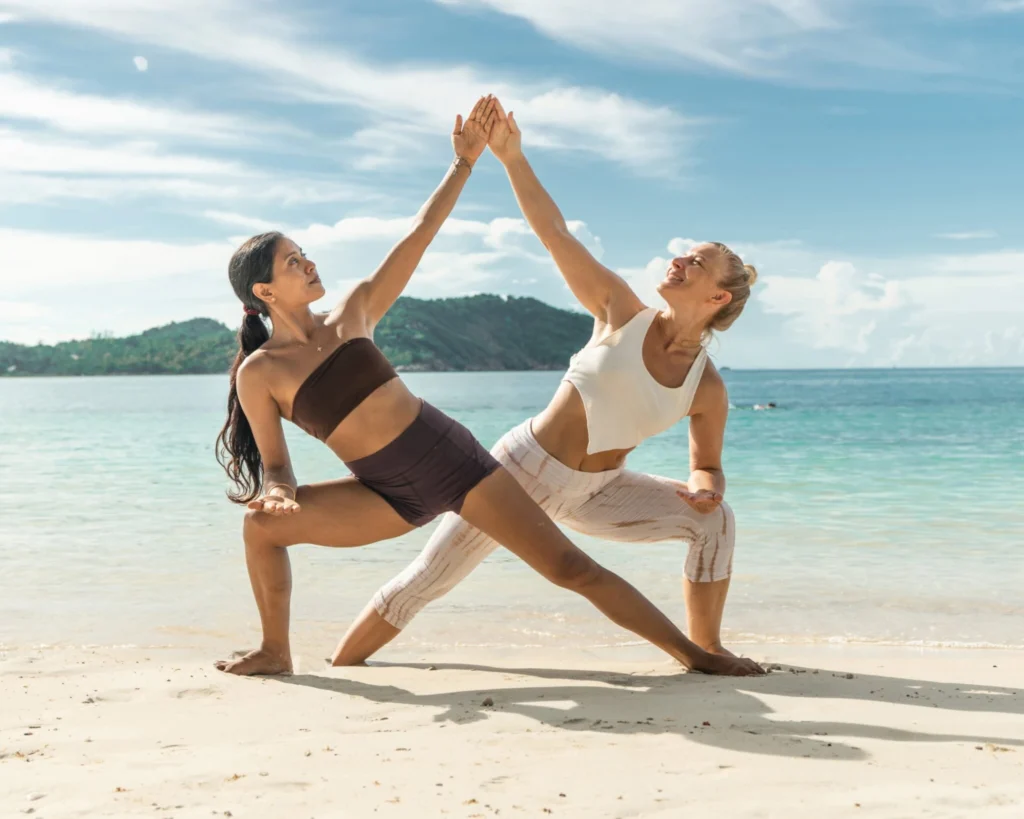
| Most people become yoga instructors by building a consistent personal practice, completing a teacher training program, developing practical teaching skills through supervised practice, passing the program’s assessments, and earning certification on successful completion. Teaching experience and continued study build from there. |
A workable sequence looks like this:
- Build a consistent yoga practice.
- Learn the foundations — the common postures, basic breathwork, and how a class is structured.
- Choose a teacher training program that matches your goals.
- Complete the training.
- Practice teaching, with feedback from experienced teachers.
- Complete the required assessments.
- Earn certification on successful completion.
- Keep developing — teaching regularly, studying further, refining your style.
- Confirm any local employment and legal requirements before working professionally.
That last step matters and is often skipped over. Completing a training and being legally able to work in a given country are two separate questions, covered further down.
Do You Need to Be an Experienced Yogi to Become an Instructor?
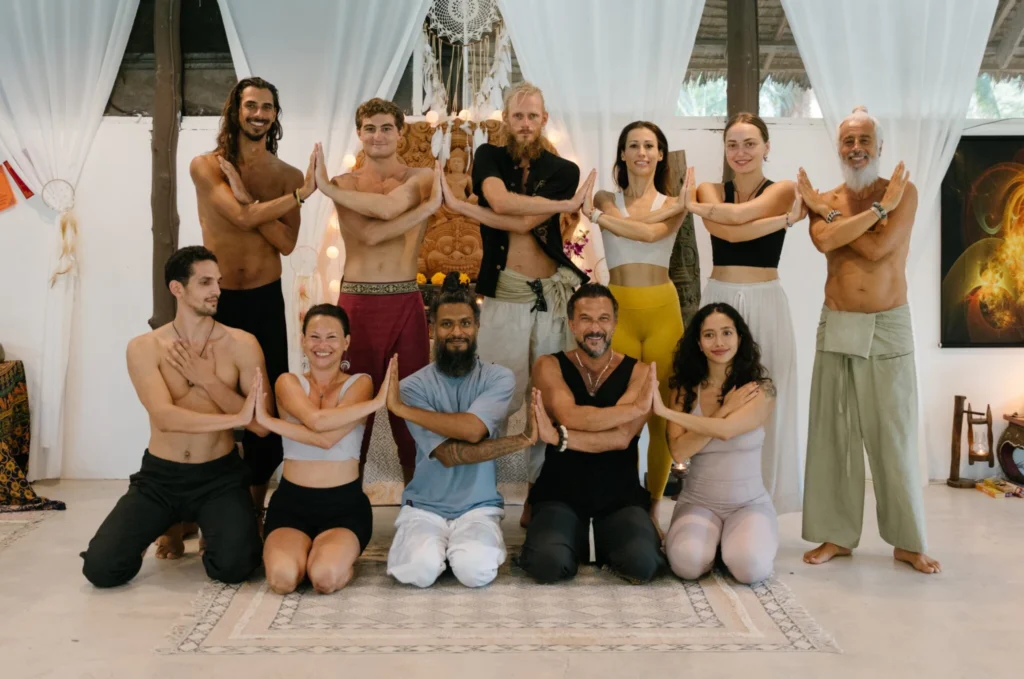
| No. Many teacher trainings accept complete beginners. What helps is a few months of consistent practice beforehand, so you arrive with enough familiarity to absorb technical instruction rather than spending the first week catching up. |
It is worth separating three things that often get confused:
| What it means | |
|---|---|
| Requirement | Something you must meet to enroll or to be certified |
| Recommendation | Something that makes the training easier but is not mandatory |
| Assumption | Something people believe is required but often is not — such as advanced flexibility |
House of Om states that its Thailand training welcomes all levels, beginners and beyond, and is designed for complete beginners, dedicated practitioners, and people simply curious to explore yoga. The school also states that students do not need teaching ambitions to join — some attend to deepen a personal practice, reconnect with themselves, and experience yoga.
On preparation, the school’s guidance is that it is advisable to learn some basic foundation and have a few months of consistent practice before the course. That is framed as advisable rather than mandatory, and the distinction is worth holding onto if you have been putting off enrolling because you think you are not ready.
One thing that is stated as a requirement: participants must be at least 18 years old at the time of enrollment, which House of Om notes is a requirement for Yoga Alliance certification.
Choosing the Right Teacher Training Program
This is the decision that shapes everything after it. Programs vary far more than their marketing suggests, and the differences that matter are not always visible on a homepage.
Worth comparing across any shortlist:
- Certification — what you receive, and on what conditions
- Curriculum — what is actually taught, and in what depth
- Teaching methodology — how much time goes to learning to teach, not just to practice
- Anatomy — how it is taught, and whether it is applied to teaching
- Practical teaching — how often you teach, and who gives feedback
- Instructor experience — who is leading your specific dates
- Format — fully in person, hybrid, or online
- Location, accommodation, and schedule — whether the setting suits how you concentrate
- Reputation — evidence you can check independently rather than testimonials alone
Of these, supervised teaching practice is the one most worth interrogating. Studying how a class is built is not the same as standing up and building one while an experienced teacher watches. Ask any program how many times you will teach, and who gives the feedback.
Why a 200-Hour Training Is a Common Starting Point
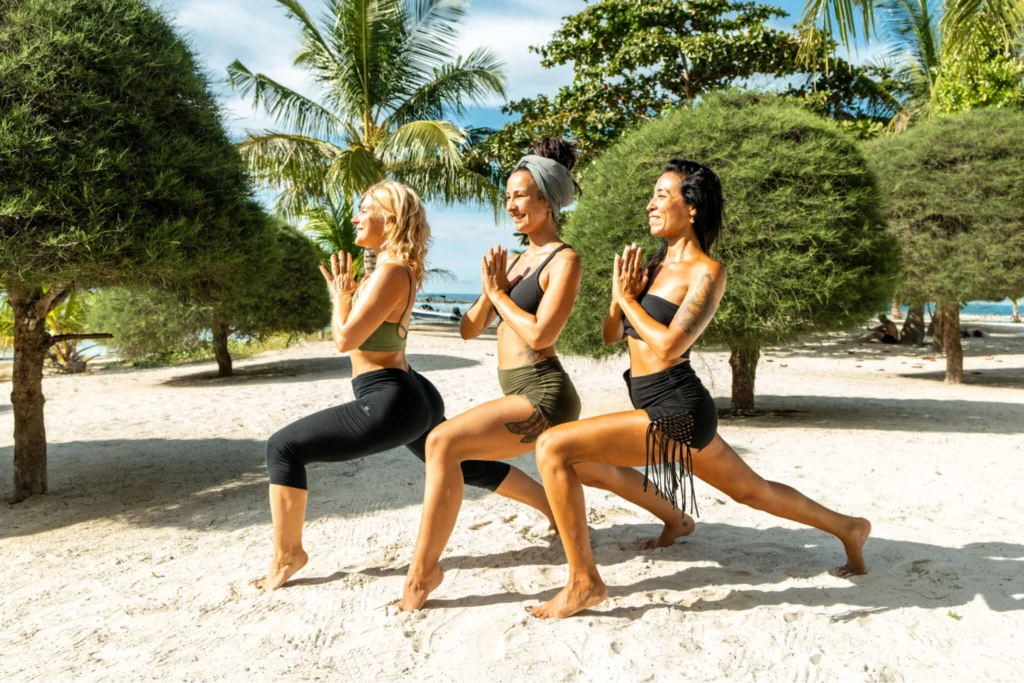
The 200-hour format is the most widely offered entry-level teacher training. It is a common industry starting point rather than a universal legal requirement — certification standards and expectations vary by organization and by country, and studios set their own hiring criteria.
House of Om’s 200-hour yoga teacher training in Koh Phangan is one example of this format, run in Thailand as a residential program.
What a 200-hour gives you is a foundation: enough grounding in practice, anatomy, philosophy, and methodology to lead a general class safely, plus supervised experience doing it. What it does not do on its own is make you an experienced teacher. That comes from teaching afterward.
What You Learn During Yoga Teacher Training in Thailand
The specifics vary by school. The areas below reflect what House of Om includes in its Thailand training, and they give a reasonable sense of the ground a 200-hour covers.
Yoga practice
House of Om’s Thailand program is described as rooted in Hatha and Vinyasa Flow, with elements of Ashtanga included to deepen practice. Daily practice and sunrise classes form the backbone of the training.
Learning several styles matters for a new teacher. Hatha builds understanding posture by posture. Vinyasa teaches how postures link through breath and movement. Ashtanga applies both within a set sequence.
Anatomy and physiology
Anatomy is what separates a teacher who can lead a class from one who can lead it safely. House of Om includes anatomy and physiology alongside injury-prevention biomechanics — understanding not just how the body moves, but where things commonly go wrong and how to teach around that.
Teaching methodology
This is the classroom side of teaching: how a class is planned, how instructions are delivered, how you manage a room of people at different levels. It appears throughout the House of Om Thailand schedule rather than as a single module.
Yoga philosophy
Philosophy gives context to everything else. It is also, practically, what many students expect a teacher to be able to speak to. The Thailand program includes philosophy as part of the core curriculum.
Pranayama and meditation
Breathwork and meditation are taught both as personal practices and as things you may lead for others. House of Om’s Thailand program includes pranayama and meditation, along with Yoga Nidra, mantra, and kirtan.
Alignment and hands-on adjustments
Alignment workshops and hands-on adjustments are listed as part of the training. This is the material that genuinely requires being in a room with someone — learning to see misalignment and to correct it by hand is difficult to develop any other way.
Teaching practice
House of Om describes afternoon labs and supportive mentor feedback as part of the program, and the third week focuses on teaching mastery. The school states that students leave with the knowledge, experience, and presence to guide others with confidence.
Additional practices
The program also includes shatkarma, Ayurveda, a sound healing journey, and Voice Activation. That last one is worth noting: it is described as helping students use their voice with confidence, clarity, and intention, communicate effectively, lead with presence, and develop a natural teaching voice.
Vocal delivery is rarely on a curriculum list and is one of the more common early struggles for new teachers, so a dedicated component addressing it is a genuine differentiator when comparing programs.
How the House of Om Thailand Training Is Structured
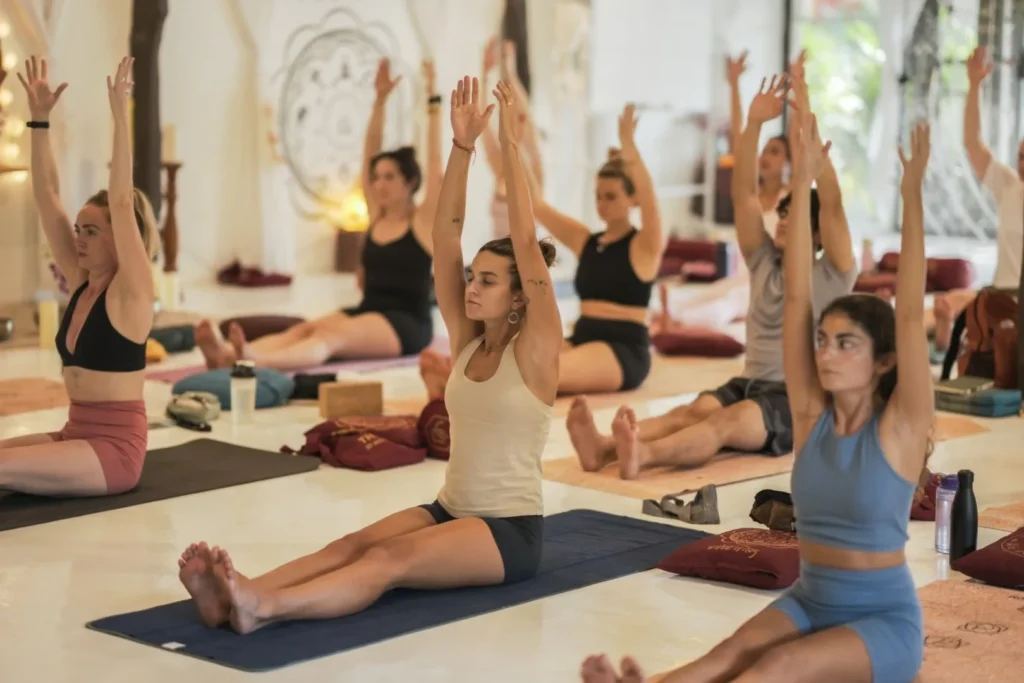
The program runs in Koh Phangan, Thailand, at a beachfront resort, and is organized by style, one focus per week.
| Stage | Focus |
|---|---|
| Week 1 | Hatha yoga foundation |
| Week 2 | Vinyasa flow exploration |
| Week 3 | Ashtanga yoga and teaching mastery |
| End of training | Practical and theoretical exams |
Days begin early. The published example schedule runs from around 06:00 with shatkarma and chanting, into asana and pranayama, a morning lab, and breakfast, with study through the middle of the day and teaching methodology and alignment work in the afternoon, closing with an evening session. House of Om notes that the daily schedule is subject to change at the teacher’s discretion, so treat it as an illustration of the rhythm rather than a fixed timetable.
On the teaching team, the school states that teachers hold 500-hour Yoga Alliance certifications and have 1,000+ hours of teaching experience, with a student feedback rating described as 9+/10, and that teachers provide mentorship and support.
What Are the Requirements to Join?
| What House of Om states | |
|---|---|
| Age | Participants must be at least 18 at the time of enrollment, stated as a requirement for Yoga Alliance certification |
| Experience level | All levels welcome, beginners and beyond — complete beginners, dedicated practitioners, and people curious to explore yoga |
| Teaching ambition | Not required. Some students attend to deepen personal practice rather than to teach |
| Preparation | Advisable, not mandatory: some basic foundation and a few months of consistent practice before the course |
The only firm requirement in that list is the age minimum. Everything else is a recommendation, which is unusual enough among training programs to be worth stating plainly.
What Certification Do You Receive?
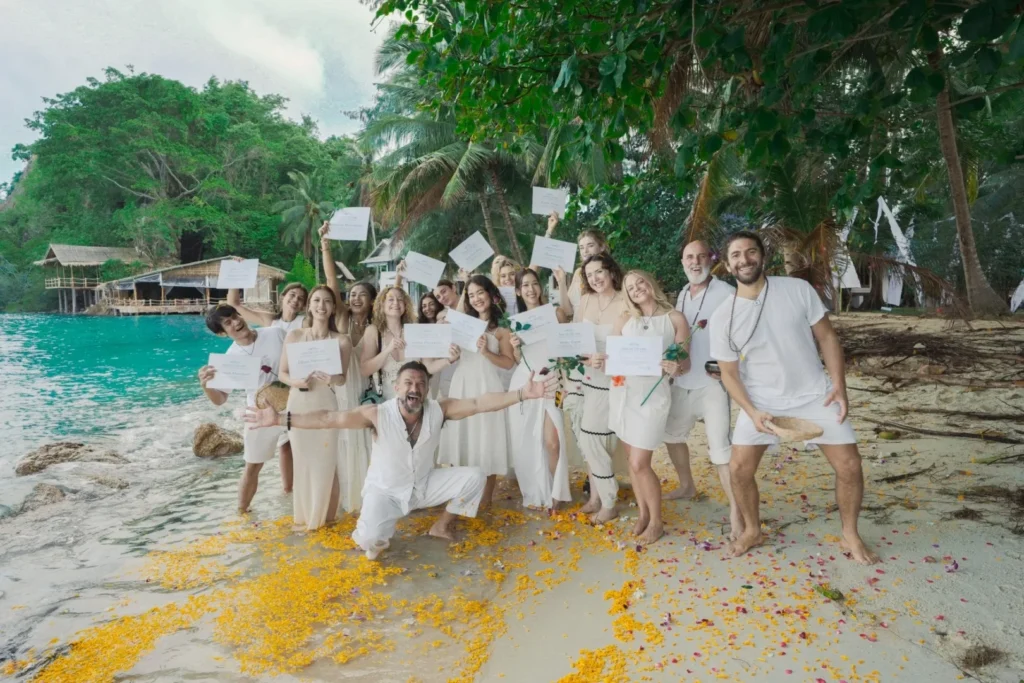
| On successful completion of the program and its required assessments, House of Om states that students receive an internationally recognized Yoga Alliance certification. The Thailand training includes both a practical and a theoretical exam. |
House of Om describes Yoga Alliance as the largest nonprofit association of yoga professionals, practitioners, and advocates across the globe, and states that its instructors prepare students to pass the exam and earn certification.
Two clarifications that apply to any school. Certification depends on completing the requirements — no program can promise it in advance. And certification is a credential, not employment: it does not guarantee teaching work, clients, or income.
Certification and the Right to Work Are Separate Things
This is worth its own section because it is where assumptions cause real problems.
Completing a teacher training in Thailand and being legally permitted to work as a yoga instructor in Thailand are two different questions. A certification issued by a yoga school is an educational credential. It does not by itself confer work authorization, immigration status, or the right to be employed in any particular country.
If you are considering teaching professionally in Thailand or anywhere else, confirm employment, immigration, tax, and work authorization requirements with the relevant national authorities or with a prospective employer before making plans. This article does not provide legal advice, and requirements change.
How Long Does It Take?
| Completing a 200-hour teacher training typically takes a few weeks in a residential format. Becoming a confident, experienced teacher takes considerably longer, and depends on how much you teach after certification. |
The dates published for the House of Om Thailand training indicate a roughly three-week in-person period per intake. That covers the training itself.
It is worth being honest about the difference between finishing a training and being an established teacher. The certification is a starting point. Most new teachers build from cover classes and small groups, and confidence tends to arrive somewhere in the first year of actually teaching rather than at graduation.
Can You Become an Instructor Through Hybrid Training?
House of Om also offers a 200-hour hybrid yoga teacher training in Koh Phangan, which combines online theory with an in-person component.
The hybrid program includes a 10-day in-person immersion with 9 nights of accommodation, and offers two ways to begin:
| Option | How it works |
|---|---|
| Start online | Begin with the theory modules at your own pace, pass the theory exam, receive a House of Om Theory Completion Certificate, then join the 10-day in-person immersion to complete the practicum and final assessments |
| Start in person | Begin with the 10-day in-person immersion for hands-on practice, teaching experience, and community connection, then complete the theory modules online afterward and take the theory exam when ready |
Both routes require completing the online and in-person components. House of Om states that the 200-Hour Yoga Alliance Certificate is received after both modules are completed.
The hybrid is a separate program with its own dates, pricing, accommodation, and meal arrangements. Compare the two on their own pages rather than assuming figures carry across.
In-Person or Hybrid: Which Suits You?
| Full in-person | Hybrid | |
|---|---|---|
| Structure | Three-week training structure in Koh Phangan | Online theory plus a 10-day in-person immersion |
| Practice | Daily in-person practice throughout | Concentrated during the in-person component |
| Teacher contact | Continuous across the training | Concentrated into the immersion |
| Theory | Delivered on site | Self-paced online, before or after the immersion |
| Flexibility | Fixed dates and structure | Choice of starting point; theory studied at your own pace |
Neither is better in the abstract. The full in-person format gives more continuous contact and a longer immersion. The hybrid asks for less consecutive time away and lets you work through theory at your own pace, which suits people who cannot step away for three weeks.
What Happens After You Complete the Training?
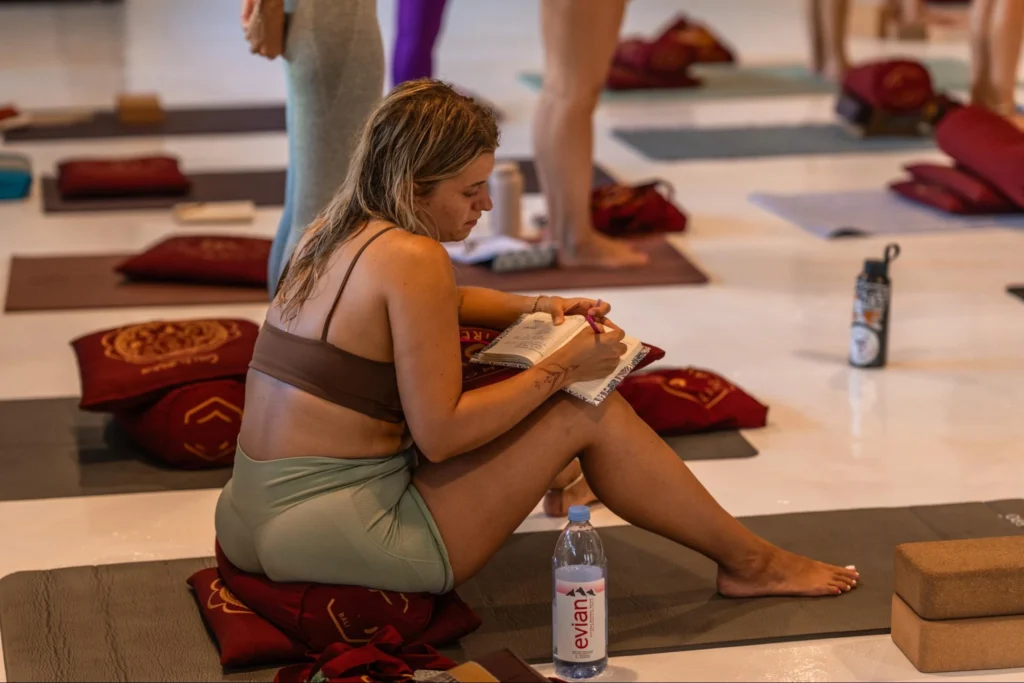
Certification is the beginning of the practical work rather than the end of it. Realistic next steps:
- Keep practicing — your own practice is the source material for your teaching
- Teach as often as you can, in whatever setting will have you
- Build confidence through repetition rather than waiting to feel ready
- Continue studying — anatomy and philosophy both reward a second pass
- Develop a teaching style rather than imitating your trainers
- Explore teaching opportunities, and confirm any local work and legal requirements first
House of Om’s Thailand program includes a pay-in-full bonus of lifetime access to its online training library, containing recorded lessons, teaching resources, templates, and downloadable materials. Resources like that tend to become more useful after graduation than during the course, when you are planning your own classes for the first time.
What Does Training in Thailand Cost?
House of Om’s standard Thailand program page shows a training-only price of $1,955, with an early-bird price of $1,615. Accommodation packages are priced separately and vary by room choice. Prices shown here reflect the program page and may change, so check current pricing and inclusions before booking.
A $500 deposit books a spot, and House of Om states that changing dates is free and easy if something goes wrong.
When comparing programs on cost, compare what is included rather than the headline figure. A price that bundles accommodation and meals is not directly comparable to one that does not.
Is Teaching Yoga Right for You?
A short honesty check before committing time and money. Teacher training tends to suit people who:
- Practice consistently and enjoy it
- Want to understand the practice more deeply, whether or not they teach
- Enjoy helping other people learn
- Are willing to study anatomy and philosophy, not only asana
- Are comfortable being corrected and teaching in front of others
- Can handle an intensive schedule for a few weeks
- Understand that certification is one step rather than a finished career
If most of that describes you, the training will likely be worthwhile even if you never teach professionally. House of Om explicitly welcomes students in that position.
If you are weighing locations, House of Om also runs trainings in Bali — our guide to becoming a certified yoga instructor in Bali covers that option.
FAQs
How do I become a yoga instructor in Thailand?
Build a consistent personal practice, choose a teacher training program, complete the training, develop teaching skills through supervised practice, and pass the required assessments. Certification follows successful completion. Confirm any local work and legal requirements separately before teaching professionally.
Do I need prior yoga experience?
Not necessarily. House of Om states that its Thailand training welcomes all levels, including complete beginners. The school advises learning some basic foundation and having a few months of consistent practice beforehand, but frames that as advisable rather than mandatory.
Can a complete beginner become a yoga instructor?
Yes. Many teacher trainings accept beginners, and House of Om states that its Thailand program is designed for complete beginners as well as experienced practitioners. Prior practice helps you absorb the material faster but is not presented as a requirement.
Is there an age requirement?
House of Om states that all participants must be at least 18 years old at the time of enrollment, and describes this as a requirement for Yoga Alliance certification.
How long does it take to become a yoga instructor?
A 200-hour residential training typically takes a few weeks. The dates published for House of Om’s Thailand program indicate a roughly three-week in-person period. Building genuine teaching experience takes longer and depends on how much you teach afterward.
What certification do you receive?
House of Om states that successful completion of its Thailand program and the required assessments earns an internationally recognized Yoga Alliance certification. The training includes both a practical and a theoretical exam.
Is a 200-hour training enough to start teaching?
The 200-hour format is the most common entry-level teacher training and is widely used as a starting point. Requirements vary by organization and location, and individual studios set their own hiring criteria, so check what applies where you intend to teach.
Does certification let me work as a yoga instructor in Thailand?
Certification is an educational credential and is separate from the right to work. Employment, immigration, tax, and work authorization requirements should be confirmed with the relevant Thai authorities or a prospective employer.
Can I complete a hybrid yoga teacher training in Thailand?
Yes. House of Om offers a 200-hour hybrid training in Koh Phangan combining online theory with a 10-day in-person immersion and 9 nights of accommodation. Students can start online or start in person, and must complete both components.
What does House of Om’s Thailand training cost?
The program page shows a training-only price of $1,955, with an early-bird price of $1,615. Accommodation packages are priced separately by room type. A $500 deposit books a spot. Confirm current pricing before booking.