
If you have started looking at yoga teacher trainings, you have seen the phrase everywhere: Yoga Alliance 200-hour. It appears on almost every school’s homepage, usually without much explanation of what it actually means.
| A Yoga Alliance 200-hour yoga teacher training is a structured 200-hour program covering yoga practice, anatomy, philosophy, teaching methodology, and supervised teaching, delivered by a school that meets Yoga Alliance’s published standards. Completing one leads to a certificate from the school, which you can then use to apply for professional registration if you choose. |
That last sentence contains a distinction most articles skip, and it is the one worth understanding before you spend money. This guide explains what the label covers, what you learn, and what the certification does and does not give you.
What Is Yoga Alliance?
Yoga Alliance is a nonprofit membership organization for yoga professionals, described by House of Om as the largest nonprofit association of yoga professionals, practitioners, and advocates across the globe.
The important thing to understand is what kind of body it is. Yoga Alliance functions as a registry. It publishes standards, and schools that meet those standards can be listed as a Registered Yoga School. Graduates of a registered school can then apply to list themselves as a Registered Yoga Teacher.
| What Yoga Alliance is not
It is not a government body, and it does not issue licenses. Yoga Alliance itself states that it does not certify teachers or accredit schools — it maintains a voluntary registry. That matters because a great deal of marketing language across the yoga industry uses “accredited” and “certified” loosely, and the difference affects what you are actually buying. |
The practical upshot: you can look up any school in Yoga Alliance’s own directory and check its current status yourself, rather than relying on a logo on a website. That takes about two minutes and is the single most useful check available to a prospective student.
What Does “200-Hour” Actually Mean?
The number refers to the total training hours in the program. It is the entry-level format for yoga teacher education and the most commonly offered worldwide.
Those hours are not left entirely to each school. Yoga Alliance’s published hours policy states that under the RYS 200 standards introduced in February 2020, all 200 hours must be classroom hours, with an option for 40 of those to be delivered as online classroom hours — up to 20 in Anatomy and Physiology and up to 20 in Yoga Humanities. The same policy caps instruction at 14 hours per day.
One detail worth knowing when comparing schools: that policy states homework, reading assignments, personal practice, volunteer work, and public classes do not count as instructional hours. If a program appears to reach 200 hours by counting self-study, ask how the hours are allocated.
Within those constraints, schools structure their programs differently. Some organize by style, some by module, some by theme. Two programs of identical length can feel quite different, which is why reading the actual syllabus matters more than comparing the headline number.
What Do You Learn in a 200-Hour Yoga Teacher Training?
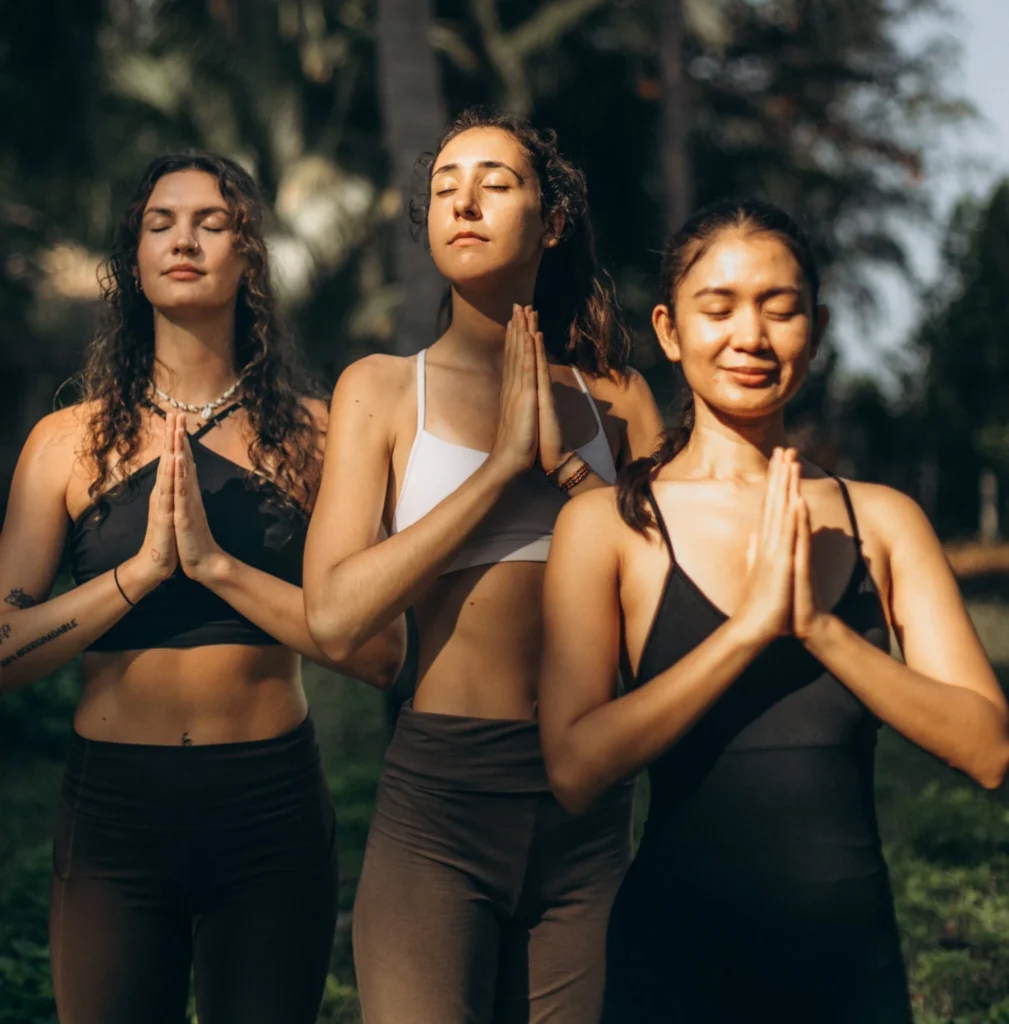
The curriculum is considerably broader than physical postures. Most programs cover the areas below, though the balance between them varies by school.
Yoga asana
The physical practice, studied more precisely than in a general class. You learn how postures are constructed, not just how to perform them — which is a different skill and the one teaching depends on.
Anatomy and physiology
Enough understanding of how the body moves to teach without causing harm. This is where a teacher learns why a given instruction works for one person and not another, and how to recognize when someone should not be doing something.
Teaching methodology
The craft of teaching itself: how to plan a class, deliver instructions, manage a room, and adapt when the group in front of you is not the group you planned for. This is the component that most distinguishes teacher training from an intensive practice retreat.
Pranayama and meditation
Breathwork and meditation, taught both as personal practices and as things you may guide for others.
Yoga philosophy
The tradition and ideas underlying the physical practice. Beyond its own value, this is material students frequently ask teachers about.
Alignment and adjustments
Learning to see when a posture is not working and to correct it, verbally or by hand. This is among the hardest material to learn remotely, because it depends on observing and being observed.
Sequencing and class planning
How a class is built — how it opens, where it builds, how it closes, and how the pieces connect. Without this, a new teacher has techniques but no structure to put them in.
Teaching practice
Actually teaching, with feedback. Of everything in a 200-hour curriculum, this is the strongest predictor of whether you can lead a class afterward, and it is worth asking any school how much of it is included.
Is a 200-Hour Training Enough to Teach Yoga?
| A 200-hour program provides a foundational teacher education and is the most widely used entry point into teaching. It does not by itself make someone an experienced teacher, and it does not guarantee employment. Studios set their own hiring criteria, and requirements vary by country and employer. |
The honest version is that a 200-hour gives you a working foundation and supervised practice. Confidence and competence build afterward, through teaching regularly. Most new teachers start with cover classes, community sessions, or small groups.
Continued study also matters. A 200-hour is designed as a starting qualification, not a complete education, and the areas it introduces — anatomy and philosophy in particular — reward returning to at greater depth.
Certificate, Certification, Registration, and License: What Is the Difference?
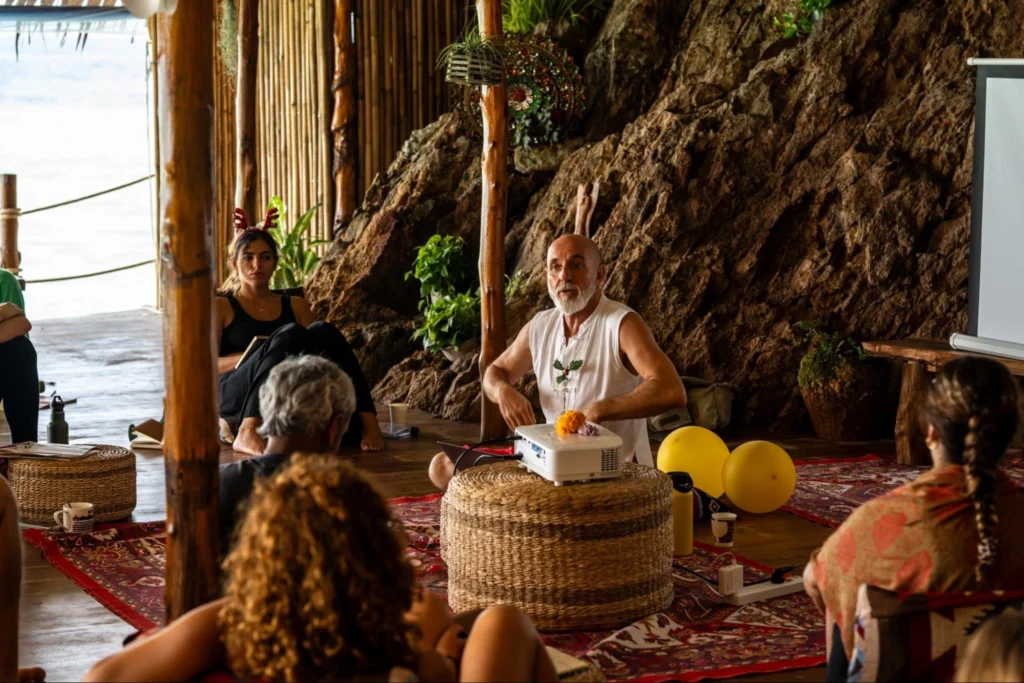
These four words get used interchangeably across the yoga industry, and they are not the same thing. Understanding the difference protects you from assuming something your credential does not actually provide.
| Term | What it means | Who issues it |
|---|---|---|
| Certificate of completion | Confirmation that you completed a specific training program with a specific school | The school you trained with |
| Registration | A voluntary professional listing showing you completed training at a school meeting a registry’s standards | Yoga Alliance, on your own application |
| Professional recognition | Whether studios, gyms, insurers, or employers accept your credential | Individual employers and insurers, at their discretion |
| Government license or work authorization | Legal permission to work in a particular country | National authorities — not any yoga body |
Three practical consequences follow.
- Completing a training and being registered are separate steps. The school issues your certificate. Registration is something you apply for afterward, and it is voluntary.
- Registration carries its own ongoing cost. Yoga Alliance publishes a one-time application fee and an annual membership, currently listed at $50 and $65, paid to Yoga Alliance rather than to your school. Very few school pages mention this.
- No yoga credential is a work permit. Being qualified to teach and being legally permitted to work in a given country are entirely different questions. Employment, immigration, tax, and work authorization requirements should be confirmed with the relevant national authorities or a prospective employer.
Can Beginners Join a 200-Hour Yoga Teacher Training?
| Many programs accept beginners. Entry requirements are set by each school rather than by any central body, so they vary — check the specific program rather than assuming a universal standard. |
It helps to separate three things that often get conflated:
| What it means | Example | |
|---|---|---|
| Requirement | Something you must meet to enroll or be certified | A minimum age |
| Recommendation | Something that makes the training easier but is not mandatory | A few months of prior practice |
| Assumption | Something people believe is required but usually is not | Advanced flexibility |
As a worked example: House of Om states that its 200-hour yoga teacher training in Koh Phangan, Thailand welcomes all levels, beginners and beyond, and is designed for complete beginners, dedicated practitioners, and people simply curious to explore yoga. The school also states that teaching ambitions are not required to join — some students attend to deepen a personal practice, reconnect with themselves, and experience yoga.
On preparation, House of Om advises learning some basic foundation and having a few months of consistent practice before the course. That is framed as advisable rather than required. Separately, the school states that participants must be at least 18 years old at the time of enrollment, which it describes as a requirement for Yoga Alliance certification.
A Worked Example: House of Om’s 200-Hour Training in Thailand

Abstract explanations only go so far, so here is how one program puts the pieces together. House of Om runs a 200-hour yoga teacher training in Koh Phangan, Thailand, at a beachfront resort described as sitting on the island’s peaceful shore.
The program is organized by style, one focus per week:
| Stage | Focus |
|---|---|
| Week 1 | Hatha yoga foundation |
| Week 2 | Vinyasa flow exploration |
| Week 3 | Ashtanga yoga and teaching mastery |
| End of training | Practical exam and theoretical exam |
The training is described as rooted in Hatha and Vinyasa Flow, with elements of Ashtanga included to deepen practice. Alongside the core work, the program includes shatkarma, mantra and meditation, Yoga Nidra, Ayurveda, kirtan, a sound healing journey, and Voice Activation.
Days begin early. The published example schedule runs from around 06:00 through to an evening session, with practice in the morning, study through the middle of the day, and teaching methodology and alignment work in the afternoon. House of Om notes that the daily schedule is subject to change at the teacher’s discretion, so it illustrates the rhythm rather than fixing it.
On certification, House of Om states that successful completion earns an internationally recognized Yoga Alliance certification, and that its instructors prepare students for the exam and certification.
Why the Training Is More Than Asana Practice

This is the point most people underestimate before enrolling. A teacher training is not an extended practice retreat.
Using the House of Om Thailand program as an example, the training includes alignment workshops, hands-on adjustments, injury-prevention biomechanics, afternoon labs, and supportive mentor feedback, alongside daily practice and sunrise classes. Teaching methodology appears in the schedule daily.
Voice Activation is worth singling out. House of Om describes it as helping students use their voice with confidence, clarity, and intention, communicate effectively, lead with presence, and develop a natural teaching voice.
That component addresses something rarely listed on a curriculum and commonly discovered in a first real class: knowing a sequence and being able to lead a room through it are different skills. When comparing programs, look for what a school includes beyond the physical practice — that is usually where the differences live.
Can You Complete a 200-Hour Training in a Hybrid Format?
Yes, some schools offer it. House of Om runs a separate 200-hour hybrid yoga teacher training in Koh Phangan, combining online theory with a 10-day in-person immersion and 9 nights of accommodation.
The hybrid offers two ways to begin:
| Option | How it works |
|---|---|
| Start online | Begin with the theory modules at your own pace, pass the theory exam, receive a House of Om Theory Completion Certificate, then join the 10-day in-person immersion to complete the practicum and final assessments |
| Start in person | Begin with the 10-day in-person immersion, then complete the theory modules online afterward and take the theory exam when ready |
Both components must be completed. House of Om states that the 200-Hour Yoga Alliance Certificate is received after both modules are finished.
If you are considering a hybrid program from any school, this is where the earlier point about online hours becomes practical: ask how the 200 hours are divided between online and in-person delivery, and confirm the split meets current standards for the credential you want. Get the answer in writing before paying a deposit.
The hybrid is a distinct program with its own dates, pricing, accommodation, and meal arrangements, so compare it on its own page rather than assuming figures carry across from the standard training.
How Should You Choose a 200-Hour Training?

Once you understand what the label covers, the comparison becomes manageable. Check each shortlisted school on:
- Registration status — verified in the registry directory, not on the school’s own site
- Hour allocation — how the 200 hours split between online and in-person delivery
- Curriculum — the syllabus with hour allocations, not a list of topics
- Teaching practice — how many times you teach, and who gives feedback
- Instructor experience — who is leading your specific dates
- Certification — what the certificate says and what conditions apply
- Format — whether in-person or hybrid suits the time you have
- Location, accommodation, and schedule
- Student feedback — ideally from a source the school does not control
- Total cost — including what is excluded, and the registration fee you pay separately
- Your own goal — whether you intend to teach, or to study for its own sake
What Happens After You Complete a 200-Hour Training?
Realistic next steps rather than promises:
- Keep practicing — your own practice is the source material for teaching
- Teach whenever you can, in whatever setting will have you
- Build confidence through repetition rather than waiting to feel ready
- Decide whether to register professionally, and budget for the ongoing fee if so
- Continue studying — anatomy and philosophy both reward a second pass
- Develop your own teaching style rather than imitating your trainers
- Understand the professional side — insurance, ethics, and boundaries with students
- Confirm local employment and legal requirements before teaching professionally anywhere
House of Om’s Thailand program includes a pay-in-full bonus of lifetime access to its online training library, containing recorded lessons, teaching resources, templates, and downloadable materials. Resources of that kind tend to prove more useful after graduation than during the course, when you are planning your own classes for the first time.
Is a 200-Hour Training Right for You?
It tends to suit someone who:
- Wants structured yoga education rather than more classes
- Is curious about teaching, even without having decided
- Wants to deepen a personal practice with proper grounding
- Is willing to study anatomy and philosophy, not only asana
- Wants hands-on teaching practice with feedback
- Can commit to an intensive period of study
- Understands that certification is a starting point rather than a finished career
If most of that fits, the training is likely worthwhile even if you never teach professionally — a position several schools, House of Om among them, explicitly accommodate.
If you are weighing locations as well as formats, our guide to becoming a certified yoga instructor in Bali covers House of Om’s Indonesian options.
FAQs
What is a Yoga Alliance 200-hour yoga teacher training?
A structured 200-hour program covering yoga practice, anatomy, philosophy, teaching methodology, and supervised teaching, delivered by a school that meets Yoga Alliance’s published standards. Completing one leads to a certificate from the school.
What does “200-hour” mean?
It refers to the total training hours. Yoga Alliance’s published policy states that for the RYS 200 credential all 200 must be classroom hours, with up to 40 deliverable as online classroom hours, and that homework and personal practice do not count toward the total.
What is Yoga Alliance?
A nonprofit membership organization for yoga professionals that operates as a registry. It publishes standards and maintains a public directory of registered schools and teachers. It is not a government body and does not issue licenses.
Can beginners join a 200-hour training?
Often, yes. Entry requirements are set by each school rather than centrally. House of Om, for example, states that its Thailand training welcomes all levels including complete beginners, and that teaching ambitions are not required.
Do you need prior yoga experience?
It depends on the school. Some require it; others recommend it. House of Om advises learning some basic foundation and having a few months of consistent practice beforehand, framed as advisable rather than mandatory.
Is there an age requirement?
Schools set their own. House of Om states that participants must be at least 18 years old at the time of enrollment, describing this as a requirement for Yoga Alliance certification.
Does completing a 200-hour training automatically make you an RYT?
No. Completing a program earns a certificate from the school. Registration is a separate, voluntary step you apply for yourself, and it carries its own application and annual fees paid to Yoga Alliance.
Can you teach yoga after a 200-hour training?
It is the most widely used entry-level qualification, but it does not guarantee employment. Studios set their own hiring criteria, and being qualified to teach is separate from being legally permitted to work in a given country.
Does House of Om offer a 200-hour training in Thailand?
Yes. House of Om runs a 200-hour yoga teacher training in Koh Phangan, Thailand, structured across three weeks covering Hatha, Vinyasa, and Ashtanga with teaching mastery, followed by practical and theoretical exams.
Is there a hybrid 200-hour training in Thailand?
Yes. House of Om offers a separate 200-hour hybrid program in Koh Phangan combining online theory with a 10-day in-person immersion and 9 nights of accommodation. Students can start online or start in person, and both components must be completed.