
If you are researching a yoga certification course in Thailand, there are really two questions bundled together, and mixing them up causes most of the confusion.
| The short answer
For most aspiring teachers, a 200-hour yoga teacher training is the usual starting qualification. Completing an eligible program at a Yoga Alliance Registered Yoga School can make you eligible to apply for the RYT 200 credential yourself. RYT 200 is a professional credential, not a Thai government work permit — certification and permission to work in Thailand are separate questions with separate answers. |
This guide covers both: what qualification you need to teach yoga generally, and what changes if you want to work in Thailand specifically.
What Certification Do You Need to Teach Yoga in Thailand?
There is no single yoga license. What exists is a chain of related but distinct things, and it helps to see them separately:
| Stage | What it is | Who issues it |
|---|---|---|
| 200-hour teacher training | The education itself | The school |
| Completion certificate | Confirmation you finished the program | The school |
| RYS 200 | Designation showing the school meets a registry standard | Yoga Alliance, to the school |
| RYT 200 | Professional credential for the individual | Yoga Alliance, on your own application |
| Employer requirements | What a studio, retreat, or platform asks for | The employer |
| Work authorization | Legal permission to work in a country | National authorities |
Most people need the first two. Many choose to add the third and fourth. The last two are separate from all of it, and the final one is where assumptions cause real problems.
Is Yoga Alliance Certification Legally Required in Thailand?
| Direct answer
No. Yoga Alliance is a professional membership organization that maintains a voluntary registry — it is not a government body and does not issue licenses. Registration signals that a program met a shared standard. Whether you need it depends on the employer, not on Thai law. |
In practice, many studios, retreats, and online platforms ask for a 200-hour qualification, and some specifically ask for RYT registration. That is an employer preference rather than a legal requirement.
This distinction is worth holding onto, because a lot of marketing blurs it. A school describing itself as “accredited” or implying that its certificate is a license is using language the registry itself does not use.
RYS 200 vs. RYT 200: What’s the Difference?
This is the single most useful thing to understand before comparing schools.
| The one-line version
RYS 200 refers to the school. RYT 200 refers to the teacher. |
| Term | What it means | Who holds it | Why it matters |
|---|---|---|---|
| RYS 200 | Registered Yoga School, 200-hour level | The school or program | Confirms the program met the registry’s standard |
| RYT 200 | Registered Yoga Teacher, 200-hour level | The individual teacher | The credential you can apply for after graduating |
| RYT 500 | Registered Yoga Teacher, 500-hour level | The individual teacher | Advanced pathway, built on further training |
| E-RYT | Experienced Registered Yoga Teacher | The individual teacher | Adds documented teaching experience to the credential |
The practical consequence: a school cannot hand you an RYT 200. Completing an eligible program can make you eligible to apply, but the application is yours to make, and it carries its own fee.
Yoga Alliance publishes those fees openly — a one-time application fee and an annual membership, currently listed at $50 and $65. These are paid to Yoga Alliance rather than to your school, and the annual fee continues for as long as you want to hold the credential. Very few school pages mention this, and it is worth budgeting for.
What Does a 200-Hour Yoga Teacher Training Include?
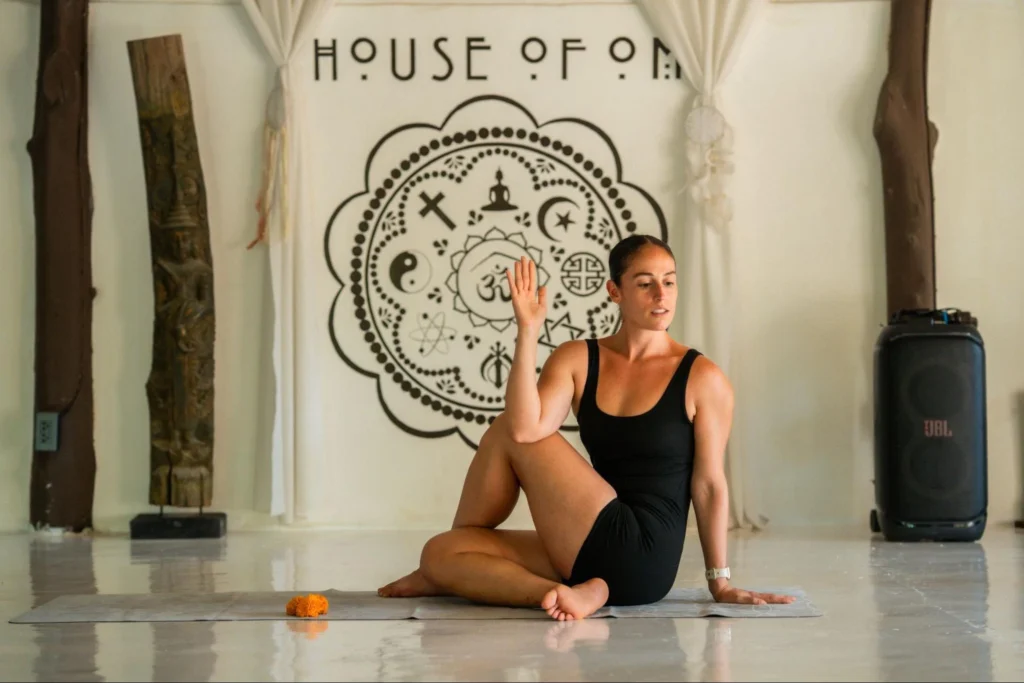
Yoga Alliance’s published standards define a 200-hour program across four educational categories rather than prescribing a style:
| Category | What it covers |
|---|---|
| Techniques, Training and Practice | Asana, pranayama, meditation, and how to practice and teach them |
| Anatomy and Physiology | How the body moves, individual variation, and safe adaptation |
| Yoga Humanities | History, philosophy, and ethics |
| Professional Essentials | Teaching methodology, professional conduct, and the business of teaching |
Two schools can meet the same standard with quite different style emphases, which is why the category framework matters more than the course title when you are comparing programs.
The same policy sets out how hours may be delivered. Under the RYS 200 standards introduced in February 2020, all 200 hours must be classroom hours, with an option for 40 of those to be delivered as online classroom hours — up to 20 in Anatomy and Physiology and up to 20 in Yoga Humanities. Homework, reading, personal practice, volunteer work, and public classes do not count as instructional hours, and instruction is capped at 14 hours per day.
That gives you a concrete question to ask any school: how are your 200 hours allocated between online and in-person delivery? A program that appears to reach 200 hours by counting self-study is not counting the way the registry counts.
Can You Teach Yoga Immediately After a 200-Hour Training?
| Direct answer
You may be able to pursue entry-level opportunities, but completing a course does not guarantee employment. Studios set their own hiring criteria, and most new teachers begin with cover classes, community sessions, or small groups while building experience. |
What tends to matter alongside the certificate:
- Supervised teaching practice completed during the training
- Ability to hold a room and give clear instruction
- Professional liability insurance, which most studios expect
- References from your training or early teaching
- Willingness to teach within the scope of what you actually studied
That last point deserves emphasis. A general 200-hour training does not qualify anyone to teach every specialty, and claiming otherwise is a professional risk as well as a safety one.
Can Foreigners Teach Yoga in Thailand?
This is where certification and legal permission come apart, and where a lot of published advice is vague in ways that could cause someone real difficulty.
Thailand’s Ministry of Foreign Affairs states the position plainly: foreigners entering Thailand are not permitted to work, regardless of their type of visa, unless they are granted a work permit, and those who intend to work must hold the correct type of visa to be eligible to apply for one.
| What this means for a yoga certificate
No yoga qualification — a school certificate, RYT 200, RYT 500, or anything else — grants permission to work in Thailand. Those are professional credentials issued by a membership organization. Work authorization is granted by Thai authorities and depends on your visa category and a work permit, not on your training. |
For employment-based work, the Ministry describes a Non-Immigrant Visa Category “B” route, applied for at a Royal Thai Embassy or Consulate-General, with the holder needing to be granted a work permit before starting work. The process typically involves a prospective employer in Thailand.
Because arrangements vary considerably — employment versus self-employment, paid versus unpaid, in-person versus online, short-term versus ongoing — the only reliable approach is to confirm your specific situation with the relevant authorities before accepting work.
| Important
Immigration, work-permit, tax, and employment requirements can change and may depend on your nationality, visa status, employer, and type of work. If you plan to teach yoga for payment in Thailand, confirm the current requirements with Thai immigration, the relevant Thai embassy or consulate, the Department of Employment, your employer, or a qualified local professional before accepting work. This article is general information, not legal advice. |
Training in Thailand vs. working in Thailand
These are different activities with different requirements. Completing a teacher training as a student is not the same as taking paid teaching work afterward, and one does not lead automatically to the other.
If your plan is to train in Thailand and then teach in your home country or online from elsewhere, the work authorization question largely does not arise. If your plan is to stay and teach in Thailand, it is the first thing to research — before choosing a school, not after.
What Do Employers Usually Ask For?
Requirements vary by setting and by employer. These are common patterns rather than universal rules.
| Teaching setting | Often asks for |
|---|---|
| Yoga studio | 200-hour training, a teaching audition, sometimes insurance |
| Retreat center | Certification, some teaching experience, references |
| Resort or hotel | Certification, employer approval, and appropriate work authorization |
| Private clients | Recognized training and professional liability insurance |
| Prenatal classes | 200-hour foundation plus a relevant specialization |
| Children’s classes | Yoga qualification plus child-safety awareness |
| Online teaching | Training, insurance, and a reliable teaching setup |
Employers frequently care as much about communication, reliability, and student safety as about the certificate itself. A well-taught audition class often matters more than an extra credential.
Do You Need 300 or 500 Hours to Teach?
| Direct answer
Not usually for entry-level general teaching. The 200-hour is the standard starting qualification. The 300-hour is advanced training taken afterward, and the two together form the 500-hour pathway. |
| Level | Purpose | When it makes sense |
|---|---|---|
| 200-hour | Foundational teacher education | Entry point for most new teachers |
| 300-hour | Advanced study building on a 200-hour | After teaching for a while and identifying a direction |
| 500-hour | Combined foundation and advanced pathway | Longer-term professional development |
Taking a 300-hour immediately after a 200-hour tends to waste much of its value. Advanced training assumes you have taught, encountered real problems, and formed questions worth answering.
What is E-RYT?
E-RYT stands for Experienced Registered Yoga Teacher. It adds documented teaching experience on top of the RYT credential. A new graduate would not hold it, and would not be expected to — it is a designation that accrues with time spent teaching.
Do You Need Specialized Certifications?
For anything outside general classes, usually yes. A general 200-hour training does not automatically qualify someone to teach every population or modality.
Areas that typically call for additional, specific training:
- Prenatal and postnatal yoga
- Children’s yoga
- Adaptive or chair yoga
- Yoga therapy
- Trauma-informed approaches
- Advanced work within a specific lineage
- Specialized breathwork
Teaching outside your training is a professional and safety issue, and it can also affect insurance coverage. Most policies expect you to work within the scope of what you have actually studied.
How to Verify a Yoga Certification Course in Thailand
Before paying a deposit, look the school up in Yoga Alliance’s school directory rather than relying on a badge or logo. It takes about two minutes and is the single most useful check available to you.
- Confirm the school appears in the directory with current registration.
- Check the designation — RYS 200, RYS 300, or both.
- Match the exact course you are booking to the registered program.
- Check the named lead teachers.
- Request the full curriculum with hour allocations by category.
- Ask how many hours of supervised teaching practice are included.
- Ask how the hours split between online and in-person delivery.
- Confirm assessment and attendance requirements.
- Ask what the certificate actually says.
- Confirm accommodation, meals, and what is excluded.
- Read the cancellation and rescheduling terms.
- Check work authorization requirements separately, if you plan to teach in Thailand.
- Arrange insurance before you begin teaching.
A note on similar-sounding registries
Several separate organizations operate under names close to Yoga Alliance and appear in ordinary search results alongside it. They are different bodies with different standards. The nonprofit most studios and insurers recognize is at yogaalliance.org, so check the domain as well as the name when a school links to its credential.
How Much Does Yoga Certification in Thailand Cost?
There is no single Thailand-wide price. Costs depend on the school, location, duration, accommodation standard, meals, facilities, teacher experience, and whether the program is residential or hybrid.
What matters more than the headline number is what it covers. Build the full figure:
- Tuition
- Accommodation, and for how many nights
- Meals, and on which days
- Course materials and any assessment fees
- Flights and local transport
- Travel insurance, and professional insurance before teaching
- Your own Yoga Alliance registration fee, if you choose to register
For House of Om specifically, current pricing varies by accommodation package and by intake. Check the current program page for the latest tuition and room options rather than relying on any figure quoted elsewhere.
House of Om’s Yoga Teacher Training in Thailand
House of Om offers a 200-hour Yoga Teacher Training in Koh Phangan, Thailand. It is a multi-style program described as rooted in Hatha and Vinyasa Flow, with elements of Ashtanga — not a standalone single-style certification.
| Detail | Information |
|---|---|
| Program | 200-Hour Yoga Teacher Training |
| Location | Koh Phangan, Thailand |
| Format | In-person residential |
| Duration | 20 days |
| Style approach | Multi-style — Hatha, Vinyasa Flow, elements of Ashtanga |
| Structure | Week 1 Hatha foundation, Week 2 Vinyasa flow, Week 3 Ashtanga and teaching mastery |
| Assessment | Practical and theoretical exams at the end of training |
| Entry level | All levels welcome, beginners and beyond |
| Accommodation | 19 nights at a beachfront resort |
| Meals | Fresh, Ayurvedic-inspired vegetarian meals with organic ingredients |
The training includes alignment workshops, hands-on adjustments, injury-prevention biomechanics, sunrise classes, afternoon labs, and mentor feedback, alongside shatkarma, mantra and meditation, Yoga Nidra, Ayurveda, kirtan, sound healing, and Voice Activation.
What certification does House of Om provide?
House of Om states that successful completion earns an internationally recognized Yoga Alliance certification, following practical and theoretical exams, and that its instructors prepare students for the exam and certification.
Applying the distinction set out earlier: the school issues your certificate on completion. Individual Yoga Alliance registration is a separate step you apply for yourself afterward, with its own fee. Confirm the school’s current registration status and the exact credential associated with your course before enrolling — advice that applies to every school, not only this one.
The hybrid alternative
House of Om also offers a 200-hour Hybrid Yoga Teacher Training in Koh Phangan, combining self-paced online study with a 10-day in-person immersion and 9 nights of accommodation. Students can start online or start in person, and House of Om states that the final 200-hour certificate is issued after both components are completed.
| Feature | 200-Hour YTT | 200-Hour Hybrid YTT |
|---|---|---|
| Location | Koh Phangan | Koh Phangan |
| Format | In-person | Online plus in-person |
| In-person period | 20 days | 10 days |
| Online component | No | 200+ hours of video, 20 modules, 250+ lessons, 300+ quizzes |
| Accommodation | 19 nights | 9 nights / 10 days |
| Meals | Fresh, Ayurvedic-inspired vegetarian | 2 meals per day on training days |
| Best for | Full immersion | Flexible learners |
If you are considering a hybrid or online format anywhere, ask how the hours are divided between online and in-person delivery, and confirm that the split matches the credential you want. Get the answer in writing before paying a deposit.
Who House of Om may and may not suit
It may suit someone who wants a multi-style foundation, a residential setting in Koh Phangan, exposure to Hatha, Vinyasa, and Ashtanga within one curriculum, and teaching methodology alongside anatomy and philosophy.
It is likely not the right fit for someone seeking a single-lineage specialist program, a purely online credential, a specialty qualification such as prenatal yoga, or a training that comes with a work arrangement in Thailand attached. Those are different products, and being clear about that saves everyone time.
Can You Teach Yoga Online After Certification?
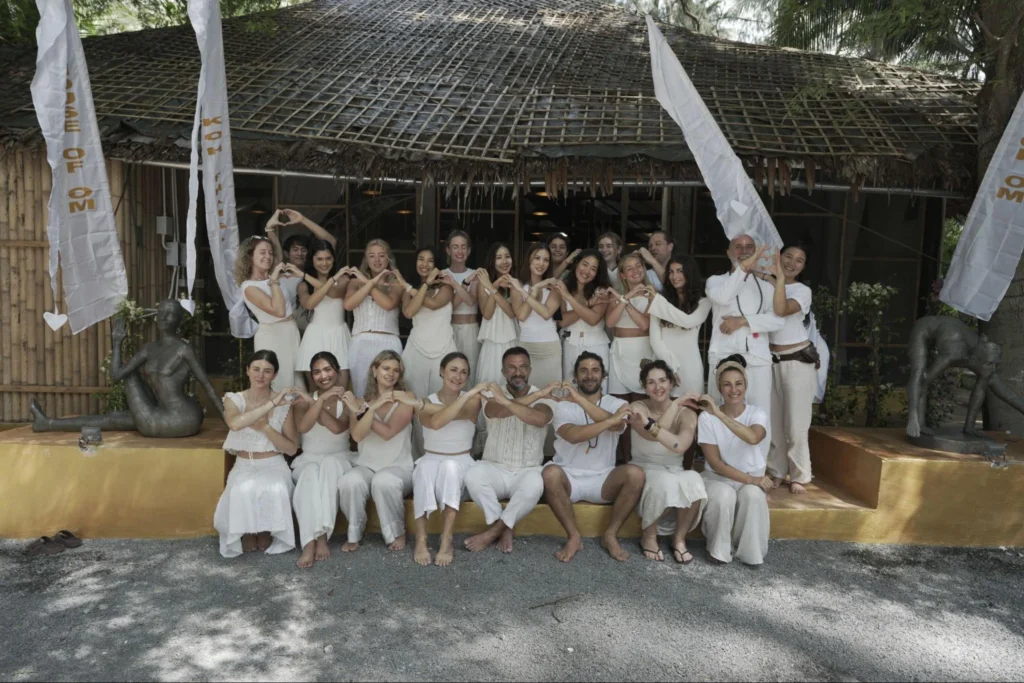
A 200-hour training can provide the foundation, but online teaching raises considerations a certificate does not resolve:
- Whether your visa permits the activity if you are physically in Thailand
- Where your students are located and what that means for your obligations
- How you receive payment, and any tax consequences
- Whether your insurance covers online instruction
- Privacy and recording consent
- Teaching skills specific to a camera — you cannot observe students the same way
House of Om also offers an online 200-hour program for people who cannot travel. It is a different experience from residential training — hands-on adjustment in particular is difficult to learn remotely — but it removes the travel constraint.
Checklist Before You Enroll
❑ School appears in the Yoga Alliance directory with current registration
❑ The exact course you are booking matches the registered program
❑ Format confirmed — in person, hybrid, or online
❑ Total hours confirmed, with the online and in-person split
❑ Full curriculum received with hour allocations
❑ Supervised teaching practice hours confirmed
❑ Assessment and attendance requirements understood
❑ Lead teachers named for your dates
❑ Certificate wording confirmed
❑ RYT eligibility understood — and the separate application fee budgeted
❑ Accommodation and meals confirmed
❑ Current price confirmed, with exclusions listed
❑ Cancellation and rescheduling terms read in full
❑ Insurance arranged before you begin teaching
❑ Work authorization researched separately, if teaching in Thailand
The Short Version
For most people, a 200-hour teacher training at a school you have verified in the registry is the right starting point. After graduating, you can decide whether to register as an RYT 200, continue toward advanced training, or simply begin teaching where your qualification is accepted.
The distinction worth carrying with you: a yoga credential answers the question “have you completed recognized training?” It does not answer “are you legally permitted to work here?” If you plan to teach for payment in Thailand, that second question needs its own research, with the relevant authorities, before you commit to anything.
If a multi-style foundation in Koh Phangan fits what you are looking for, the current Thailand program details and student experiences at House of Om are the places to start.
Frequently Asked Questions
What certification do I need to teach yoga in Thailand?
A 200-hour yoga teacher training is the usual starting qualification. Many employers prefer training from a Yoga Alliance Registered Yoga School, and some teachers register as RYT 200 afterward. Work authorization is a separate requirement.
Is RYT 200 a Thai government license?
No. RYT 200 is a voluntary professional credential from Yoga Alliance, a membership organization. It is not issued by any government and does not grant permission to work in Thailand or anywhere else.
Can I teach yoga in Thailand with a 200-hour certificate?
A 200-hour certificate may satisfy an employer’s training requirement. Separately, Thailand’s Ministry of Foreign Affairs states that foreigners are not permitted to work regardless of visa type unless granted a work permit, so confirm your situation before accepting paid work.
Is Yoga Alliance registration required to teach yoga?
Not legally. It is a voluntary credential. Whether you need it depends on the employer — some studios and platforms ask for it, others do not. It is a threshold many employers use rather than a legal requirement.
What is the difference between RYS 200 and RYT 200?
RYS 200 refers to the school — a Registered Yoga School at the 200-hour level. RYT 200 refers to the individual teacher who completed qualifying training and registered themselves. A school cannot issue you an RYT credential.
Can foreigners teach yoga in Thailand?
Only with appropriate authorization. Thailand’s Ministry of Foreign Affairs states that foreigners entering Thailand are not permitted to work, regardless of visa type, unless granted a work permit, and must hold the correct visa to be eligible to apply.
Do I need a work permit to teach yoga in Thailand?
For paid work, this needs to be confirmed for your specific situation. Official guidance indicates that working requires both the correct visa category and a work permit. Confirm with Thai immigration, an embassy, the Department of Employment, or a qualified local professional.
Do I need RYT 500 to teach yoga?
Not usually for entry-level general teaching. The 200-hour is the standard starting qualification. RYT 500 is an advanced pathway built on further training, better suited to teachers who have already been teaching for a while.
Can I teach yoga online after a 200-hour training?
The training can provide the foundation, but consider insurance coverage for online instruction, where your students are located, payment and tax questions, and whether your visa permits the activity if you are physically in Thailand.
How do I verify a Yoga Alliance school in Thailand?
Search the school by name in the directory at yogaalliance.org, then compare the listing with the school’s website, named teachers, course dates, and location. Check the domain as well as the name, since similarly named registries exist.
Does House of Om offer yoga certification in Thailand?
House of Om offers a 200-hour Yoga Teacher Training in Koh Phangan and a 200-hour hybrid option. The school states that successful completion earns an internationally recognized Yoga Alliance certification following practical and theoretical exams.
What does House of Om’s Thailand 200-hour program include?
A 20-day multi-style training rooted in Hatha and Vinyasa Flow with elements of Ashtanga, structured across three weeks by style, with 19 nights of accommodation, vegetarian meals, and practical and theoretical exams.