
Most of what determines how your first week goes has nothing to do with yoga. It comes down to whether your documents are sorted, whether you packed for the actual climate, whether you arrived rested, and whether you have a realistic picture of what the days involve.
| The short version
To prepare for YTT in Thailand, build a consistent practice in the weeks beforehand, get your travel documents and arrival logistics organized early, pack light and climate-appropriate, familiarize yourself with basic terminology, and arrive rested. You are not expected to arrive good at yoga. You are expected to arrive able to participate. |
This guide covers preparation across six areas: booking decisions, body, mind, study, packing, and travel. It uses House of Om’s Thailand program as a worked example where specifics help.
What to Prepare, at a Glance
| Area | What to do before you arrive |
|---|---|
| Before booking | Check dates, format, what is included, and what is not |
| Physical | Build a consistent practice — regularity matters more than intensity |
| Mental | Set realistic expectations for a structured, intensive schedule |
| Study | Get familiar with common terminology. Familiarity, not mastery |
| Packing | Light, breathable, quick-drying, and less than you think |
| Travel | Documents, entry requirements, connections, insurance, buffer days |
| Logistics | Confirm accommodation details and raise dietary needs early |
What Should You Do Before Booking?
Preparation starts before you pay a deposit. Confirm these with any school:
- Training dates, and whether the full period is genuinely free in your calendar
- Course length and format — fully in person, or a hybrid structure
- Location, and what getting there actually involves
- Accommodation options and what each includes
- Meals — what is provided and on which days
- Certification — what you receive and on what conditions
- The daily schedule, so you know the shape of a training day
- Total cost, including what sits outside the program price
Getting the answers in writing is worth the extra email. It also tells you something about how a school communicates before you have committed anything.
Do You Need Yoga Experience Before YTT?
| Direct answer
It depends on the school. Requirements are set by each program rather than centrally, so check the one you are considering. Many trainings accept complete beginners. |
Three things are worth separating, because they routinely get confused:
| What it means | Example | |
|---|---|---|
| Requirement | Something you must meet to enroll or be certified | A minimum age |
| Recommendation | Something that makes the training easier but is not mandatory | A few months of prior practice |
| Assumption | Something people believe is required but usually is not | Advanced flexibility |
As a worked example: House of Om states that its 200-hour yoga teacher training in Thailand welcomes all levels, beginners and beyond, and is designed for complete beginners, dedicated practitioners, and people curious to explore yoga. The school also states that teaching ambitions are not required to join — some students attend to deepen their personal practice.
On preparation, House of Om advises learning some basic foundation and having a few months of consistent practice before the course. That is framed as advisable rather than mandatory. Separately, the school states that participants must be at least 18 years old at the time of enrollment, described as a requirement for Yoga Alliance certification.
If you have been putting off enrolling because you think you are not ready, that distinction is worth sitting with. Being eligible and feeling prepared are different things, and only one of them is a barrier.
How Should You Physically Prepare?
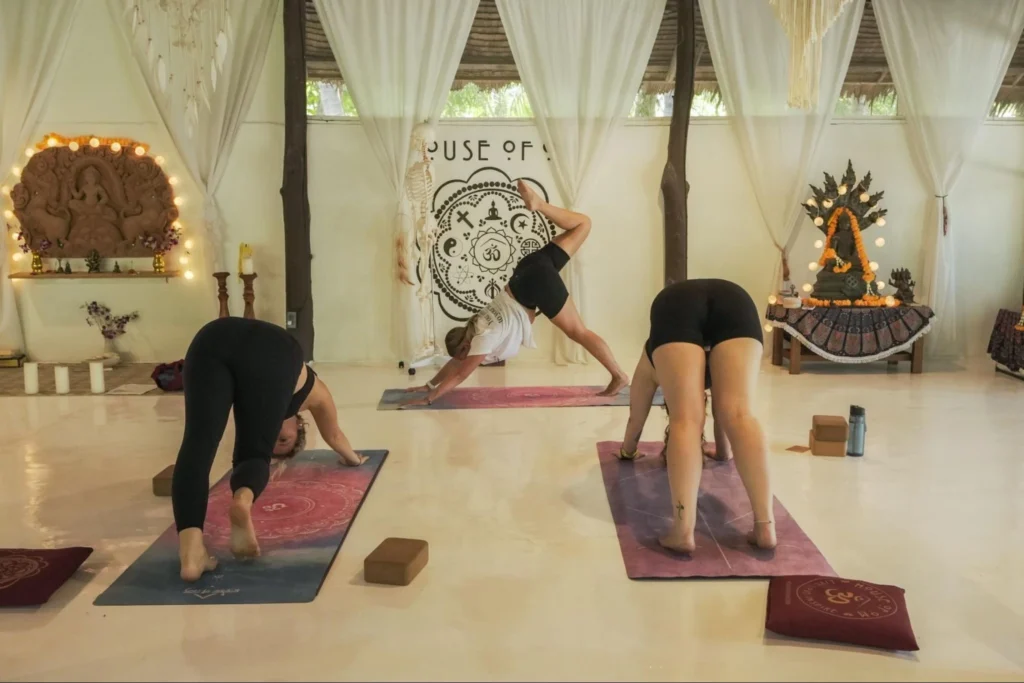
Consistency matters more than capability. Nobody is assessing the depth of your forward fold.
Build a regular practice
- Practice several times a week rather than occasionally and hard
- Spend time on foundational postures rather than chasing advanced ones
- Get comfortable following spoken instruction without watching a screen
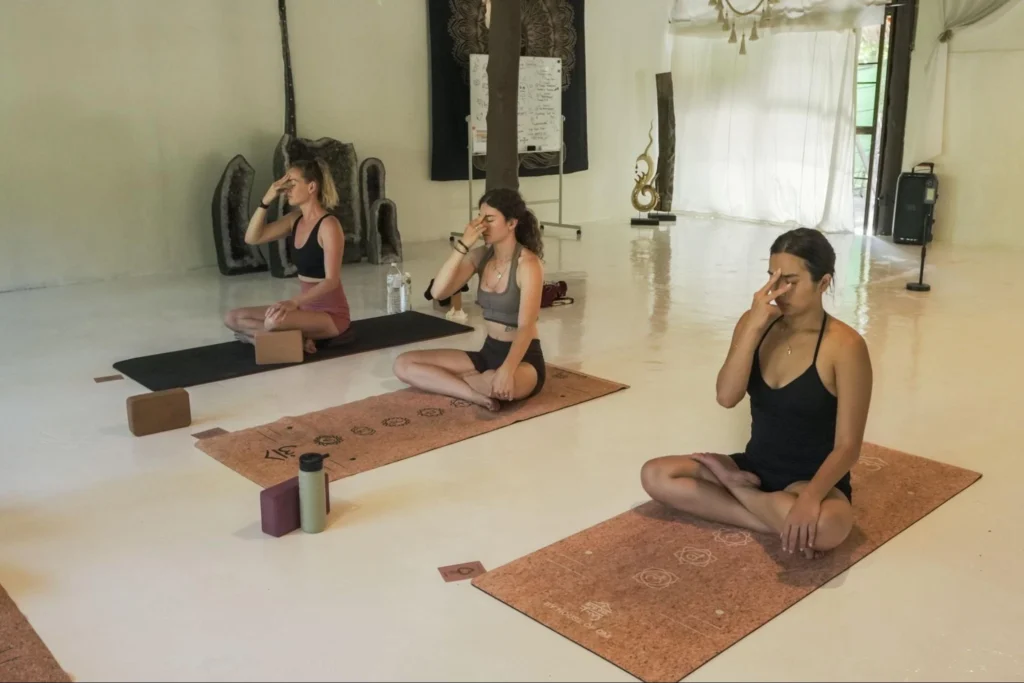
- Include some breathwork, even a few minutes at a time
- Practice sitting still — harder than most people expect, and it comes up constantly
Build up your volume gradually
If your usual practice is one class a week, the adjustment is the amount rather than the difficulty of any individual posture. In the weeks before you travel, gradually extend your sessions. Going from an hour to ninety minutes occasionally is more useful preparation than adding difficult shapes.
Prioritize rest
This is the most underrated item on any preparation list. Training days start early, and the first week is also when you are adjusting to a new place, a new group, and a new routine. Arriving already depleted from clearing your desk at work makes those days considerably harder than they need to be.
Easing off intense workouts in the final week before you travel is usually more helpful than adding them.
How Should You Mentally Prepare?
A teacher training is a course, not a retreat. Expect study, assessment, and being observed while you teach.
Things worth being ready for:
- Being corrected, sometimes in front of other people
- Teaching before you feel ready to teach
- Encountering unfamiliar terminology and concepts
- Following a structured daily routine you did not design
- Studying consistently rather than only practicing
- Working closely with a group for the full duration
People who find this hardest are often those who are competent in their working lives and unused to being visibly new at something. Knowing that in advance takes some of the sting out of it.
What Should You Study Beforehand?
Aim for familiarity, not mastery. The point is to recognize terms when you hear them, so your attention goes to the content rather than the vocabulary.
| Topic | What is useful before you arrive |
|---|---|
| Sanskrit terms | Recognize the names of common postures. Do not attempt fluency |
| Common asanas | Know the shapes you are likely to meet daily |
| Basic anatomy | Major muscle groups, the main joints, and how the spine moves |
| Pranayama | Know what the term refers to and try a simple technique |
| Meditation | Some experience of sitting practice, however short |
| Philosophy | Read an introduction once, without trying to memorize anything |
| Teaching concepts | Notice how your own teacher structures a class |
That last one is the highest-return preparation available and almost nobody does it. For a month before you travel, attend classes as an observer as well as a participant. Watch how the teacher opens, how they build toward a peak, how they handle someone struggling, what they say when the room is tired.
You will then start the teaching methodology sessions with real examples in your head instead of a blank page. It costs nothing.
None of this is an admission requirement anywhere. It simply makes the first week easier.
What to Pack for Yoga Teacher Training in Thailand
Pack light. You will live in practice clothes, and laundry is easier to arrange than luggage is to carry.
Clothing
- Comfortable practice clothing you can move freely in — two or three sets is usually enough
- Breathable, quick-drying fabrics; heavy cotton stays damp in humidity
- Lightweight everyday clothing for downtime
- One layer for early mornings and air-conditioned spaces
- Rain protection
- Modest clothing that covers shoulders and knees for temple visits
- Comfortable sandals or shoes
Study and personal items
- A notebook and pens — you will write more than you expect
- Reusable water bottle
- Sun protection
- Insect protection
- Personal toiletries
- Any personal medications you need, in sufficient quantity
- Phone, charger, and a power adapter if your plugs differ
Documents
- Passport, with a photo of it stored separately
- Booking confirmations for the course and your travel
- Travel insurance details
- Emergency contacts, written down rather than only on your phone
Nothing on this list is mandated by any school unless they tell you so. Check what your program provides before buying anything.
What House of Om Provides in the Welcome Bag

Worth knowing before you shop. House of Om states that every student receives a House of Om welcome bag containing:
- Training materials
- A neti pot
- A mala bead
- A sarong
That means you do not need to buy those items specifically for the training. A sarong in particular is a genuinely useful item in a tropical climate, and a neti pot is not something most people own already.
For anything else — mats, props, manuals — ask what is supplied rather than assuming either way.
What Should You Expect From the Daily Schedule?
Knowing the shape of a training day is the difference between adjusting in two days and adjusting in a week. House of Om publishes the following example schedule for its Thailand program:
| Time | Session |
|---|---|
| 06:00 – 06:15 | Shatkarma |
| 06:15 – 06:30 | Chanting |
| 06:30 – 07:45 | Asana and pranayama |
| 08:00 – 08:45 | Morning lab |
| 08:45 – 10:00 | Breakfast |
| 10:00 – 12:30 | Jnana yoga |
| 12:00 – 13:15 | Yoga Nidra |
| 13:15 – 14:30 | Lunch |
| 14:30 – 15:30 | Teaching methodology |
| 15:30 – 16:45 | Alignment and adjustment |
| 17:00 – 18:00 | Evening sadhana |
House of Om notes that the daily schedule is subject to change at the teacher’s discretion, so treat this as an illustration of the rhythm rather than a fixed timetable.
The practical implications for preparation:
- Shift your sleep schedule earlier in the week before you travel, not on arrival
- Expect a full day, most days, with study and practice interleaved
- Free time exists but is limited — plan sightseeing for before or after the course
- Rest periods are there to be used, not filled
What Does the Training Cover?
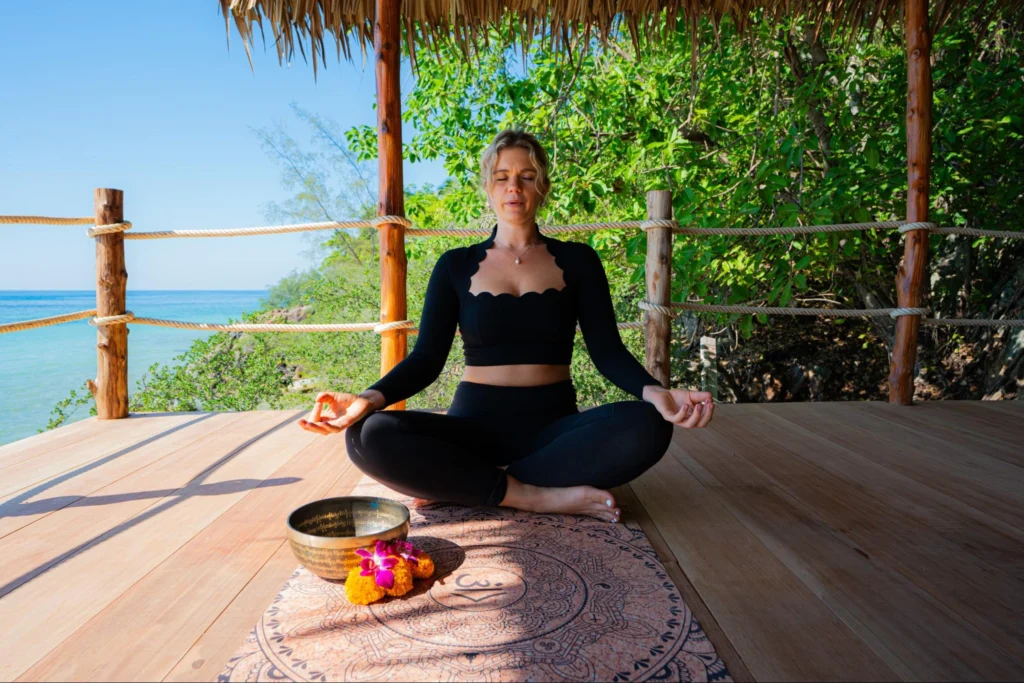
Knowing the structure helps you prepare for the right things. House of Om organizes its Thailand program by style, one focus per week:
| Stage | Focus |
|---|---|
| Week 1 | Hatha yoga foundation |
| Week 2 | Vinyasa flow exploration |
| Week 3 | Ashtanga yoga and teaching mastery |
| End of training | Practical and theoretical exams |
The training is described as rooted in Hatha and Vinyasa Flow, with elements of Ashtanga included to deepen practice. It includes daily practice, alignment workshops, hands-on adjustments, injury-prevention biomechanics, sunrise classes, afternoon labs, and supportive mentor feedback.
Alongside the core work, the program includes shatkarma, mantra and meditation, Yoga Nidra, Ayurveda, kirtan, a sound healing journey, and Voice Activation — described as helping students use their voice with confidence, clarity, and intention, communicate effectively, lead with presence, and develop a natural teaching voice.
The exams at the end are worth noting when planning travel. Booking a departure for the final day leaves no margin if anything runs long.
How Intensive Is a 200-Hour Training?
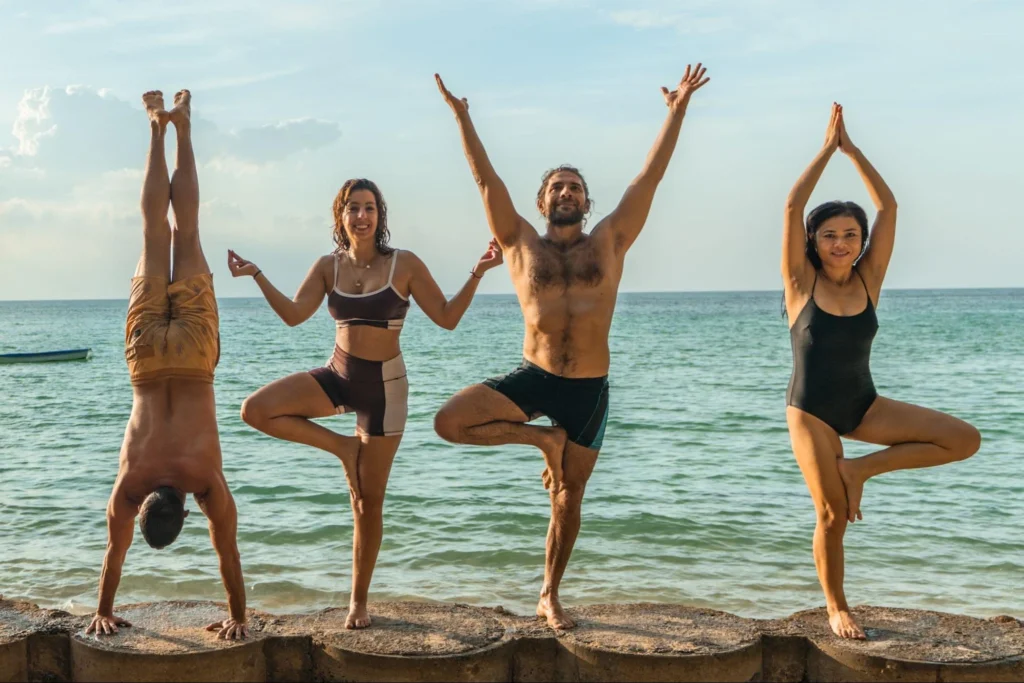
It is structured and immersive rather than uniformly hard, and how it lands varies considerably between people.
What is consistent is the shape: long days combining physical practice, theory, teaching methodology, practice teaching, study, and feedback, running continuously for the duration. Some people find the pace energizing. Others find the middle stretch demanding, once the early starts have accumulated and the teaching practice starts feeling real.
Neither reaction means anything is wrong. Planning for both is more useful than expecting one.
How to Prepare for Teaching Practice
This is the part most people underprepare for, because it is the part that is least like practicing yoga.
Things you can work on beforehand, at no cost:
- Speaking clearly and at a steady pace
- Describing a movement out loud while someone does it
- Demonstrating a posture while talking
- Watching how experienced teachers give instructions
- Getting comfortable being watched
- Receiving feedback without defending yourself
House of Om’s Thailand program includes teaching methodology, teaching mastery in the third week, alignment and hands-on adjustments, and mentor feedback. Arriving already comfortable with the sound of your own voice giving instructions makes those sessions considerably more productive.
What Should You Expect From Accommodation and Food?
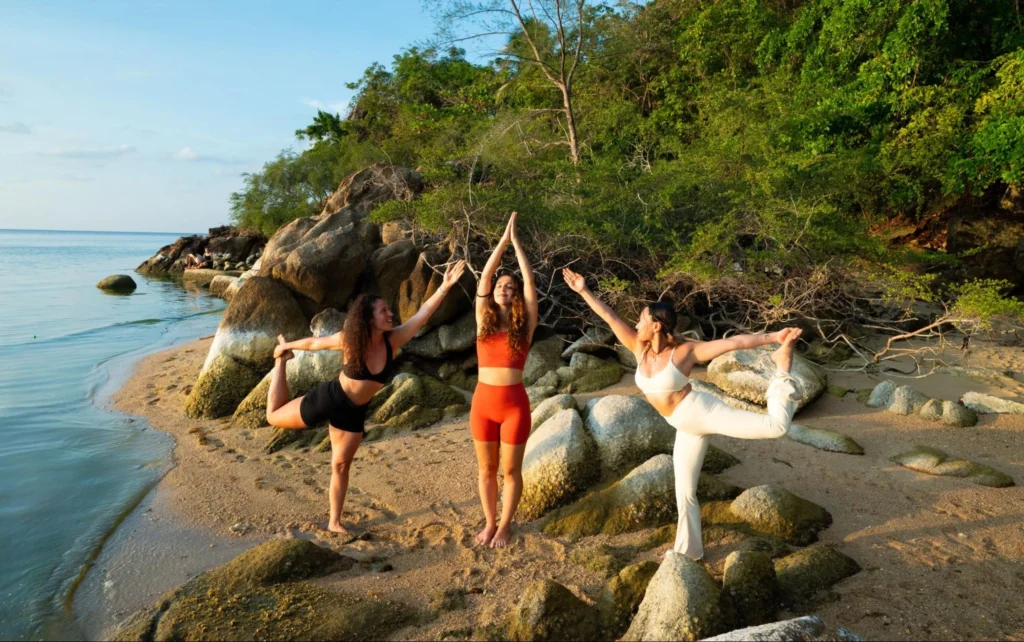
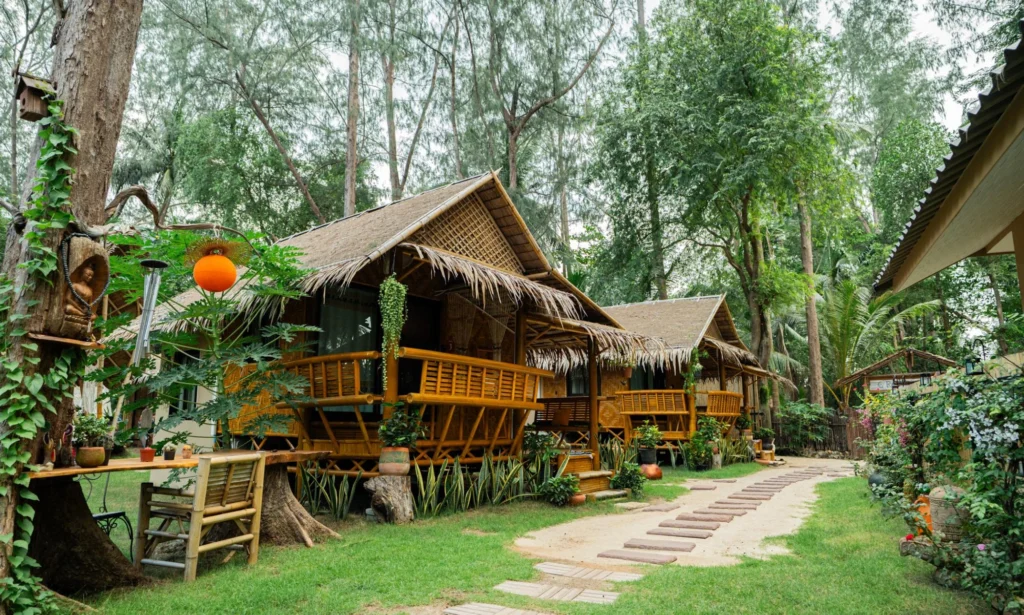
For House of Om’s Thailand program, the school states that students stay for 19 nights at a beachfront resort surrounded by tropical nature, with the ocean and island landscapes just outside the door. Several accommodation options are available.
Meals are described as fresh, Ayurvedic-inspired vegetarian meals prepared with organic ingredients.
Two things to sort before you travel:
- Dietary requirements. Raise allergies and restrictions at the inquiry stage rather than on arrival. A kitchen catering for a group needs notice, and a serious allergy is not something to mention at the first meal.
- Room choice. This is a recovery decision as much as a budget one. Shared rooms build the group quickly; private rooms give you somewhere to decompress when the middle of the course gets demanding.
For anything not stated on the program page — laundry, facilities, transfers — ask before you travel rather than assuming.
What Should You Know About the Training Location?
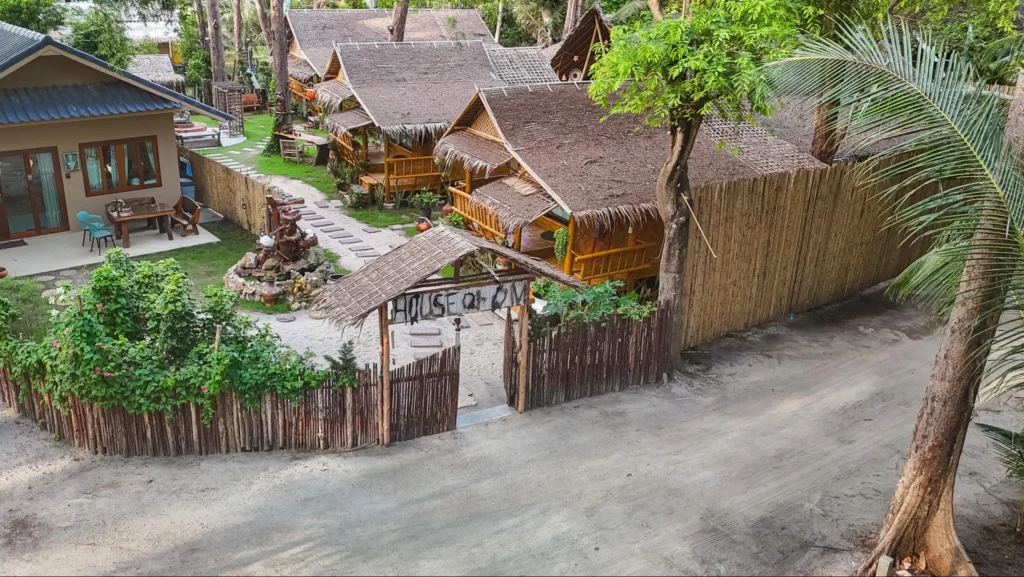
House of Om’s Thailand training takes place on Koh Phangan. The school describes the island as Thailand’s spiritual hub, states that 70 percent of it is protected national park, and describes its resort as beachfront, with a tropical setting, palm trees, sea breeze, and rooms with access directly to the sand.
For preparation purposes, the useful point is that this is an island training rather than a city one. That affects two things: how you get there, and what is available locally. Bring anything you specifically depend on rather than assuming you can buy it on arrival.
How to Prepare for Travel
Sort these in order, and start earlier than feels necessary.
- Confirm your training dates and that your place is secured before booking anything else.
- Check your passport validity, and renew now if it is anywhere near expiring.
- Confirm current entry requirements for your nationality with official Thai government sources. Requirements change, and this is not something to take from a blog — including this one.
- Book travel around the confirmed course dates, allowing buffer at both ends.
- Arrange travel insurance, and check whether it covers course fees rather than only medical costs.
- Save booking confirmations offline and keep key contacts accessible.
| One current requirement worth knowing about
Thailand introduced a Digital Arrival Card that foreign nationals complete online before arrival, replacing the previous paper form. It is issued through an official government portal and there is no fee. Paid lookalike sites exist, so use the official portal linked in the sources section and check the current requirements and timing window yourself before you travel. |
Booking flights before confirming a place on a course is the most common and most expensive mistake in this sequence.
How to Prepare for the Climate
Thailand does not have one uniform climate. Thailand’s National Climate Center notes that the country’s weather is shaped by seasonal monsoons and that conditions differ between regions — the northeast monsoon from around mid-October brings cool dry air to much of the country while bringing abundant rain along the eastern coast of the southern region.
Since Koh Phangan sits on that eastern coast, general “best time to visit Thailand” advice does not transfer cleanly. Check current local conditions for your specific travel dates rather than relying on national generalizations.
Practical preparation regardless of month:
- Lightweight, breathable clothing
- Rain protection
- Sun protection
- Consistent hydration
- Quick-drying fabrics — humidity slows everything down
- Comfortable footwear you can walk in
Common Mistakes Before YTT
- Trying to become very flexible beforehand. Flexibility is not what is being assessed.
- Overtraining in the weeks before arrival, then starting depleted.
- Treating rest as optional during preparation.
- Overpacking, then carrying it across multiple transfers.
- Not reading the training schedule before arriving.
- Leaving travel logistics until the last few weeks.
- Assuming the course is mostly physical yoga.
- Not preparing for the amount of study involved.
- Being unprepared to receive feedback in front of others.
- Leaving passport renewal or documents until the final month.
- Booking a departure flight for the day the training ends.
- Planning to work remotely during the course.
One Week Before Your Training
❑ Confirm travel documents are in order
❑ Confirm your booking and training dates
❑ Review accommodation details
❑ Check current local weather for your dates
❑ Pack — then remove a third of it
❑ Prepare practice clothing
❑ Organize any study materials or notes
❑ Ease off intense workouts
❑ Save booking confirmations offline
❑ Store important contact information somewhere accessible
❑ Prioritize sleep this week specifically
The Day Before Your Training Starts
❑ Rest, and avoid a late night
❑ Hydrate
❑ Eat normally — this is not the moment to change your diet
❑ Organize your belongings and lay out clothes for the morning
❑ Review the schedule so the first morning is not a surprise
❑ Set an alarm, and a backup
❑ Set realistic expectations for day one
First-Day Mindset
You do not need to know anything yet. That is the point of a training.
What helps on day one is being curious rather than impressive, asking questions when something is unclear, participating rather than observing, and accepting that you will be a beginner at teaching regardless of how long you have practiced.
If you are still deciding between destinations rather than preparing for a confirmed booking, our guide for beginners considering a first training in Bali covers House of Om’s Indonesian options.
House of Om Thailand Training Dates
The program page lists the following intakes for the 200-hour training in Koh Phangan:
| 2026 | 2027 |
|---|---|
| 22 Aug – 11 Sep | 02 Jan – 21 Jan |
| 24 Sep – 14 Oct | 03 Feb – 22 Feb |
| 27 Oct – 16 Nov | 07 Mar – 26 Mar |
| 29 Nov – 19 Dec | 08 Apr – 27 Apr |
| 10 May – 29 May | |
| 11 Jun – 30 Jun | |
| 13 Jul – 01 Aug | |
| 14 Aug – 02 Sep | |
| 15 Sep – 04 Oct | |
| 17 Oct – 05 Nov | |
| 18 Nov – 07 Dec |
These are the dates shown in the supplied program information. Availability changes, so confirm current dates and remaining places before planning travel.
What If You Need a More Flexible Format?
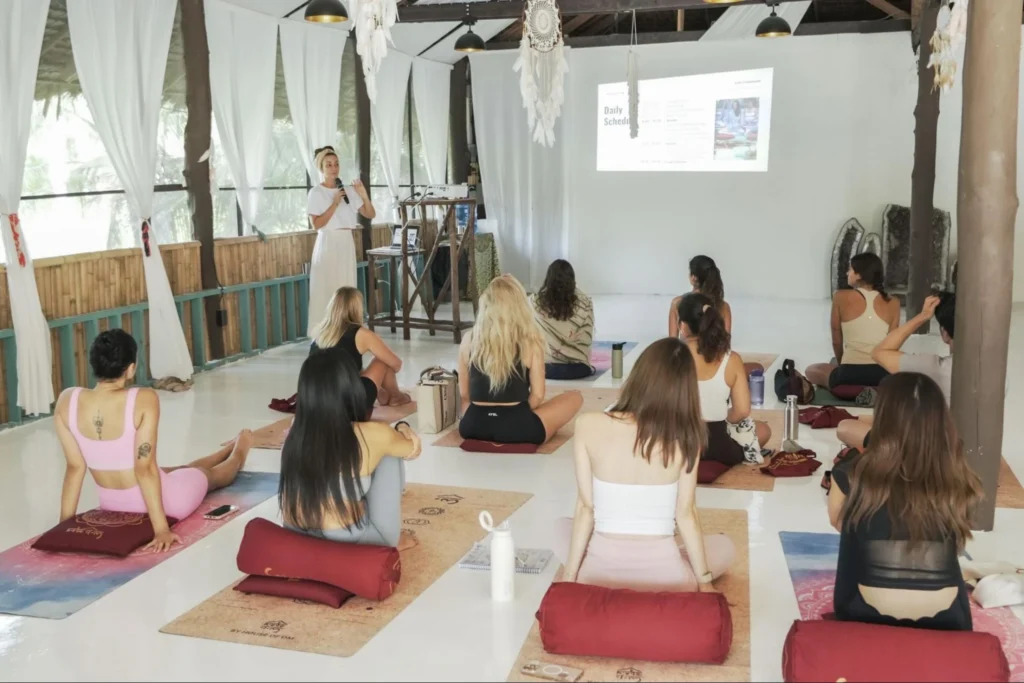
If a continuous three-week period is difficult to arrange, House of Om also offers a 200-hour hybrid yoga teacher training in Thailand, also on Koh Phangan. It combines online theory with a 10-day in-person immersion and 9 nights of accommodation.
The hybrid offers two starting options: begin online with the theory modules and then join the in-person immersion, or begin with the immersion and complete the theory afterward. Both components must be completed, and House of Om states that the 200-Hour Yoga Alliance Certificate is received after finishing both.
Preparation differs slightly for the hybrid. The online portion depends entirely on your own discipline, so the honest question to ask yourself is whether you finished the last few online courses you started. The in-person block is shorter, which means less time away but a more concentrated pace while you are there.
The hybrid is a separate program with its own dates, pricing, accommodation, and meal arrangements. Compare it on its own page rather than assuming figures carry across.
Final Preparation Checklist
Before booking
❑ Choose your location
❑ Compare training formats
❑ Check available dates against your calendar
❑ Review what is included and excluded
❑ Review accommodation options
❑ Calculate the total cost
Before travel
❑ Organize documents and check passport validity
❑ Confirm entry requirements with official sources
❑ Plan transportation with buffer at both ends
❑ Arrange travel insurance
❑ Pack appropriately for the climate
❑ Prepare physically with consistent practice
❑ Prepare mentally for an intensive schedule
❑ Confirm dietary requirements in writing
Before training begins
❑ Rest properly
❑ Hydrate
❑ Review basic terminology
❑ Prepare your notebook
❑ Be ready for teaching practice
❑ Be open to feedback
FAQs
How do I prepare for a yoga teacher training in Thailand?
Build a consistent practice in the weeks beforehand, organize travel documents and confirm entry requirements early, pack light and climate-appropriate, shift your sleep schedule earlier, and arrive at least a day before the course starts.
What should I pack for yoga teacher training in Thailand?
Two or three sets of quick-drying practice clothing, lightweight everyday clothes, rain and sun protection, insect protection, a reusable water bottle, a notebook, comfortable footwear, personal medications, and your travel documents.
Do I need yoga experience before YTT?
It depends on the school. House of Om states that its Thailand training welcomes all levels including complete beginners, and advises learning some basic foundation and having a few months of consistent practice beforehand — framed as advisable rather than required.
How physically fit do I need to be?
Fitness matters less than consistency. Regular practice in the weeks before you travel prepares you better than intensive training does. Flexibility is not a prerequisite and is not what teacher training assesses.
What should I study before yoga teacher training?
Aim for familiarity rather than mastery: common Sanskrit posture names, basic anatomy, and what pranayama refers to. The most useful preparation is watching how your own teacher structures a class.
Is a 200-hour yoga teacher training difficult?
It is structured and immersive rather than uniformly hard, and experiences vary. Long days combine practice, theory, teaching methodology, and study. Many people find the middle stretch the most demanding.
What should I expect from the daily schedule?
House of Om publishes an example schedule for its Thailand program running from 06:00 with shatkarma and chanting through to an evening session, with practice, study, and teaching work across the day. The school notes the schedule is subject to change at the teacher’s discretion.
How should I prepare mentally?
Expect to be corrected, to teach before you feel ready, and to follow a routine you did not design. Setting realistic expectations beforehand makes the first week easier than assuming it will feel like a holiday.
What does House of Om provide in the welcome bag?
House of Om states that every student receives a welcome bag containing training materials, a neti pot, a mala bead, and a sarong. That means you do not need to buy those items specifically for the training.
Does House of Om offer a hybrid option in Thailand?
Yes. The 200-hour hybrid training in Koh Phangan combines online theory with a 10-day in-person immersion and 9 nights of accommodation. Students can start online or start in person, and both components must be completed.