
| How does online yoga teacher certification work?
Online yoga teacher certification usually involves completing an online training program, meeting the school’s requirements, and receiving a completion certificate. A school certificate is not automatically the same as an individual Yoga Alliance registration. Before enrolling, verify the school’s status, how hours are delivered, how teaching practice is assessed, and exactly what credential the course leads to. |
Online yoga teacher certification usually works like this: you complete an online training program, meet the school’s requirements, and receive a completion certificate from that school.
What that certificate means afterward is where most of the confusion sits. A school-issued certificate is not automatically the same as an individual professional registration, and “certified” in yoga marketing does not mean licensed in any legal sense.
What Is Online Yoga Teacher Certification?
It refers to completing a yoga teacher training delivered fully or partly online and receiving a certificate from the school on successful completion.
Terminology varies considerably between providers. Some schools say “certification,” some say “certificate of completion,” some imply an external credential. Those are not equivalent, and the difference is worth pinning down before you pay.
| One thing to be clear about
Being “certified” by a yoga school is not the same as being licensed. No yoga qualification, online or in person, is a government license. Employment, insurance, and — if you teach abroad — work authorization requirements are set separately and vary by country and employer. |
How Does Online Yoga Teacher Certification Work?

A typical pathway may include:
- Enrolling in an online yoga teacher training program
- Completing the required lessons and coursework
- Completing practice and teaching components
- Completing assessments
- Meeting any attendance or live-participation requirements
- Receiving the school-issued completion certificate
- Deciding whether to apply for optional professional registration
Steps five and seven are the ones people most often overlook. Some online programs include live components that are not optional, and registration after graduation is a separate application with its own fees.
Is an Online Yoga Certificate the Same as RYT 200?
| Direct answer
No, not necessarily. A school certificate confirms you completed that school’s program. RYT 200 is an individual registration with Yoga Alliance, applied for separately after graduating and subject to its current requirements. |
The distinction runs through this entire topic. RYS refers to a school; RYT refers to an individual teacher. A school cannot hand you an RYT credential — completing a qualifying program may make you eligible to apply, and the application is yours to submit.
Yoga Alliance publishes the associated costs openly — a one-time application fee and an annual membership. These are paid to Yoga Alliance rather than to your school, and the annual fee continues for as long as you hold the credential.
For a fuller explanation of the credential framework, see our guide to Yoga Alliance 200-hour teacher training.
What Does “Yoga Alliance Online Teacher Training” Actually Mean?

This is the section worth reading most carefully, because the answer is less settled than most marketing suggests.
Yoga Alliance’s online learning standards have changed over time, which can make older information confusing.
Under the current standards, RYSs can offer training fully in person, fully online, or as a combination. For programs with distance learning, at least 15% of the total hours must be taught synchronously, meaning teachers and students interact live online. For a 200-hour program, that means at least 30 live online hours.
Earlier standards, introduced in 2020, allowed up to 40 online classroom hours under different requirements. This older information is still available online, which explains some conflicting answers.
If you’re considering an online 200-hour training, check that the school is currently RYS-registered and ask how the program is delivered, including live teaching, teaching practice, feedback, and assessment.
| What this means for you as a prospective student
Do not take any school’s summary of Yoga Alliance policy at face value — including this one. If registration matters to you, confirm the current position directly with Yoga Alliance and ask the school, in writing, exactly how its hours are delivered and which credential pathway the program is registered under. A program described as “fully online” is not automatically a problem, but it is a question worth asking. |
Certification Verification Checklist

Work through this before paying a deposit. Every item is answerable by a school that is running a serious program.
❑ The school’s registration status, verified independently rather than from a badge on its website
❑ The exact number of training hours, and how they are counted
❑ How much is live and how much is recorded
❑ Whether live sessions are required or optional
❑ How teaching practicum is delivered and assessed
❑ How much individual feedback you receive, and from whom
❑ How much direct instructor access is included
❑ The anatomy content and how far it goes
❑ The teaching methodology content
❑ The assessment structure, and what happens if you do not pass
❑ The exact wording on the certificate you will receive
❑ Whether completion makes you eligible for any external registration, and under which pathway
❑ Any deadline for completing the program
❑ How long you retain access to the platform and materials
❑ Refund and cancellation terms
❑ The current price and any fees not included in it
❑ Whether the program is 200-hour, 300-hour, or another format
Item twelve is the one most often answered vaguely, and the one that matters most if your goal is registration.
Self-Paced vs. Live vs. Mixed Online Training
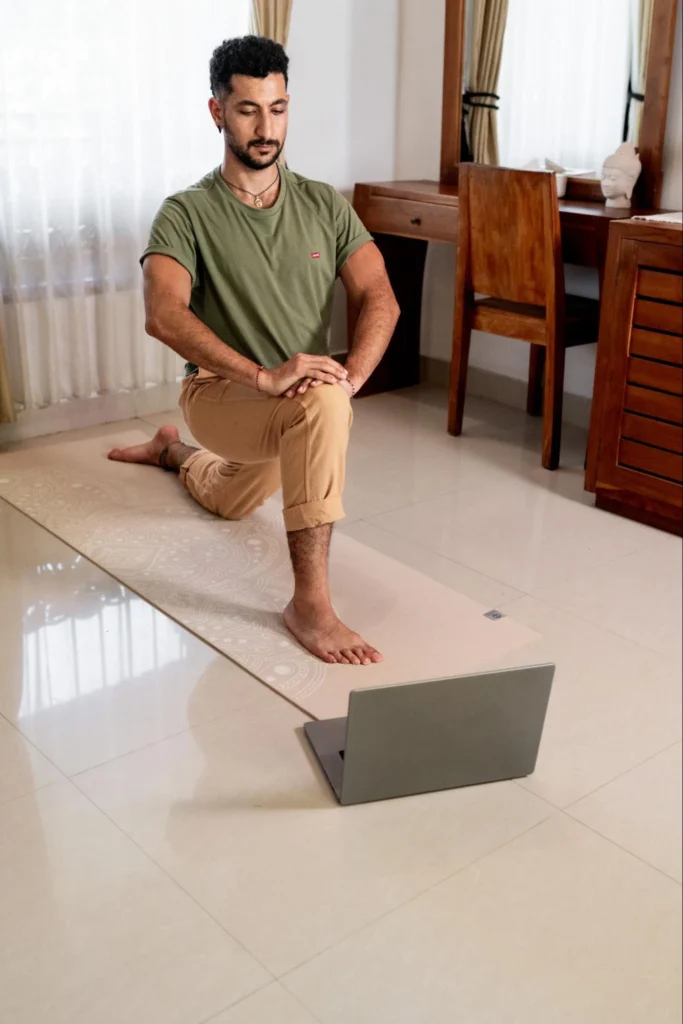
| Factor | Self-paced | Live online | Mixed |
|---|---|---|---|
| Schedule flexibility | Highest | Lowest — fixed sessions | Moderate |
| Instructor interaction | Limited or asynchronous | Direct and real-time | Some of both |
| Teaching feedback | Often delayed | Immediate | Varies by structure |
| Peer interaction | Usually minimal | Built in | Concentrated in live sessions |
| Assessment | Often submitted work | Can be observed live | Depends on the program |
| Time zones | Not a factor | Can be a significant factor | Affects the live portion only |
| Learning pace | You set it | The cohort sets it | Split |
| Best suited for | Disciplined self-directed learners | Those wanting accountability and feedback | Those wanting flexibility with some contact |
None is universally better. The honest question is whether you complete self-directed courses. If you do, self-paced works. If you do not, live structure may finish faster in practice even though it demands more scheduling.
For a wider comparison including in-person and hybrid formats, see our online yoga teacher training guide.
Why Teaching Practicum Matters in Online Certification
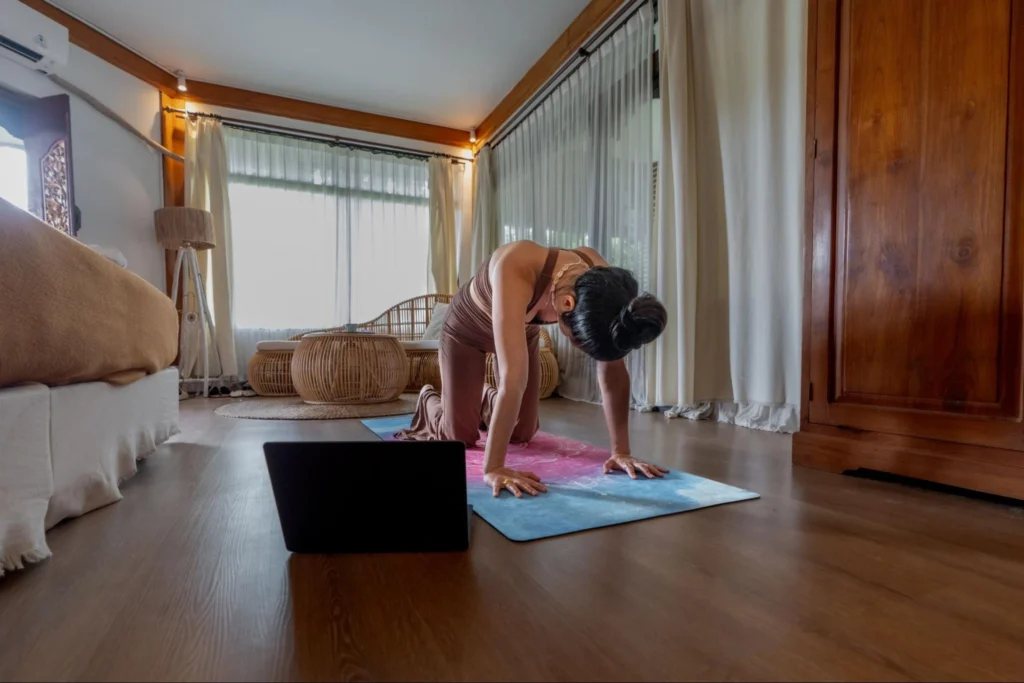
Watching lessons demonstrates that you consumed material. It does not demonstrate that you can teach.
Practicum is where you build sequencing, cueing, observation, and the ability to adjust when a class is not going as planned. It is also the component most variable between online programs — some build it in seriously, others treat it as a formality.
Ask specifically: how many times will I teach, who watches, and how soon do I get feedback? Vague answers here are the most meaningful warning sign in the whole comparison, because practicum is the expensive part for a school to deliver properly.
One honest limitation of any online format: hands-on adjustment is difficult to learn through a screen. You can learn the theory and the principles, but not the touch. That is worth factoring in rather than glossing over.
How Are Online Assessments Usually Handled?
Schools may use one or more of the following:
- Quizzes on theory content
- Written assignments
- Video submissions of you teaching
- Live teaching assessments
- Practice logs
- A final evaluation or exam
Different schools combine these differently, and some use far fewer than others. A program with no competency check at all is worth questioning — not because assessment is pleasant, but because it is what makes a certificate mean something.
Is Online Yoga Certification Recognized?
It depends on who is doing the recognizing. Recognition is not a single yes or no.
| Who decides | What they typically consider |
|---|---|
| The credentialing registry | Whether the program meets its current standards and delivery rules |
| A studio or employer | Your training, an audition, experience, and often insurance |
| An insurer | Its own criteria, which may exclude certain formats or modalities |
| A country’s authorities | Work authorization — entirely separate from any yoga credential |
Many employers value recognized training, but requirements vary, and no format is accepted everywhere. Any school claiming universal acceptance is overstating.
Can You Teach Yoga After an Online 200-Hour Certification?

Completing an online 200-hour training may give you foundational teacher preparation. Whether you can teach in a particular studio, country, or business context depends on that employer’s requirements, insurance, and — if you are teaching abroad — local work-authorization rules.
None of those is settled by the certificate itself. Arrange professional liability insurance before you begin teaching, and check what any specific opportunity actually requires.
Common Misleading Online Certification Claims
| Claim | What is actually the case |
|---|---|
| “International yoga license” | No such license exists. Yoga credentials are issued by membership organizations, not governments. |
| “You become RYT 200 automatically” | Course completion and individual registration are separate steps with separate requirements and fees. |
| “Accepted in every country” | Employment, insurance, and regulatory requirements vary. No credential is accepted everywhere. |
| “No assessment required” | Worth questioning. Assessment is what distinguishes a qualification from an attendance record. |
| “Accredited” with no body named | Always ask: accredited by whom? Verify that body independently. |
| “Government approved” | Yoga teacher training is not government-licensed in most jurisdictions. |
Red Flags Checklist
❑ Vague accreditation language with no body named
❑ No clear school identity or registered name
❑ No published curriculum
❑ No named instructors before you enroll
❑ No teaching practicum, or practicum that is unexplained
❑ Unclear certificate wording
❑ Fees that appear after the deposit
❑ A completion timeline that does not add up against the stated hours
❑ Guaranteed employment or income
❑ Guaranteed international recognition
❑ Pressure to enroll quickly, or countdown timers on pricing
❑ No written refund or cancellation policy
One of these on its own is a question. Several together is a reason to look elsewhere. Note that a fast program is not automatically illegitimate — what matters is whether the arithmetic between stated hours and stated timeline holds up.
How House of Om’s Online 200-Hour Training Fits

House of Om offers an online 200-hour yoga teacher training delivered through structured online learning materials. The current program structure, curriculum, assessment approach, support, access terms, and completion requirements are set out on the official program.
Apply the same checklist to it that you would to any other program. Review the current curriculum and assessment details directly, and confirm what credential pathway the program leads to before enrolling — that is sound practice with any school, including this one.
What About Online 300-Hour Training?
House of Om also offers an online 300-hour yoga teacher training. This is an advanced option rather than an entry point, and should not be treated as interchangeable with a 200-hour course.
Prerequisites for advanced training are set by individual schools, so check the current requirements on that rather than assuming.
Online 200-Hour vs. Online 300-Hour Comparison

| Factor | Online 200-hour | Online 300-hour |
|---|---|---|
| General level | Foundational | Advanced |
| Typical audience | Those preparing to teach general classes | Those who already hold foundational training |
| Depth | Broad coverage of foundations | Narrower and deeper |
| Prerequisites | Vary by school; check current requirements | Commonly assumes foundational training; check current requirements |
| Purpose | Entry-level teacher preparation | Deepening existing teaching practice |
Questions to Ask Before You Enroll
- What certificate will I receive, and what does it say?
- Is the school registered with a recognized professional body, and can I verify that independently?
- Does completion make me eligible for any optional registration, and under which pathway?
- How is teaching practice delivered and assessed?
- Is the course live, self-paced, or mixed — and which parts are which?
- How much instructor feedback is included, and from whom?
- Are there deadlines for completion?
- Are there fees beyond the advertised price?
- How long do I retain access to materials?
- What should I verify separately if I want to teach professionally?
Send these as one email. A school running a serious program will answer all ten specifically. How quickly and how precisely it responds tells you something in itself.
FAQs
Can you get yoga teacher certification online?
Yes. Many schools deliver teacher training fully or partly online and issue a completion certificate. What varies is how the hours are delivered, how teaching practice is assessed, and which credential pathway the program leads to — all worth confirming before enrolling.
Is online yoga teacher certification legitimate?
It can be, depending on the program. Legitimacy comes from the curriculum, the assessment, the teaching practicum, and the school’s standing — not from the format itself. Verify the school independently and ask how competency is actually checked.
Is online yoga certification recognized?
Recognition depends on who is deciding. A registry applies its own standards; a studio applies its hiring criteria; an insurer applies its policy terms. Many employers value recognized training, but no credential is accepted everywhere.
Can I become RYT 200 through online training?
Possibly, depending on the program and the current requirements. Yoga Alliance’s rules on online delivery have developed over time, so confirm the current position directly with Yoga Alliance and ask the school which pathway its program is registered under.
Is online yoga teacher training accepted by Yoga Alliance?
Yoga Alliance’s published hours policy sets specific rules on how much of a 200-hour program may be delivered online, and its approach has developed since that page was last updated. Verify the current position directly rather than relying on any school’s summary.
What is the difference between an online yoga certificate and RYT 200?
The school issues the certificate when you complete its program. RYT 200 is an individual registration with Yoga Alliance, applied for separately after graduating, with its own requirements and ongoing fees. They are related steps, not the same thing.
Can I teach yoga after an online 200-hour course?
It may provide foundational preparation, but whether you can teach in a given studio, country, or business depends on employer requirements, insurance, and local work rules. Arrange professional liability insurance before teaching.
What should I check before choosing an online yoga certification course?
The school’s verified status, how hours are delivered, how much is live, how practicum is assessed, instructor feedback, certificate wording, which credential pathway applies, completion deadlines, access terms, and total cost including any extra fees.
Is self-paced online YTT enough?
It depends on the program and on you. Self-paced study suits disciplined learners but offers less accountability and slower feedback. Check what live components, practicum, and assessment are included rather than judging by format alone.
How long does online yoga teacher training take?
It varies widely. Self-paced programs depend largely on your own pacing, and some set a completion window. Flexibility often extends the calendar rather than shortening it, so ask whether a deadline applies.
Conclusion
Online yoga certification can be entirely legitimate when the training structure and the credential claims are clear. The format is not the issue; vagueness is.
Verify the school independently, ask how hours are delivered and how teaching practice is assessed, get the certificate wording in writing, and confirm which credential pathway the program leads to. A school-issued certificate and a professional registration are related but separate, and no yoga credential is a license.
If you are comparing online training options, review the current House of Om Online 200 and Online 300 program pages for up-to-date structure, requirements, and enrollment details.