
Thailand has more yoga teacher training options than most people can reasonably compare, and from the outside many look alike. Similar photographs, similar promises, similar price ranges. The differences that decide whether a course works for you are rarely the ones on the homepage.
| To choose the right yoga teacher training in Thailand, compare accreditation status, total course hours and how they are delivered, curriculum, teaching practice, instructor experience, certification, schedule, location, accommodation, food, community, total cost, and reputation — then weigh those against your own goal. The cheapest or most photogenic course is not automatically the right one. |
What follows is a framework you can apply to any school on your shortlist, plus the specific checks most prospective students skip.
How Do You Choose the Right Yoga Teacher Training in Thailand?
Work through fifteen factors in order of impact. The first four separate good programs from weak ones; the rest determine fit.
| # | Factor | What to check | Why it matters |
|---|---|---|---|
| 1 | Accreditation | Status verified in the registry itself | Determines whether your certificate leads to the credential you expect |
| 2 | Course hours | Total hours and online/in-person split | Shows training depth and delivery method |
| 3 | Curriculum | Syllabus with hour allocations | Reveals whether the program matches your goals |
| 4 | Teaching practice | Supervised hours and feedback | Best predictor of whether you can teach afterward |
| 5 | Instructors | Who leads your specific dates | Teaching teams rotate between intakes |
| 6 | Certification | Exact wording and conditions | Certificate and registration are not the same thing |
| 7 | Teaching style | Styles taught and emphasis | Determines what you can confidently teach |
| 8 | Schedule | Daily structure and rest days | Affects how much you absorb |
| 9 | Location | Setting and accessibility | Influences focus and travel planning |
| 10 | Accommodation | Room types and what is included | Sleep quality over several weeks is not a detail |
| 11 | Food | Meals included and dietary handling | Affects budget and daily comfort |
| 12 | Community | Group size and feedback culture | Shapes how much individual attention you get |
| 13 | Format | In-person, hybrid, or online | Must fit your available time |
| 14 | Total cost | Every category, not tuition alone | Prevents expensive surprises |
| 15 | Reputation | Evidence you can verify independently | Testimonials are curated by definition |
Check Accreditation Before Anything Else
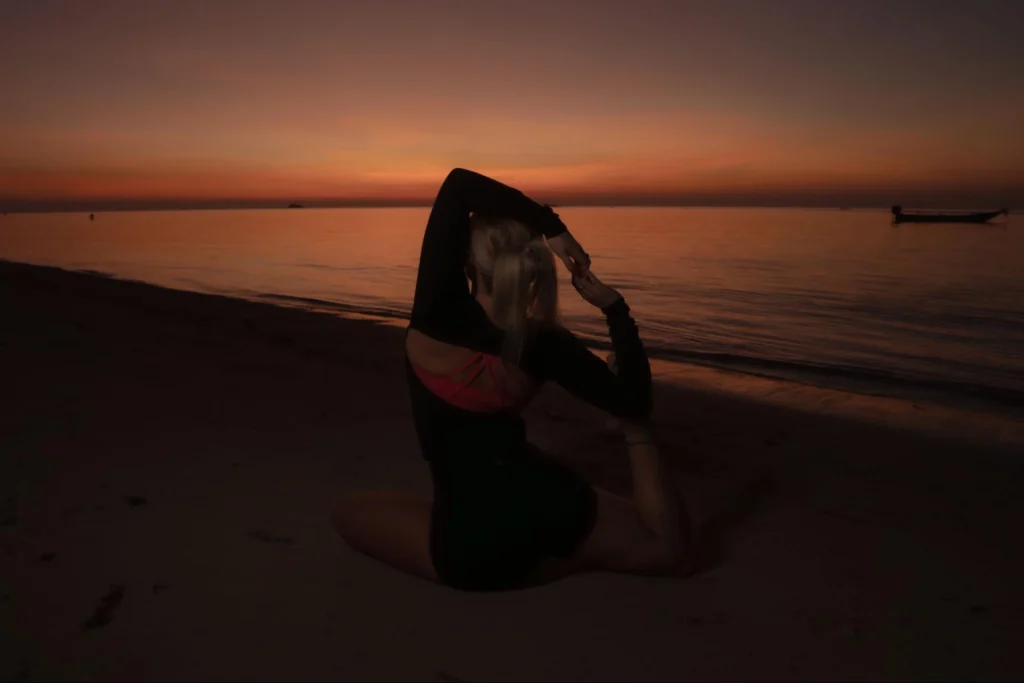
Verify the school’s status in the registry itself, not on the school’s own website. This takes about two minutes and can invalidate every other comparison.
Yoga Alliance is the largest nonprofit association of yoga professionals worldwide, and it operates as a registry. A school meeting its standards becomes a Registered Yoga School; a graduate of that school can then apply to become a Registered Yoga Teacher. Search any school by name in Yoga Alliance’s school directory and confirm the listing is current.
Check the domain, not just the nameSeveral separate for-profit organizations trade under names very close to Yoga Alliance, and they appear in ordinary search results alongside the genuine nonprofit. The one most studios and insurers recognize is at yogaalliance.org. If a school’s credential links anywhere else, that is a different body with different standards. Ask for the registration number and check it yourself. |
One further point worth knowing: registration is a threshold, not a recommendation. It confirms a program met a shared standard. It does not tell you the teaching is good.
Compare Course Hours and Training Level
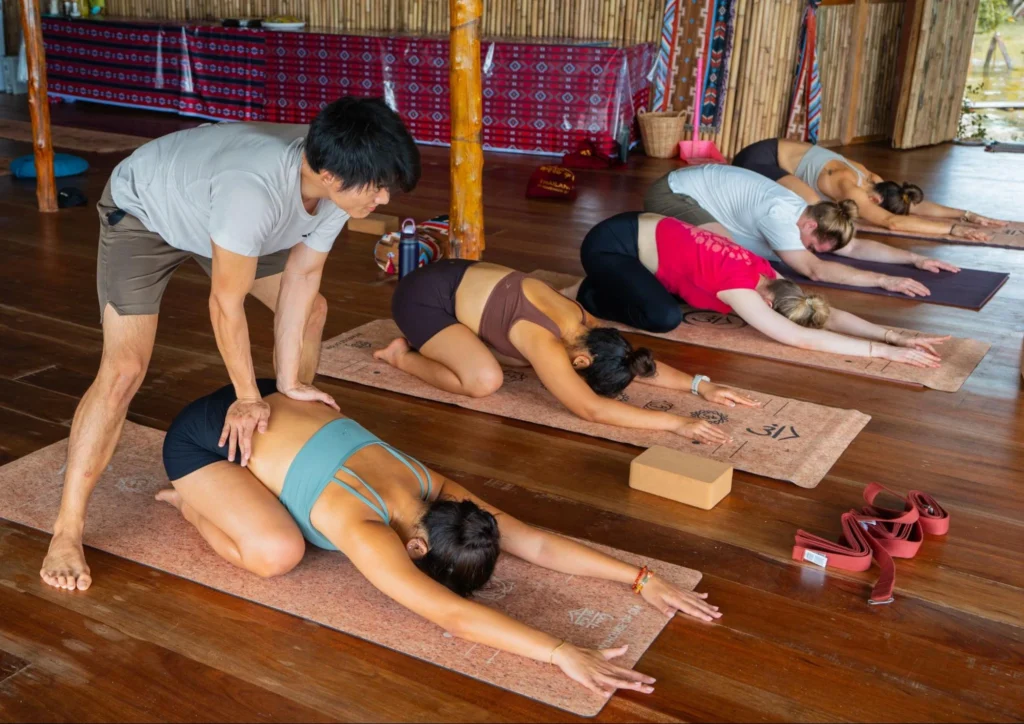
The 200-hour is the foundational level and the standard entry point. The 300-hour is advanced training that builds on it, and the two together form the 500-hour pathway.
What varies more than the headline number is delivery. Yoga Alliance’s published hours policy states that under the RYS 200 standards introduced in February 2020, all 200 hours must be classroom hours, with an option for 40 of those to be delivered as online classroom hours — up to 20 in Anatomy and Physiology and up to 20 in Yoga Humanities. The same policy states that homework, reading, personal practice, volunteer work, and public classes do not count as instructional hours, and caps instruction at 14 hours per day.
Two questions follow. Ask how any program allocates its hours between online and in-person delivery. And treat with caution any course that appears to reach 200 hours by counting self-study, because the registry does not.
If you are new to teaching, the 200-hour is the right level. The 300-hour is designed for people who have completed a 200-hour and taught for a while, and taking it immediately afterward tends to waste much of its value.
Read the Curriculum, Not the Summary
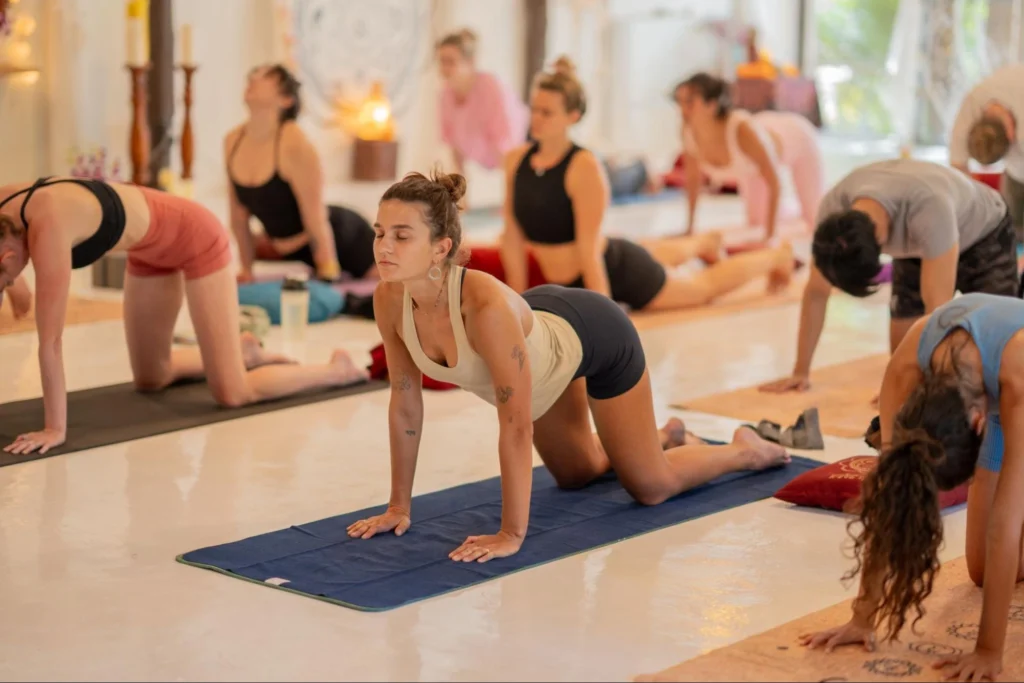
Ask for the syllabus with hour allocations rather than a list of topics. Every registered 200-hour course covers similar ground; the difference is in the weighting.
A complete curriculum should give real depth to:
- Asana practice, alignment, and hands-on adjustment
- Functional anatomy applied to teaching, not just memorized
- Pranayama and meditation
- Yoga philosophy as context for teaching
- Sequencing and class planning
- Teaching methodology and supervised practicum
- Ethics and scope of practice
If a published syllabus gives eight hours to anatomy, either there are unlisted hours elsewhere or the program is not meeting the standard. Ask which.
Ask How Much Supervised Teaching You Will Actually Do
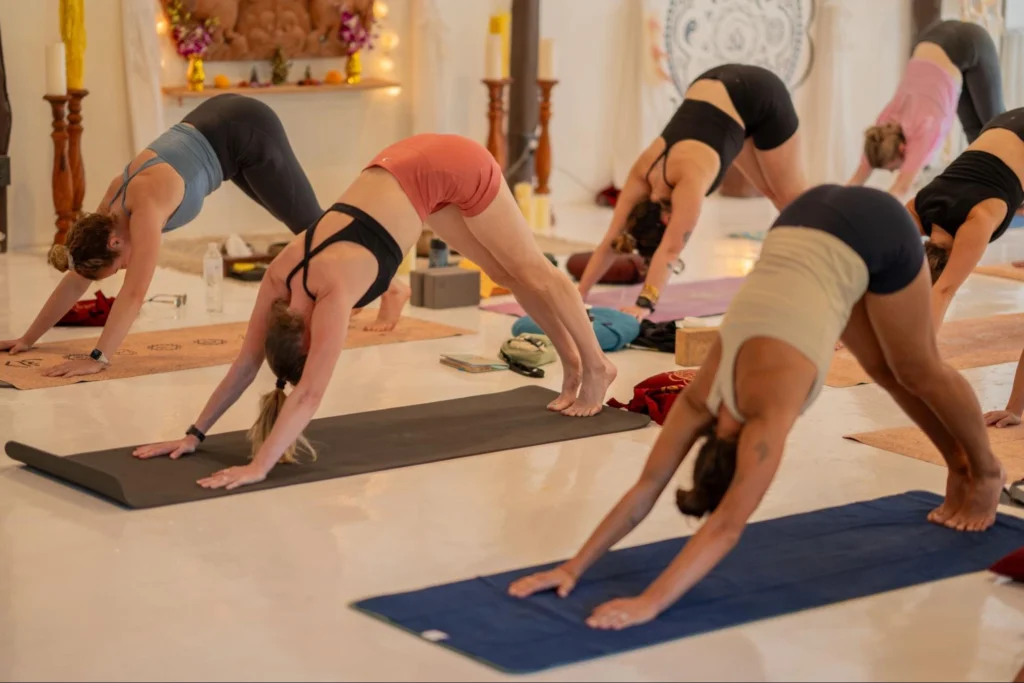
This is the factor that best predicts whether you can teach when you finish, and the one schools describe most vaguely.
There is a real difference between studying theory, observing a class, teaching once at the end, and teaching repeatedly with feedback each time. All four get described as “practicum.”
Ask specifically:
- How many hours of supervised teaching practice are included?
- How many times will I teach a full class before graduating?
- Who gives feedback, and how soon afterward?
- Am I assessed in a room or on a recorded video?
- How much hands-on adjustment practice is there?
A well-designed program answers these immediately. Vagueness here is the single most meaningful warning sign in the comparison.
Find Out Who Is Teaching Your Dates
Not the faculty page in general, but the people leading the intake you are considering. Teaching teams rotate between dates.
Ask how long they have taught teacher trainings specifically. Teaching yoga well and teaching people how to teach yoga are different skills, and only the second one matters here. A school that will not name its lead trainer before you book has told you something useful.
Understand Exactly What Certificate You Receive
The school issues a certificate confirming you completed the training. Registration with Yoga Alliance is separate, voluntary, and something you apply for yourself afterward.
Yoga Alliance publishes its own fees: a one-time application fee and an annual membership, currently listed at $50 and $65. These are paid to Yoga Alliance rather than to the school, and the annual fee continues as long as you want the credential. Very few school pages mention this.
Ask what the certificate says, whether completing the program makes you eligible to register, and what conditions apply — attendance requirements and assessments you must pass.
Match the Teaching Style to Your Goals
Schools differ in emphasis: Hatha, Vinyasa, Ashtanga, and multi-style approaches are all common in Thailand. None is objectively better.
The useful question is not which style is best but which one you want to be able to teach in a year. If you already know you want to lead slow, alignment-focused classes, a fast-paced program will feel like a mismatch, however well run it is. If you do not yet know, a multi-style foundation gives you exposure before you specialize.
Look at How the Days Are Built
Two courses with identical hours can feel completely different depending on how those hours sit in a day.
- When does the day start and end?
- Is there genuine study time, or is every hour scheduled?
- How many rest days, and are they actually free?
- Is practicum spread through the course or compressed into the final days?
Practicum spread across the course is considerably more valuable than practicum bolted onto the end, because you get to apply the feedback you receive.
Consider the Location Practically
Location affects study more than it affects photographs. Some people concentrate better with nothing around them; others need a town nearby to stay sane after a week. Neither is wrong, and knowing which you are is worth more than any review.
Practical questions: how do you get there, how long does the final leg take, and what is nearby if you need a pharmacy or a quiet cafe on a rest day. Island locations in particular usually involve a ferry, which is worth building buffer time around.
Evaluate Accommodation Honestly

Several weeks of poor sleep will affect what you get from the course. Check room types, whether bathrooms are shared, the distance from the training space, and what is included versus charged separately.
The shared-versus-private decision is about recovery rather than budget. Shared rooms build the group quickly; private rooms give you somewhere to decompress when the middle of the course gets demanding.
Check What Food Is Included
Confirm how many meals are provided and on which days. “Meals included” sometimes means two per day on training days only, which leaves a real gap in both budget and planning.
If you have allergies or dietary requirements, raise them at the inquiry stage and get the answer in writing. A kitchen catering for a group needs notice.
Ask About Group Size and Feedback Culture
Group size determines how much individual attention you receive during practicum, which is where teaching skill is actually built. “Small groups” is marketing language; a number is information. Ask for the cap.
You will be corrected repeatedly in front of other people. Whether that feels supportive or exposing depends on how the school handles it, and reviews are more useful here than anywhere else — look for repeated comments about how feedback was given.
Decide Between In-Person, Hybrid, and Online
Each format solves a different problem:
| Format | Strength | Trade-off | Suits |
|---|---|---|---|
| In-person | Continuous teacher contact, hands-on adjustment, repeated practicum | Requires the most time away | People who can take several weeks off |
| Hybrid | Theory online at your own pace, plus a shorter in-person block for practice | Online portion depends on your own discipline | People with limited leave who still want hands-on practice |
| Online | Highest flexibility, no travel | Cannot teach hands-on adjustment; feedback is delayed | People who cannot travel and study reliably alone |
No format is better in the abstract. Program quality matters more than format, and a well-run hybrid beats a poorly run residential course.
Calculate the Real Total Cost
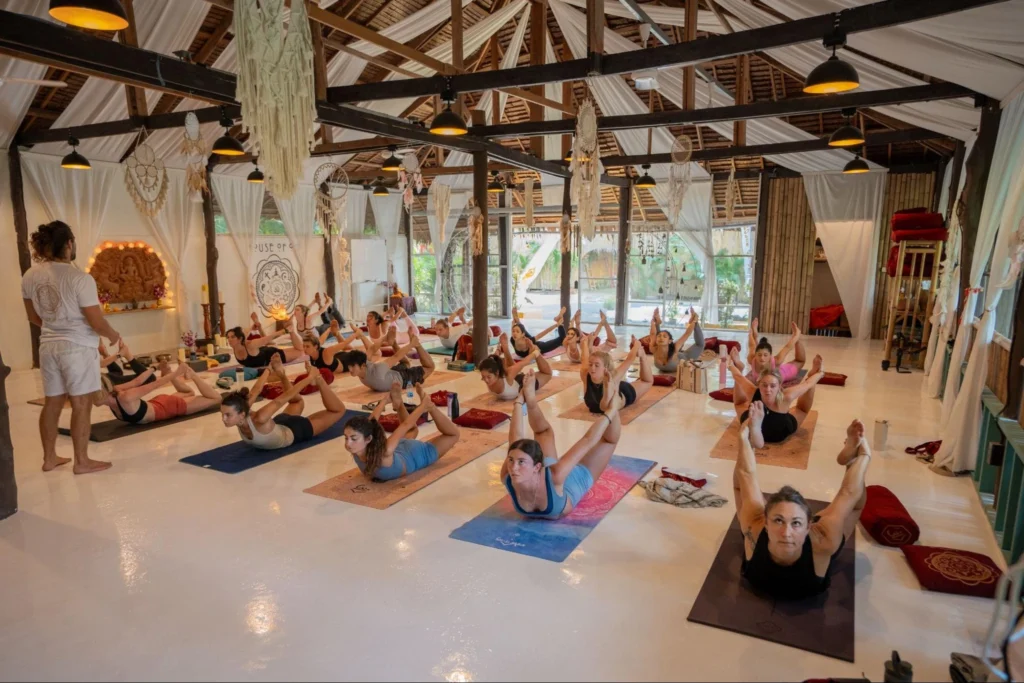
Tuition is the number people compare and the one that misleads most. Yoga Alliance notes that tuition is set by each school and commonly ranges from $1,500 to $5,000 or more, depending on length, location, and format — so a headline price tells you very little on its own.
Build the full figure across every category:
| Cost category | What to confirm |
|---|---|
| Tuition | Whether accommodation and meals are bundled or separate |
| Accommodation | Room type, number of nights, and any extra nights either side |
| Meals | How many per day, on which days, and what you buy yourself |
| Flights | Varies substantially by season and booking lead time |
| Local transport | Transfers, ferries, and getting around locally |
| Visa and entry costs | Depends on nationality and length of stay |
| Travel insurance | Whether it covers course fees, not only medical costs |
| Registration fee | Paid to Yoga Alliance after graduating, not to the school |
| Materials and equipment | Ask what is supplied before buying anything |
| Personal spending | Rest days, laundry, and everything else |
A program with higher tuition that includes accommodation and meals often works out cheaper overall than a tuition-only quote that looks like a bargain.
Use Reputation Evidence You Can Verify
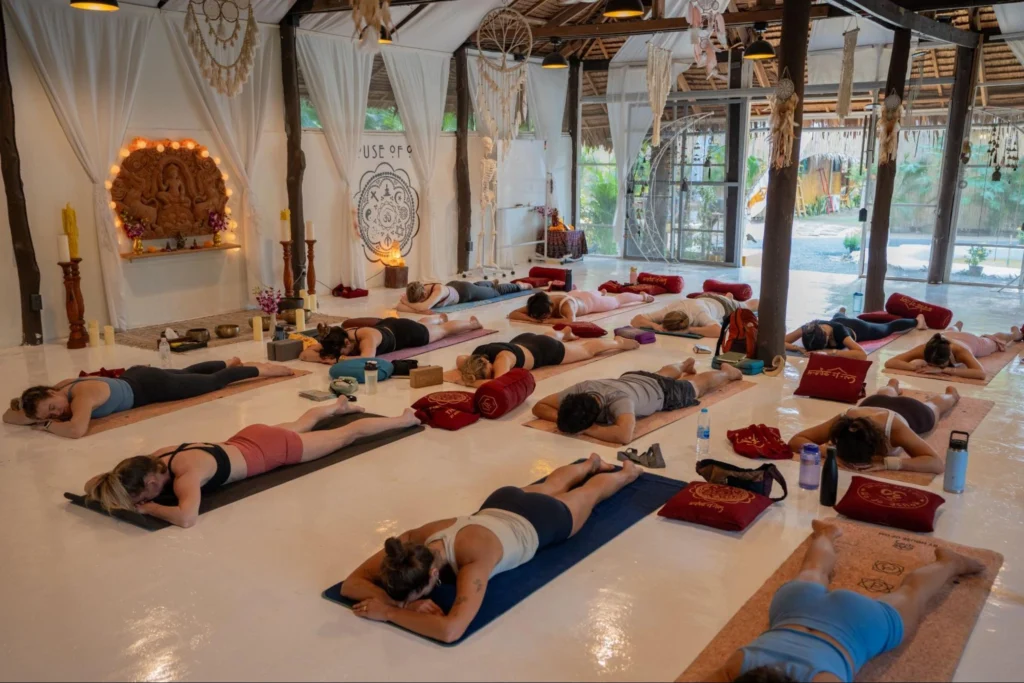
Testimonials on a school’s own website are curated by definition. Better evidence exists, and almost nobody uses it.
Yoga Alliance operates a Social Credentialing system in which every trainee must submit a review of their training before they can register as a teacher. Those reviews assess curriculum accuracy, learning objectives, and lead teacher contact hours, and they feed a public Overall School Rating shown on each school’s directory listing.
Because submission is mandatory rather than optional, that rating is structurally harder to curate than voluntary reviews, and graduates are rating the things that matter for a comparison — whether the curriculum matched what was advertised, and whether the lead teacher was actually present.
When reading ordinary reviews, look for patterns across many rather than intensity in one. Repeated mentions of disorganization, absent teachers, or a course that differed from its description carry far more weight than a single dramatic review either way.
Thailand Yoga Teacher Training Comparison Checklist
Fill this in for each shortlisted school and score every row from 1 to 5.
| Factor | What to check | Why it matters |
|---|---|---|
| Accreditation | Registry listing verified independently | Confirms the training pathway |
| Course hours | Total hours and online split | Shows depth and delivery |
| Curriculum | Syllabus with hour allocations | Matches program to your goals |
| Teaching practice | Supervised hours and feedback method | Builds actual teaching ability |
| Instructors | Named leads for your dates | Indicates teaching expertise |
| Certification | Wording and conditions | Clarifies what you receive |
| Teaching style | Styles and emphasis | Determines what you can teach |
| Schedule | Daily structure and rest days | Affects retention and energy |
| Location | Setting and travel logistics | Shapes the whole experience |
| Accommodation | Room options and inclusions | Affects rest and recovery |
| Food | Meal count and dietary handling | Affects budget and comfort |
| Group size | Stated cap in writing | Determines individual attention |
| Format | In-person, hybrid, or online | Must fit your available time |
| Total cost | All categories combined | Prevents surprises |
| Reputation | Independently verifiable rating | Evidence over marketing |
Comparing House of Om Using This Framework
If House of Om is on your shortlist, here is how its published Thailand information maps against the factors above. Full details are on the House of Om yoga teacher training in Thailand pages. Apply the same table to every school you are considering.
House of Om runs two Thailand programs, both in Koh Phangan. They are different products and should be compared separately.
| Factor | 200-Hour (in person) | 200-Hour Hybrid |
|---|---|---|
| Format | Full in-person training | Online theory plus 10-day in-person component |
| Accommodation | 19 nights, beachfront resort | 9 nights / 10 days |
| Structure | Week 1 Hatha foundation; Week 2 Vinyasa flow; Week 3 Ashtanga and teaching mastery; practical and theoretical exams at the end | Start online or start in person; both modules required for the certificate |
| Style | Rooted in Hatha and Vinyasa Flow with elements of Ashtanga | Rooted in Hatha and Vinyasa Flow with elements of Ashtanga |
| Entry level | All levels welcome, beginners and beyond; teaching ambitions not required | All levels welcome, beginners and beyond |
| Meals | Fresh, Ayurvedic-inspired, vegetarian, organic ingredients | 2 meals per day, buffet-style, vegan and vegetarian, on training days |
| Deposit | $500 to book a spot | $500 to book a spot |
| Location | Beachfront resort, Koh Phangan | Bovy Beach, Koh Phangan |
Additional elements listed for the in-person 200-hour include shatkarma, mantra and meditation, Yoga Nidra, Ayurveda, kirtan, sound healing, and Voice Activation — described as helping students use their voice with confidence, clarity, and intention, and develop a natural teaching voice.
The in-person program also includes daily practice, alignment workshops, hands-on adjustments, injury-prevention biomechanics, sunrise classes, afternoon labs, and mentor feedback. Both programs publish a daily schedule beginning at 06:00, which the pages note is subject to change at the teacher’s discretion.
On certification, the pages state that successful completion earns an internationally recognized Yoga Alliance certification. For the hybrid, both the online and in-person modules must be completed before the 200-Hour certificate is issued.
On reputation, the published figure most useful for comparison is a 4.66 out of 5 rating on Yoga Alliance based on 1,600+ registered graduated teachers, because that is the one you can verify independently in the directory. Program pages: 200-hour in Koh Phangan and 200-hour hybrid.
Ask these before booking any school, House of Om includedTotal supervised teaching hours, the group size cap for your intake, current pricing and whether early-bird rates still apply, availability on your preferred dates, and the full cancellation and rescheduling terms. Published pages rarely cover all of these, which is exactly why the questions are worth sending. |
Should You Train in Thailand or Somewhere Else?
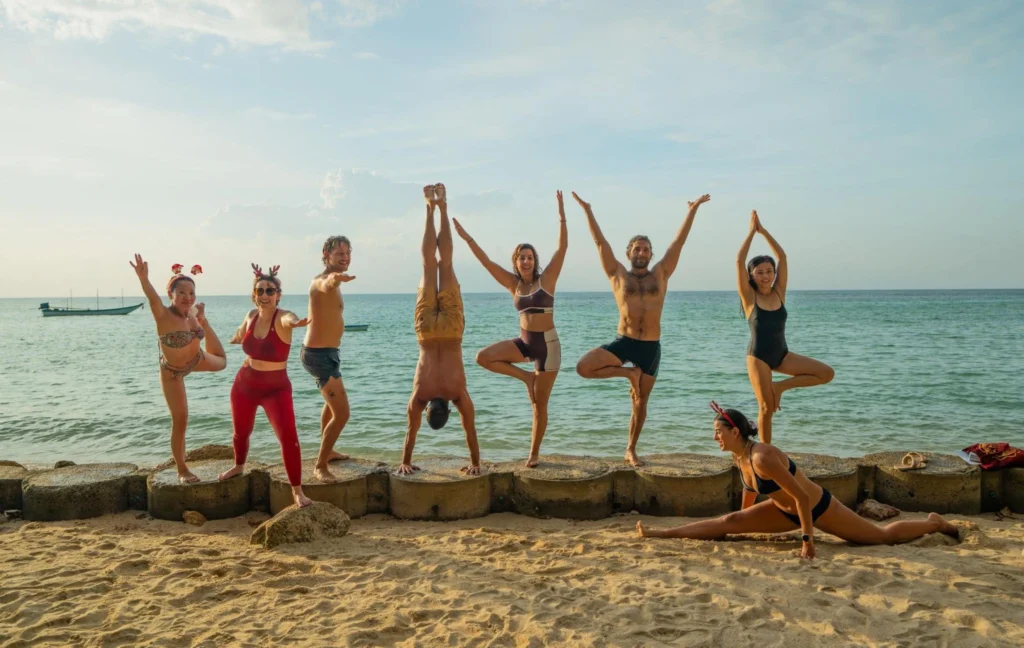
Thailand is one of several established destinations, and the choice usually comes down to setting rather than standard. A registered 200-hour program delivers the same credential wherever it is taught.
If you are also weighing Bali, the comparison is mostly about environment, travel logistics, and program availability rather than quality. Our definitive guide to yoga teacher training in Bali covers that market in the same detail, and there is a separate guide for beginners considering a first training in Bali.
Apply the same fifteen factors either way. The framework does not change with the destination.
Final Checklist Before Booking
❑ Accreditation verified in the registry itself, not the school website
❑ Course hours confirmed, including the online and in-person split
❑ Full syllabus received with hour allocations
❑ Supervised teaching hours confirmed in writing
❑ Lead instructor named for your specific dates
❑ Certificate wording and conditions understood
❑ Teaching style matches what you want to teach
❑ Daily schedule and rest days reviewed
❑ Location and travel logistics planned, with buffer time
❑ Accommodation type confirmed and what it includes
❑ Meals confirmed, and dietary requirements raised in writing
❑ Group size cap confirmed
❑ Total cost calculated across every category
❑ Reviews and independent rating checked
❑ Cancellation, rescheduling, and payment terms read in full
Frequently Asked Questions
How do I choose the best yoga teacher training in Thailand?
Verify accreditation in the registry itself, compare curriculum depth and supervised teaching hours, check who is teaching your specific dates, and calculate total cost rather than tuition alone. Then weigh those against whether you want to teach professionally or deepen a personal practice.
Is Yoga Alliance accreditation important?
It matters if you want a credential that studios and insurers commonly recognize. Yoga Alliance functions as a registry rather than a license, so registration confirms a program met a shared standard — it is a threshold to check, not a guarantee of teaching quality.
Is a 200-hour yoga teacher training enough for a beginner?
The 200-hour is the foundational level and the standard entry point. Many Thailand programs, including House of Om’s, state that all levels are welcome, including complete beginners, and that teaching ambitions are not required to enroll.
How much does yoga teacher training in Thailand cost?
Yoga Alliance notes tuition across registered schools commonly runs from $1,500 to $5,000 or more depending on length, location, and format. Add accommodation, meals, flights, local transport, insurance, and your own registration fee to reach the real total.
What should a yoga teacher training curriculum include?
Asana and alignment, functional anatomy, pranayama, meditation, philosophy, ethics, sequencing, teaching methodology, and substantial supervised practicum. Ask for hour allocations by category rather than a list of topics.
Should I choose in-person or hybrid yoga teacher training?
In-person suits those who can take several weeks off and want continuous teacher contact. Hybrid suits those with limited leave while keeping hands-on teaching practice. House of Om offers both in Koh Phangan, with the hybrid including a 10-day in-person component.
How important is practical teaching experience?
It is the strongest predictor of whether you can teach after graduating. Ask how many hours of supervised practice are included, how many full classes you will teach, and how feedback is given. Vague answers here are the clearest warning sign.
How do I know if a yoga school is reputable?
Check its listing in the Yoga Alliance directory, including the Overall School Rating fed by mandatory graduate reviews. Then look for consistent patterns across independent reviews rather than relying on testimonials published by the school itself.
Making the Decision
Most people compare the things that are easy to compare — price, photographs, dates — and hope the rest works out. Four checks separate programs meaningfully: accreditation verified independently, supervised teaching hours, the syllabus with hour allocations, and total cost across every category.
Do those four for each school on your list, and the decision usually makes itself. If House of Om is one of them, start with the Thailand training details.