
| Short answer
A training day at The Mansion begins at 6:00 AM with shatkarma and chanting, followed by asana and pranayama practice, a morning lab, breakfast, theory sessions, Yoga Nidra, lunch, teaching methodology, alignment and adjustment work, and evening sadhana. Breakfast and lunch are included on training days. The schedule is subject to change at the teacher’s discretion. |
YTT stands for Yoga Teacher Training. What follows walks through each session in order and explains what it is for.
Early-morning practice
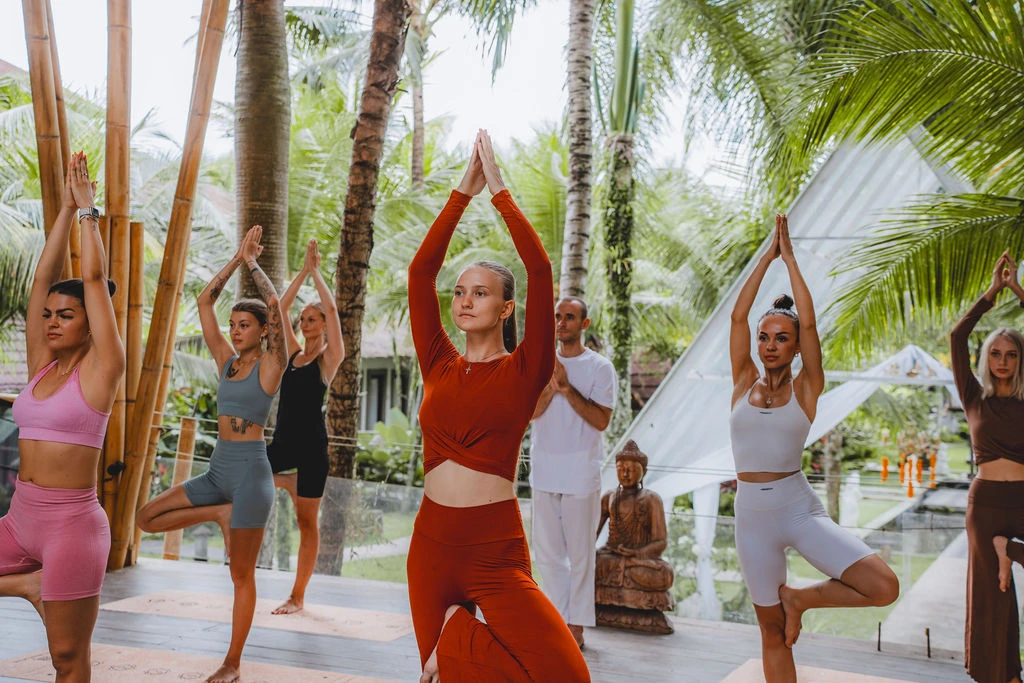
The first two hours cover cleansing practice, chanting, and the main asana and pranayama session. This is the most physically demanding part of the day, scheduled before the heat builds.
Structured training sessions
The rest of the day alternates between applied practice, theory, and teaching work. No two consecutive sessions ask the same kind of effort.
Meal and rest breaks
Breakfast and lunch sit inside the schedule, with the longest break falling around lunch from 1:30 PM to 3:00 PM.
Afternoon teaching practice
Afternoons focus on teaching — methodology first, then alignment and hands-on adjustment work with mentor feedback.
Evening sadhana
The training day closes with evening practice from 5:30 PM, after which the evening is your own.
The Mansion 200-Hour YTT Daily Schedule at a Glance
| Time | Session |
|---|---|
| 06:00 – 06:15 | Shatkarma |
| 06:15 – 06:30 | Chanting |
| 06:30 – 07:45 | Asana and pranayama |
| 08:00 – 08:45 | Morning lab |
| 08:45 – 10:00 | Breakfast |
| 10:00 – 12:30 | Jnana yoga |
| 12:30 – 13:15 | Yoga Nidra |
| 13:30 – 15:00 | Lunch |
| 15:00 – 16:00 | Teaching methodology |
| 16:00 – 17:15 | Alignment and adjustment |
| 17:30 – 18:30 | Evening sadhana |
| 18:30 – 19:30 | Dinner |
House of Om notes that the daily schedule is subject to change at the teacher’s discretion. Check the program page for the current timetable.
6:00 AM — shatkarma
The day opens with fifteen minutes of yogic cleansing practice, supporting physical and energetic purification.
6:15 AM — chanting
Fifteen minutes of chanting follows, as a daily morning component of the curriculum.
6:30 AM — asana and pranayama
The main morning practice runs until 7:45 AM, combining physical postures with breathwork. This is the longest single session of the day.
8:00 AM — morning lab
A 45-minute applied session directly after practice, while the morning’s material is still fresh.
8:45 AM — breakfast
Breakfast runs to 10:00 AM. It is one of two meals included on training days.
10:00 AM — Jnana yoga and theory
The scheduled theory and study component, running through the middle of the day.
Midday — Yoga Nidra
Guided deep relaxation and meditation, scheduled around midday.
1:30 PM — lunch
Lunch runs to 3:00 PM — the longest break in the day, and the second included meal.
3:00 PM — teaching methodology
A dedicated daily hour on how to plan, structure, and deliver a class.
4:00 PM — alignment and adjustment
Alignment workshops and hands-on adjustment practice, running to 5:15 PM.
5:30 PM — evening sadhana
An hour of evening practice closes the formal training day.
After training — personal time and dinner
The schedule shows a dinner period from 6:30 PM, though dinner itself is not one of the included meals. The evening is unstructured.
Why Does the Day Start With Shatkarma?
What shatkarma means in yoga training
Shatkarma refers to yogic cleansing techniques. House of Om describes them as supporting physical and energetic purification.
How shatkarma fits into the Mansion curriculum
It is a listed curriculum element rather than an optional extra, scheduled daily at 6:00 AM. The student welcome bag includes a neti pot, which connects directly to this part of the program.
What beginners should expect
The session is short — fifteen minutes. For most people arriving without a background in these practices, the first few mornings are the adjustment, and it becomes routine quickly after that.
What Happens During Morning Chanting?

Mantra practice
Mantra is a listed part of the curriculum, and chanting runs as a daily morning component from 6:15 AM to 6:30 AM.
Breath, focus and group practice
Chanting is done together as a group. Practically, it marks the shift from waking up to being present for the day — which is part of why it sits between cleansing practice and physical practice rather than elsewhere.
How chanting connects with the wider curriculum
Chanting links to mantra and meditation, to kirtan — group chanting connected with Bhakti yoga — and to Voice Activation, which covers using your voice with clarity and intention as a teacher.
What Happens During Asana and Pranayama Practice?
The 6:30 AM session is the main physical practice of the day and the one that changes most across the three weeks.
Hatha yoga foundations
Hatha forms the foundation of week one, with the emphasis on individual postures, alignment, and steady practice.
Vinyasa Flow practice
Week two moves into Vinyasa Flow, applying those foundations to breath-led movement and sequencing.
Ashtanga elements
Week three brings in Ashtanga alongside teaching development.
Pranayama practice
Breathwork is paired with asana in the same morning session rather than taught separately.
Building personal practice alongside teaching skills
This session serves two purposes at once. You are developing your own practice, and you are also experiencing how a class is sequenced and led — which is material you will be asked to reproduce later in the day.
What Is the Morning Lab?
The morning lab runs from 8:00 AM to 8:45 AM, immediately after the main practice and before breakfast.
Exploring technique and movement
A shorter applied session following the morning practice, while the material is still recent.
Alignment practice
Alignment is a dedicated part of the House of Om curriculum, covered in workshops and applied sessions across the program.
Applying what you learn in asana sessions
The placement is deliberate. Working on technique straight after practicing it is more useful than revisiting it the next day.
Asking questions and receiving teacher feedback
Mentor feedback is built into the program. A shorter session after practice is a natural point for questions that came up during it.
What Happens During the Theory Portion of the Day?
Theory occupies the middle of the day, after breakfast, under the heading of Jnana yoga.
Jnana yoga
Jnana yoga is the scheduled theory and study component, running from 10:00 AM.
Yoga philosophy
Philosophy is part of the training, covering the tradition behind the practice rather than treating the program as physical instruction alone.
Anatomy and biomechanics
Injury-prevention biomechanics are part of the curriculum, applied to teaching decisions rather than taught as abstract theory.
Teaching principles
Theory sessions feed directly into the teaching methodology work later in the day.
Connecting theory with physical practice
Placing study after the morning practice means the theory has something concrete to attach to. You have already moved through the postures being discussed.
Where Does Yoga Nidra Fit Into the Daily Schedule?
Yoga Nidra as a dedicated training element
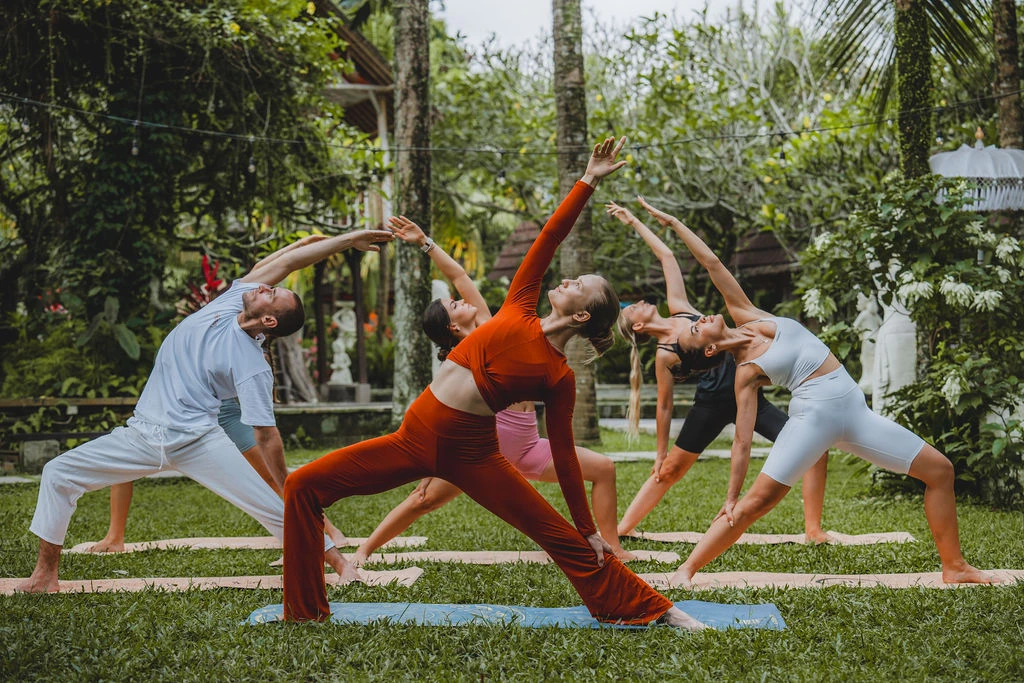
Yoga Nidra is a listed curriculum element, described as guided relaxation and meditation. It is scheduled around midday.
Rest and awareness between intensive sessions
Its placement matters. It falls between the theory block and lunch, in the middle of a long day, and is a practice rather than a break.
Learning the practice as a future teacher
You are experiencing Yoga Nidra and also learning it as something you may guide for others. Both purposes run at once, which is true of most sessions in the day.
What Happens During Teaching Methodology?
Teaching methodology runs as a dedicated daily session from 3:00 PM. For anyone intending to teach, this is the most directly relevant hour of the day.
How to structure a yoga class
Class planning is covered as part of the methodology work, progressing across the three weeks as the styles change.
Sequencing practice
Sequencing is how a class holds together. Knowing postures and knowing what order to put them in are separate skills.
Giving clear instructions
Cueing and clear verbal instruction are part of the session. Being able to do a posture and being able to talk a room through it are different things, and the second is what a teacher training is for.
Developing confidence as a teacher
Teaching practice is integrated into the program rather than saved for the end, so confidence builds across the three weeks rather than being tested once.
Receiving feedback from instructors
Supportive mentor feedback is part of the program, and this session is one of the main points where it happens.
What Do Students Learn in Alignment and Adjustment Sessions?
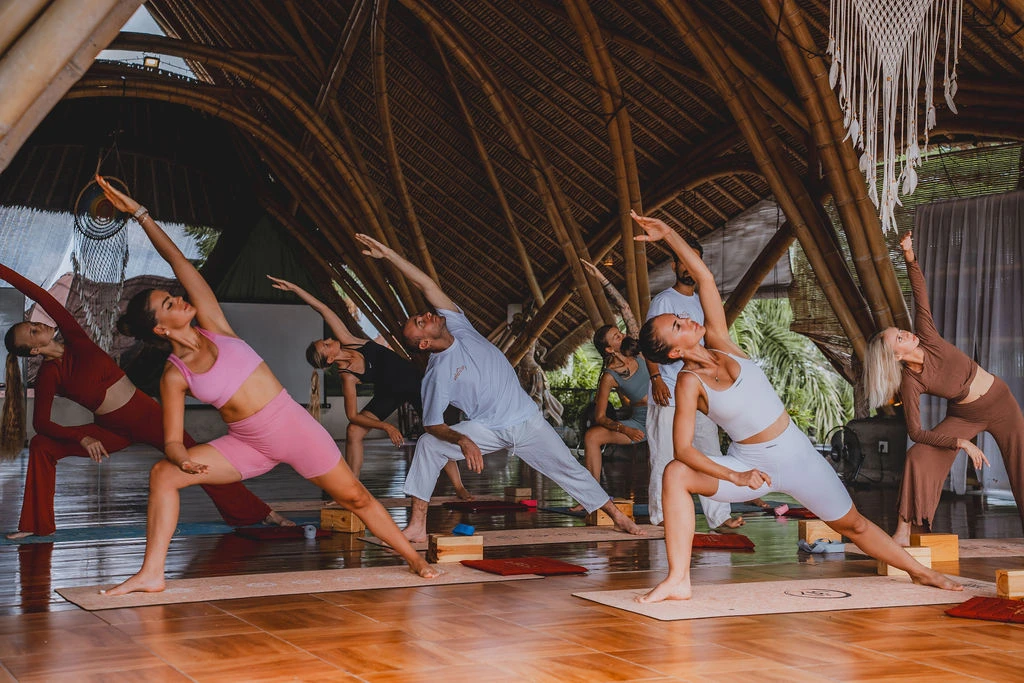
Alignment and adjustment work runs from 4:00 PM, directly after teaching methodology.
Understanding alignment
Alignment workshops are a dedicated part of the curriculum rather than something covered in passing during practice.
Hands-on adjustment practice
Hands-on adjustment training is listed as part of the program. This is a practical skill that is difficult to learn any way other than in a room with a teacher.
Injury-prevention principles
Injury-prevention biomechanics are covered as part of the training.
Adapting practice for different students
Alignment work is what makes adaptation possible. Understanding why a posture is structured a particular way is what allows you to adjust it for someone whose body works differently.
Applying alignment knowledge while teaching
Following teaching methodology with alignment work is a sensible order. You plan the class first, then work on what you will actually do while standing in front of it.
What Is Evening Sadhana?
How evening practice completes the training day
Evening sadhana runs from 5:30 PM to 6:30 PM, closing the formal training day.
Meditation and reflective practice
Meditation is a listed curriculum element. The evening session is quieter in character than the morning practice.
Integrating physical and non-physical yoga practices
The day begins with cleansing and chanting and ends with evening practice. Physical work sits in between. That shape is deliberate: the program treats yoga as more than asana, and the schedule reflects it.
When Do Students Eat During the Training Day?
| What is included
Two meals are included on training days: breakfast and lunch. Both are fresh, Ayurvedic-inspired vegetarian dishes prepared with organic ingredients. Dinner is not included, and the program is not described as all-inclusive. |
Breakfast after the morning practice
Breakfast runs from 8:45 AM to 10:00 AM, following the morning practice and lab. It is a genuine break rather than a rushed one.
Lunch between theory and afternoon training
Lunch runs from 1:30 PM to 3:00 PM — the longest break in the day, sitting between the theory block and the afternoon teaching sessions.
Breakfast and lunch on training days
These two meals are included with every accommodation option, from the dorm through to the private room. Meals are provided on training days.
Why dinner is not included
Dinner is not part of the included meals. The published schedule shows a dinner period from 6:30 PM to 7:30 PM, but students arrange and pay for that meal themselves.
This is worth reading carefully, because the schedule listing a dinner slot can suggest otherwise. If you are comparing programs on total cost, budget for roughly three weeks of evening meals.
Dinner options outside the training schedule
There are more than 20 cafes and restaurants serving healthy food within roughly 3 km of the property, and central Ubud is about 10 minutes away. In practice, evening meals become one of the ways students spend unstructured time together.
How Much Free Time Is There During a Typical Day?
Breaks between training sessions
The schedule includes breakfast from 8:45 AM to 10:00 AM and lunch from 1:30 PM to 3:00 PM, plus short gaps between sessions. The evening after 6:30 PM is unstructured.
Time to rest at The Mansion
Because accommodation is on the property, breaks are genuinely usable. A ninety-minute lunch break is long enough to return to your room, which it would not be if you were staying elsewhere.
Using the pool and shared spaces
There is a pool on site, along with gardens and shared areas. These are where most of the informal part of a training happens — the conversations between sessions that people tend to describe afterward as the community side of the program.
Exploring Ubud around the training schedule
Central Ubud is about 10 minutes away, with more than 10 spas and wellness centers within roughly 3 km and more than 15 cultural and sacred natural sites within about 9 km.
The honest guidance is to pace this. The schedule is full and runs across consecutive days, and students who treat every break as sightseeing time tend to feel it by the third week.
Why the daily schedule may change
House of Om states that the daily schedule is subject to change at the teacher’s discretion. Times shift, and the published timetable is the shape of a day rather than a fixed contract.
One detail worth noting if precise timings matter to you: the published schedule shows Jnana yoga running to 12:30 and Yoga Nidra beginning at 12:00. Confirm the current sequencing directly with the school rather than planning around it.
How Does the Daily Schedule Change Across the Three Weeks?
The shape of the day stays consistent. What changes is the content of the practice sessions.
| Stage | Focus |
|---|---|
| Week 1 | Hatha yoga foundation |
| Week 2 | Vinyasa Flow exploration |
| Week 3 | Ashtanga yoga and teaching development |
| Final stage | Practical and theoretical exams |
Week 1: Hatha yoga foundations
The morning practice focuses on Hatha — individual postures, alignment, steady work. The pace is deliberate, which is what makes the program workable for beginners.
Week 2: Vinyasa Flow development
The morning session changes character as Vinyasa Flow is introduced, moving from held postures to breath-led sequences.
Week 3: Ashtanga yoga and teaching development
The final week combines Ashtanga-focused practice with teaching development. By this point the emphasis has moved from learning postures to learning to lead them.
Preparing for practical and theoretical assessments
The program concludes with practical and theoretical exams. Because teaching practice runs throughout with mentor feedback, the practical assessment comes after weeks of preparation rather than as a first attempt.
What Other Practices May Be Included During the Training?
Alongside the daily timetable, the curriculum includes a set of additional practices.
Mantra and meditation
Chanting and meditation practices for cultivating mindfulness and inner steadiness.
Ayurveda
An introduction to Ayurvedic principles and their relationship with yoga and holistic well-being.
Kirtan
Group chanting connected with Bhakti yoga, oriented around unity and shared practice.
Sound healing
A sound healing journey using restorative vibrations to support relaxation and inner balance.
Voice Activation
Work on using your voice with confidence, clarity, and intention — communicating effectively, leading with presence, and developing a teaching voice that feels natural rather than performed.
This is worth singling out. Many new teachers know their sequences and then find that projection and pacing are the harder part of standing in front of a room, and few 200-hour curricula address it directly.
Yoga Nidra
Guided relaxation and meditation, scheduled daily around midday.
Shatkarma
Yogic cleansing techniques, practiced daily at the start of the schedule.
Is the Mansion Schedule Manageable for Beginners?

| Direct answer
Yes. House of Om states that all levels are welcome, including complete beginners. The day is full and starts early, but the first week covers Hatha foundations, rest periods are built in, and teaching ambitions are not required to join. |
Do you need an advanced yoga practice?
No minimum experience is specified. The Hatha-first structure means the program opens at a deliberate pace before faster styles are introduced.
Do you need previous teaching experience?
No. Teaching methodology is taught from the ground up as a dedicated daily session across all three weeks.
How beginners adapt to the daily training rhythm
The schedule is repetitive by design, and repetition is what makes it manageable. Most of the adjustment happens in the first few days, after which the rhythm becomes familiar.
Why rest and recovery matter during a three-week YTT
The demand comes from consecutive days rather than from any single session. Using the breaks as breaks — rather than filling every one of them — is what allows the final week to be as useful as the first.
What Is It Like to Train and Stay at the Same Property?
No daily commute to training
A 6:00 AM start is considerably more workable when the practice space is on the same site. Nothing has to be factored in before the day begins.
Moving between the shala, meals and accommodation
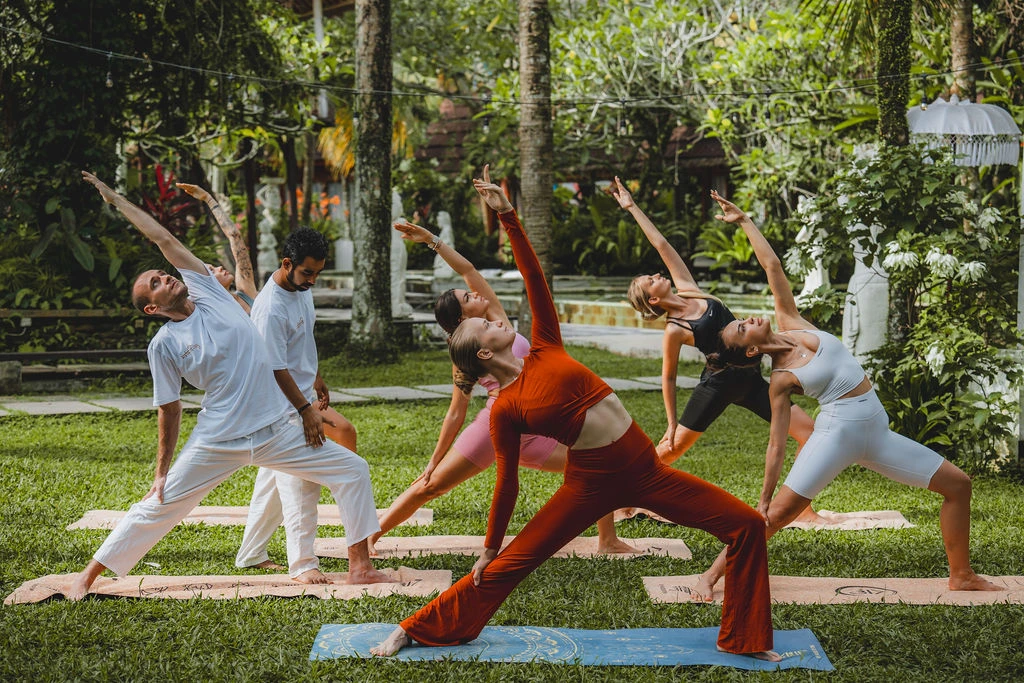
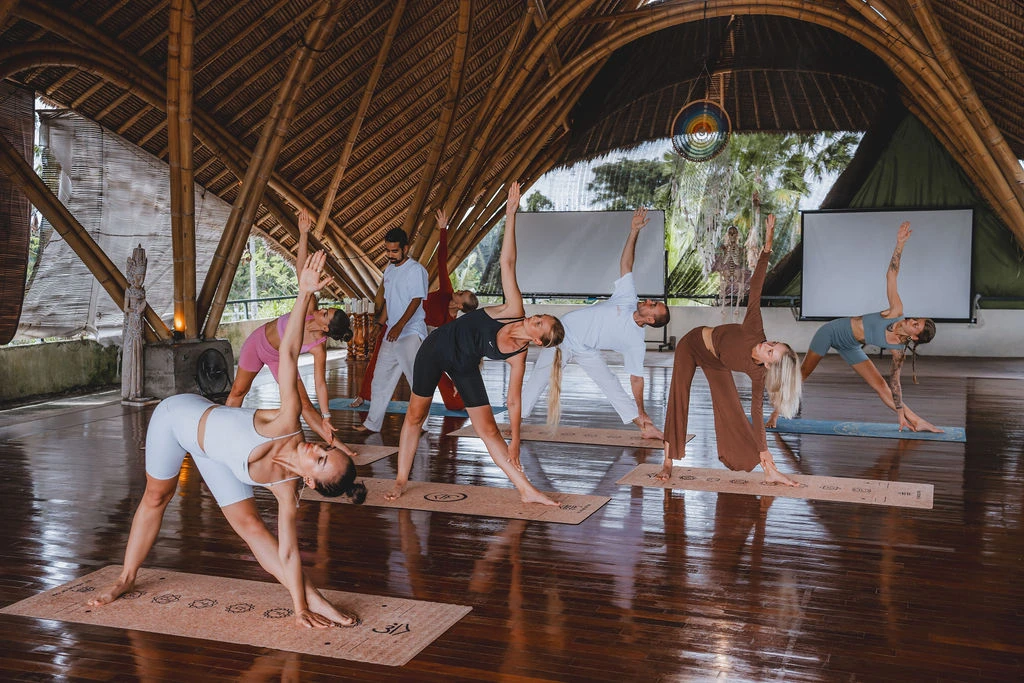
Practice happens across the property — rooftop shalas, open-air halls, and bamboo studios — with meals and accommodation in the same place. Movement through the day is short and simple.
Resting between sessions
Being able to return to your own room during a ninety-minute lunch break is a meaningful difference on a three-week program.
Spending three weeks with other YTT students
Everyone is on the same schedule for the same three weeks. The shared spaces, gardens, and pool are where the unstructured part of that happens.
How the Mansion Schedule Supports a 200-Hour Yoga Teacher Training
Each part of the day maps to a component of the training.
| Session | What it contributes |
|---|---|
| Morning asana and pranayama | Daily personal practice |
| Jnana yoga | Theory and yoga humanities |
| Teaching methodology | How to plan and deliver a class |
| Morning lab, alignment and adjustment | Applied practical learning |
| Integrated teaching practice | Preparation for the practical exam |
Daily personal practice
Morning asana and pranayama build your own practice, which is the foundation everything else rests on.
Theory and yoga humanities
Jnana yoga covers philosophy and the tradition behind the practice, feeding into the theoretical exam at the end.
Teaching methodology
A dedicated daily hour on class structure, sequencing, and clear instruction.
Alignment and practical learning
The morning lab and afternoon alignment sessions are where technique becomes something you can apply rather than only perform.
Teaching practice and assessment
Teaching practice is integrated throughout with mentor feedback, leading to practical and theoretical exams at the end of the training.
What Should You Prepare for Before Starting the Training?

Prepare for early mornings
The day begins at 6:00 AM for three weeks. Shifting your sleep schedule in the week before you travel makes the first few days easier.
Plan for full training days
Sessions run from early morning to early evening. This is a course rather than a holiday, and planning around that expectation is the single most useful preparation.
Bring what you need for daily yoga practice
Yoga equipment and learning materials are included, and students receive a welcome bag containing training materials, a neti pot, a mala bead, and a sarong. Practice clothing is the main thing to bring, and you will use it daily.
Allow time for rest and recovery
Use the breaks. The program runs across consecutive days, and recovery is part of how the three weeks stay sustainable.
Review the current schedule before arrival
The schedule is subject to change at the teacher’s discretion. Check the program page shortly before you travel rather than relying on a timetable read months earlier.
FAQs
What time does yoga teacher training start each day?
The day begins at 6:00 AM with shatkarma, followed by chanting at 6:15 AM and the main asana and pranayama practice from 6:30 AM.
How many hours do students train each day?
Sessions run from 6:00 AM through to evening sadhana ending at 6:30 PM, with breakfast, lunch, and shorter gaps in between. The program covers 200 hours across approximately three weeks.
Is there yoga practice every morning?
Yes. Asana and pranayama run daily from 6:30 AM to 7:45 AM, preceded by shatkarma and chanting.
Are meditation and pranayama included?
Yes. Pranayama is paired with the morning asana practice, and meditation is a listed curriculum element alongside mantra, Yoga Nidra, and evening sadhana.
Is yoga philosophy taught every day?
Jnana yoga is the scheduled theory and study component and appears in the published daily schedule from 10:00 AM.
Is teaching practice part of the daily schedule?
Yes. Teaching methodology runs as a dedicated daily session from 3:00 PM, and teaching practice is integrated into the program with mentor feedback.
Are alignment and adjustment sessions included?
Yes. Alignment and hands-on adjustment work runs daily from 4:00 PM, with injury-prevention biomechanics covered as part of the curriculum.
When are breakfast and lunch served?
Breakfast runs from 8:45 AM to 10:00 AM and lunch from 1:30 PM to 3:00 PM. Both are included on training days.
Is dinner included?
No. Dinner is not included, and the program is not described as all-inclusive. The schedule shows a dinner period from 6:30 PM, but students arrange that meal themselves.
Is there free time during the training day?
Yes. Meal periods are built into the schedule, the longest break falls at lunch, and the evening after 6:30 PM is unstructured.
Can students leave The Mansion during free time?
Central Ubud is about 10 minutes away, with cafes, wellness centers, and cultural sites nearby. The schedule is full, so free time is best planned around it rather than through it.
Does the daily schedule stay the same for all three weeks?
The shape of the day stays consistent. The content changes — Hatha in week one, Vinyasa Flow in week two, Ashtanga and teaching development in week three.
Is the schedule suitable for beginners?
Yes. House of Om states that all levels are welcome, including complete beginners. The first week covers Hatha foundations and rest periods are built into each day.
Are there practical and theoretical exams?
Yes. Both are held at the end of the training and are part of the program.
Where can I check the latest Mansion training schedule?
On the official Mansion program page. The schedule is subject to change at the teacher’s discretion, so that page is the reliable source.
Explore the 200-Hour Yoga Teacher Training at The Mansion
A schedule tells you more about a training than almost anything else. It shows how much practice you actually get, how much teaching preparation is built in, and what the three weeks will genuinely ask of you.
Review the full training curriculum
The curriculum is multi-style, covering Hatha, Vinyasa Flow, and Ashtanga alongside philosophy, anatomy, teaching methodology, and traditional practices.
View current 2026 and 2027 dates
Ten start dates remain in 2026, and the 2027 calendar is published in full. Availability changes by date and by room type.
Compare Mansion accommodation options
Four room types are available, all including the same training, meals, equipment, and materials.
Check current rates and booking conditions
Rates vary by room type and change over time. The early-bird rate applies to bookings made 30 or more days ahead of the training start date and paid in full, and a $500 deposit can be used to reserve a place. Check the program page for current pricing.
View The Mansion 200-hour yoga teacher training
Current dates, room options, rates, and the full schedule are published on the 200-Hour Yoga Teacher Training at The Mansion.