
Yes. Every one of our 200-hour yoga teacher trainings welcomes complete beginners, and all of them are eligible programs in The Reset, our Black Friday campaign running November 16 to 30, 2026. You do not need teaching experience to begin. What matters is choosing the format, setting and schedule that fit your life, because a discount makes a suitable course more affordable — it does not make an unsuitable one right for you.
Can Complete Beginners Book During The Reset?
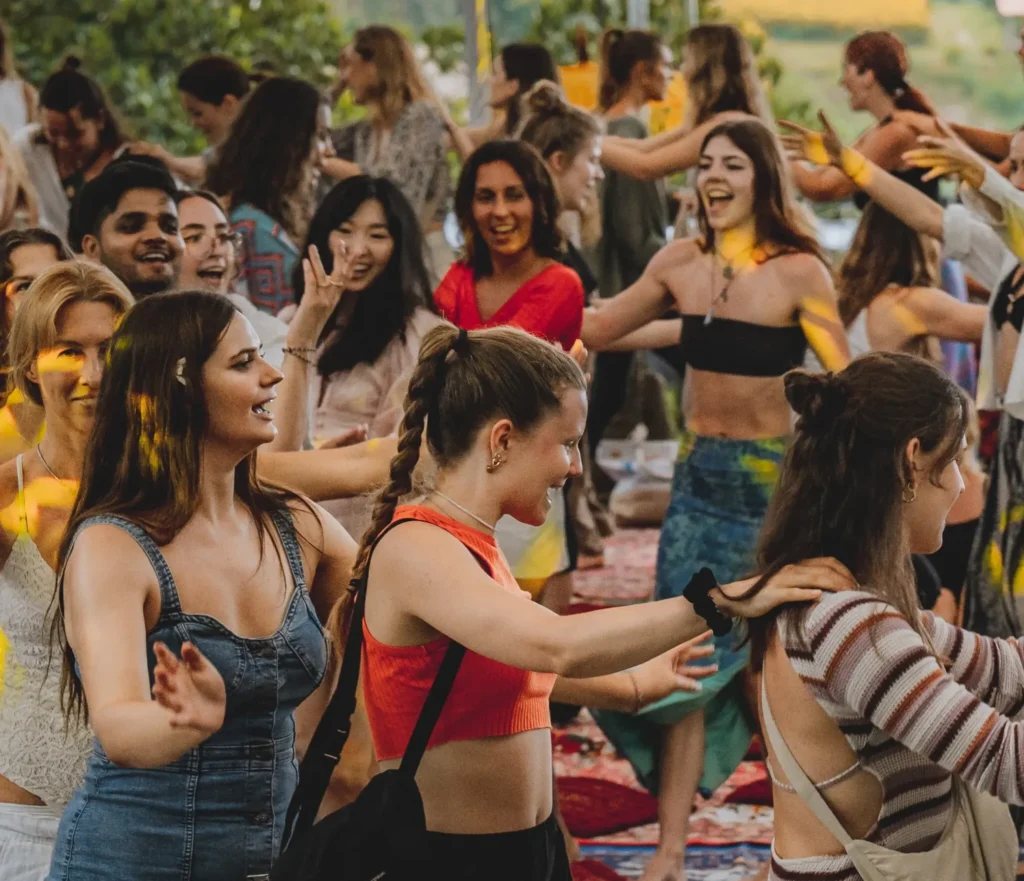
You can. The campaign covers our full range of 200-hour trainings across residential, hybrid and online formats, and every one of them states that beginners are welcome. Only our programs in India are excluded from the promotion.
Our 300-hour programs are a different matter. Those are advanced trainings that require a completed 200-hour course first, so they are not a starting point no matter how the pricing looks.
What Beginner-Friendly Actually Means
It means the course is built on the assumption that you are arriving without prior training, and that the teaching starts where you are. It does not mean the course is easy, and the distinction is worth sitting with before you book.
A 200-hour training is a structured education. You will have early starts and daily physical practice. You will study anatomy and philosophy, learn how to sequence and cue a class, teach in front of other people, and be assessed. Beginner-friendly means nobody expects you to arrive already able to do those things. It does not mean you can drift through.
Not every teacher training is built this way. Some assume years of practice, or are designed for teachers deepening existing skills. When you are comparing courses anywhere, look for an explicit statement that beginners are welcome rather than inferring it from a friendly tone.
Is a 200-Hour Course Right If You Have Never Taught?
Yes, and most people arriving at a first training have never taught. That is what the course is for.
It is also worth saying that you do not need to want to teach. Plenty of people take a 200-hour training to understand their own practice properly — to learn why the poses are sequenced the way they are, what the breath is actually doing, and where the philosophy comes from. Teaching afterward is an option that opens, not an obligation you take on by enrolling.
What helps is some existing practice. You do not need to be advanced or flexible, and none of our programs require a particular level. But arriving with a sense of how your body moves in a few basic shapes makes the first week more comfortable, simply because you are learning one thing instead of two.
Which of Our 200-Hour Trainings Welcome Beginners
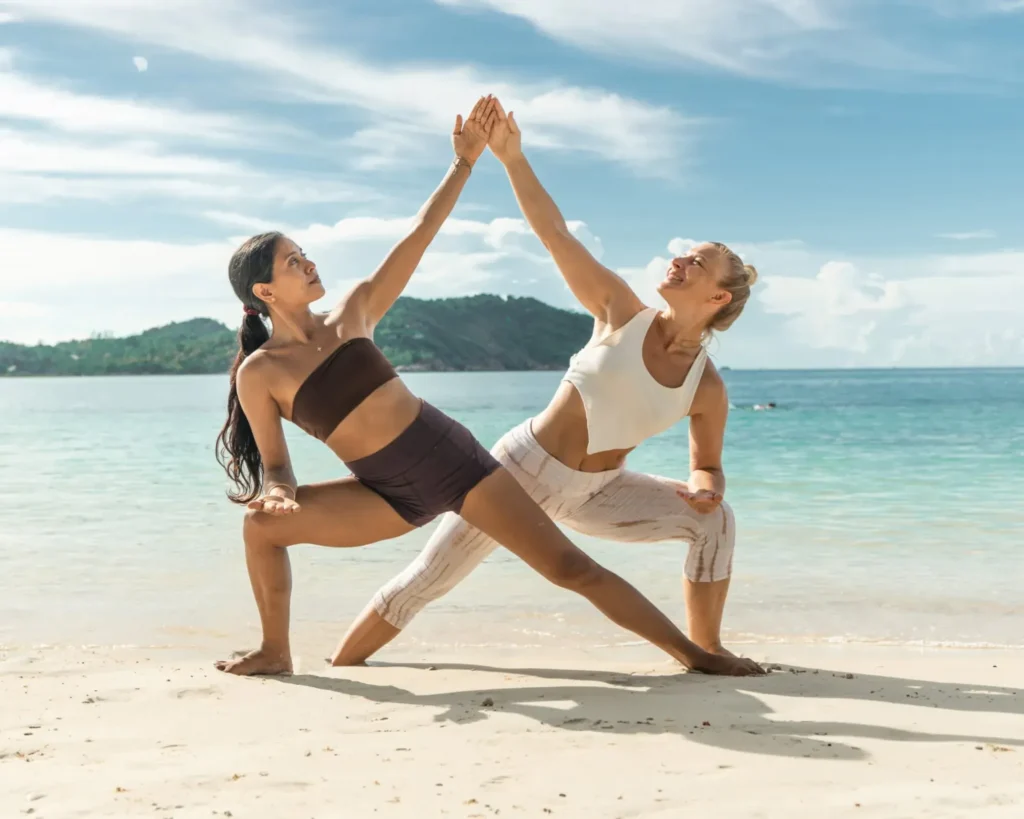
All of them. Each program page states it directly, and several specify absolute beginners. The real question is not whether you qualify but which arrangement suits your circumstances, so here is what each group of options actually asks of you.
Residential Options in Bali and Thailand
Residential training means you stay at the training location for the whole course and the schedule is handled for you. It is the most immersive route and the one that asks for the most continuous time away.
Our 200-hour training at Amertham runs for 20 nights in Bona, Gianyar — a secluded jungle setting above a deep river gorge. It is open to all levels including complete beginners, moving from a Hatha foundation through Vinyasa Flow to Ashtanga elements and teaching development, and finishing with practical and theoretical exams. Accommodation is included, along with breakfast, lunch and dinner.
Our training at The Mansion is a separate 20-day program in Ubud, with accommodation included across four room categories and two meals provided on training days. Our training in Koh Phangan runs 20 days with 19 nights in Thailand, and is the only residential course of the three that also offers a training-only booking without a room, for people who would rather arrange their own accommodation.
Hybrid Options for First-Time Trainees
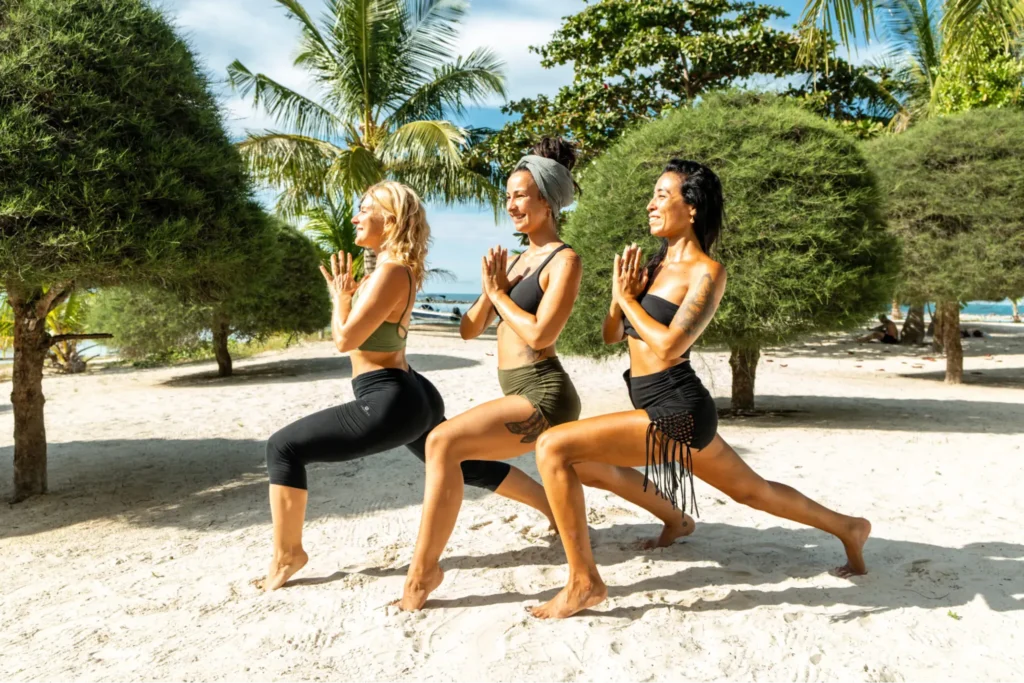
Hybrid training splits the course: you work through the theory online at your own pace, then join a ten-day in-person block covering nine nights. All three of our hybrid programs follow that structure and all three welcome beginners.
Our hybrid at Melati is in Bali close to Ubud, with amenities nearby and the widest choice of dates. Our 200-hour hybrid at Pelaga is up in the Bali mountains at around 650 to 750 meters — quieter and cooler, with no prior certificate required. For that one we suggest arriving with some foundation and a few months of consistent practice, as guidance rather than a requirement. Our hybrid in Koh Phangan runs on Bovy Beach in Thailand and, like its residential counterpart, offers a training-only option.
For a first training, the appeal of hybrid is a shorter trip. The thing to be honest about is the online half: it only works if you actually do it, and nobody will chase you through it.
One clarification worth making, because the names are similar. Our 300-hour hybrid also runs at Pelaga, and that is a separate advanced course requiring a completed 200-hour training. If you are booking your first course, the 200-hour page is the one you want.
Online Study for Beginners
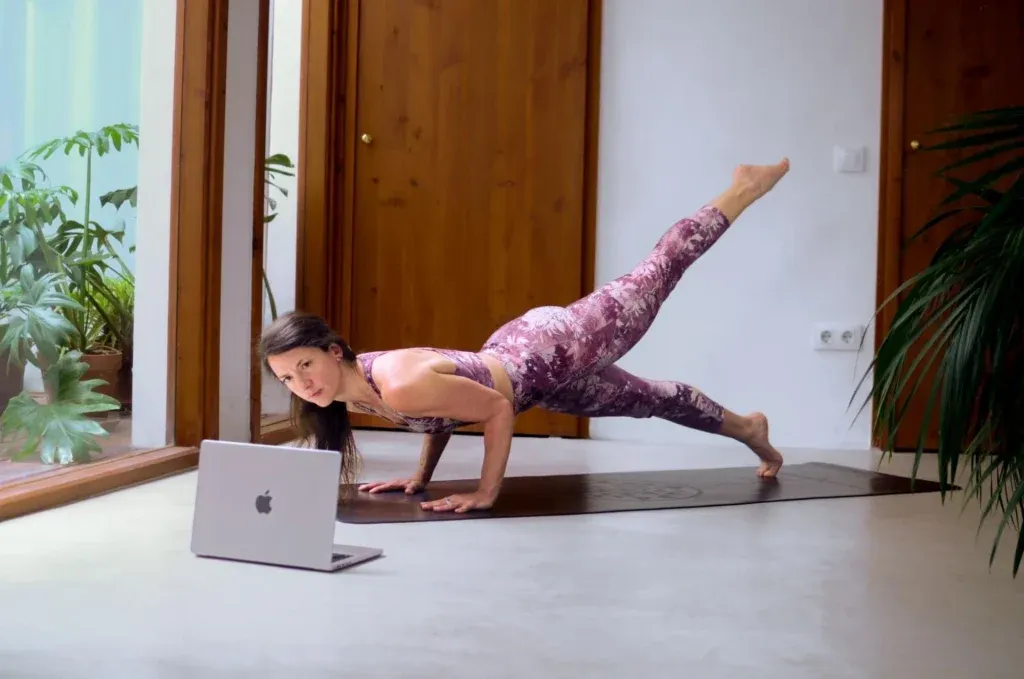
Our 200-hour online training is designed for complete beginners as well as experienced practitioners, and it removes travel from the decision entirely.
It is not entirely self-paced, and that matters for a first course. You work through the modules at your own pace, but you are matched with a study group and a personal mentor based on your timezone, and graduation requires live participation: nine workshops, which you can attend live or watch as recordings, and a minimum of three of the six group Zoom calls with your assigned teacher. Assessment includes a written exam, a sixty-minute recorded teaching demonstration and a final essay. You keep platform access afterward.
For a beginner, the live sessions and the mentor are the parts that make this work. Studying alone from recordings is a harder way to learn something physical for the first time, which is why the structure is built the way it is.
Finding the Course That Fits Your Situation
| If this is you | Format | Our programs | Why it might fit | What to verify |
|---|---|---|---|---|
| You want full in-person immersion | Residential | Amertham; The Mansion; Koh Phangan | Everything is handled once you arrive, and you are with the same group throughout | That you can take the full period away, and which dates are open |
| You need less time away from work | Hybrid | Melati; Pelaga 200; Koh Phangan hybrid | Theory is done online beforehand, so the trip is ten days rather than three weeks | That you will realistically complete the online phase |
| You cannot travel internationally | Online | Online 200-hour | No travel at all, with a study group and mentor matched to your timezone | The live session times against your own schedule |
| You want somewhere quiet and nature-based | Residential or hybrid | Amertham; Pelaga 200 | Jungle gorge setting, or mountains at 650–750 m | Travel time from the airport, and current dates |
| You want the most direct access to teachers | Residential | Amertham; The Mansion; Koh Phangan | The longest continuous face-to-face time, with teaching practice observed in the room | Who is scheduled to lead the intake you are booking |
| You need flexible remote study | Online | Online 200-hour | Modules at your own pace around scheduled live sessions | The live attendance requirement, not just the module hours |
| You are unsure about physical readiness | Any | All seven welcome beginners | No program requires a particular level, and all teach from the foundations | Mention any injury or condition to our team before booking |
Your First Yoga Teacher Training Starts With the Right Choice
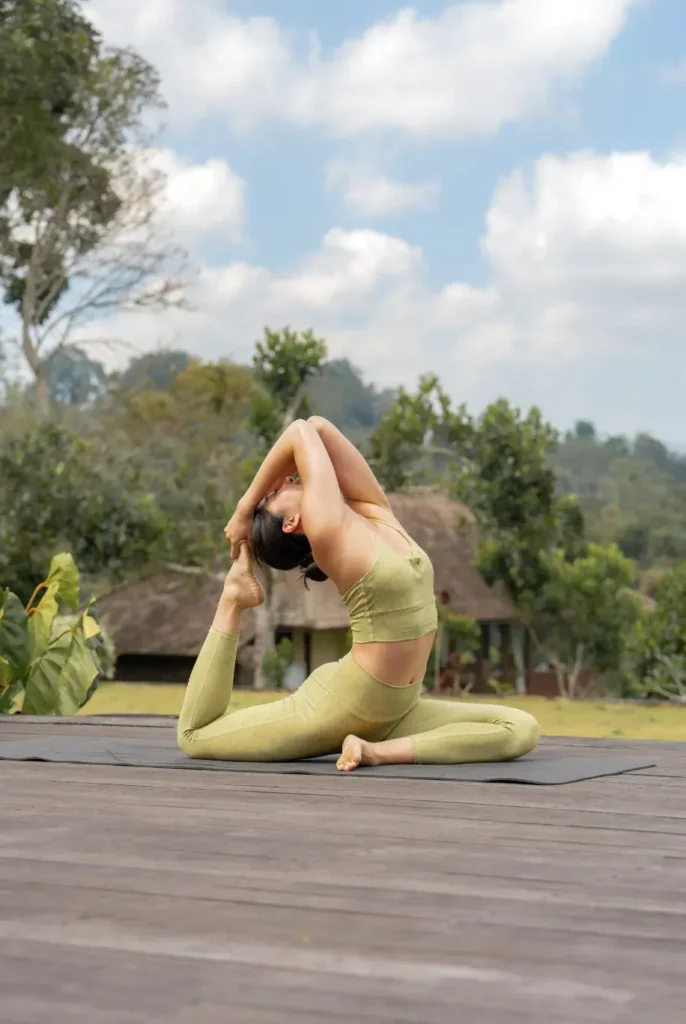
You do not need to have everything figured out before exploring your first yoga teacher training. Start by finding a 200-hour course that fits your experience, schedule and learning goals. The Reset opens on November 16 — register now and we will make sure you hear about it first.
Tell Me First
How to Think About the Black Friday Offer
The campaign runs November 16 to 30 at 25% off eligible programs with payment in full, and final prices go live when it opens.
For a first training, the useful order is to choose the course and then look at the offer, rather than the reverse. The format decides how the next few months of your life are arranged. The discount decides what it costs. Only one of those is worth reorganizing your year around, and if a course would not suit you at full price, a percentage has not changed what the course is.
One condition is worth knowing early: the discount requires payment in full rather than a deposit. Our terms also state that a promotional discount applies only to your original booking date and does not survive a reschedule. If you are booking a first course several months ahead and there is a real chance your dates will move, weigh that now.
What to Check Before Paying in Full
Four things specific to a first training, beyond the usual.
Check that the program states beginners are welcome — for ours it is on every page, but it is the habit worth forming. Check what the daily schedule actually contains, because the number of hours in a training day surprises most first-timers more than the content does. Check what is included where you are going, since meals and accommodation differ from program to program and are listed on each page rather than shared across them. And tell us about any injury or health condition before you book, so we can talk honestly about whether a particular course suits you.
Then confirm your intake is covered by the campaign, as eligibility is set by program and date.
What to Prepare Before Your First Training
Less than people expect, and none of it involves getting good at yoga first.
Build a regular practice in the weeks beforehand if you can — consistency matters far more than difficulty, and three short sessions a week will serve you better than one ambitious one. Get used to reading about yoga as a subject rather than an activity, since a good portion of the course is academic. Sort out the practical things early: travel, insurance, and time off agreed with work rather than assumed.
Mostly, arrive willing to be a beginner in front of other people. That is the part that actually takes preparation, and everyone in the room is doing the same thing.
What You Receive, and What RYT 200 Means
Completing the course gives you our school-issued 200-hour completion certificate. That is separate from registering with Yoga Alliance. Registered Yoga Teacher, or RYT, is a designation you apply for yourself after completing a qualifying training, with its own application and fee. Finishing a course does not register you automatically, and no school can do it on your behalf.
Whether you register at all is a decision for later. It matters in some teaching contexts and not in others, and you do not need to resolve it before choosing a first course.
Beginner YTT Questions
Can complete beginners join a 200-hour yoga teacher training?
Yes. All seven of our 200-hour programs welcome complete beginners, and each states it on its own page. You do not need teaching experience or an advanced practice. Beginner-friendly does not mean undemanding — expect early starts, daily practice, theory and assessments.
Is the Black Friday offer available for beginner programs?
Yes. All of our 200-hour trainings are eligible for The Reset, which runs November 16 to 30, 2026, at 25% off eligible programs with payment in full. Our India programs are excluded. Our 300-hour courses are advanced training and not a first step.
Is residential, hybrid or online better for beginners?
None is better in general. Residential gives the most continuous in-person teaching, hybrid shortens the trip by moving theory online, and online removes travel entirely. For a first course, the decision usually comes down to how much continuous time you can take away.
Can I become a yoga teacher without prior teaching experience?
Yes — that is what a 200-hour training is for. Most people arriving at a first course have never taught. You also do not need to intend to teach; many students take the training to understand their own practice.
What should beginners expect during a 200-hour course?
Early starts, daily physical practice, study of anatomy and philosophy, learning to sequence and cue a class, teaching in front of others, and assessments. It is a structured education rather than an extended retreat, and participation is expected throughout.
Can I complete a beginner 200-hour training online?
Yes. Our online 200-hour course is designed for complete beginners. It is not entirely self-paced: you are matched with a study group and mentor by timezone, and graduation requires completing nine workshops and attending at least three of six live Zoom calls, plus assessments.
Does a 200-hour certificate automatically make me an RYT 200?
No. Completing the course gives you our school-issued completion certificate. RYT 200 is a designation you apply for yourself from Yoga Alliance after a qualifying training, with its own application and fee.
Choosing Your First Course
Start with what your life allows rather than what sounds most appealing, because that narrows seven options to two or three quickly. Then choose the setting you actually want to spend that time in. You can see all our programs together to compare formats, locations and current dates, and our team is happy to talk it through if you would rather not decide alone.
| A Meaningful Beginning. Your Own Reset.
Your first yoga teacher training should be a considered choice — one that gives you space to learn, practice and grow at your own pace. Explore our beginner-suitable options, and register to hear about The Reset before anyone else when it opens on November 16. |