
| A 200-hour yoga teacher training at The Mansion covers Hatha, Vinyasa Flow, and Ashtanga across three weeks, alongside asana and pranayama, alignment and hands-on adjustment, injury-prevention biomechanics, teaching methodology, philosophy, meditation and mantra, Yoga Nidra, shatkarma, Ayurveda, kirtan, sound healing, and Voice Activation. The program concludes with practical and theoretical exams. |
YTT stands for Yoga Teacher Training. Each area is covered in detail below.
Hatha yoga foundations
Hatha forms the foundation of the curriculum and is the focus of week one.
Vinyasa Flow
Vinyasa Flow is the main focus of week two, building on the Hatha foundations.
Ashtanga yoga
Ashtanga is included in week three, alongside teaching development.
Pranayama and asana practice
Daily physical practice paired with breathwork in the morning session.
Teaching methodology
A dedicated daily session on how to plan, structure, and deliver a class.
Alignment and adjustment
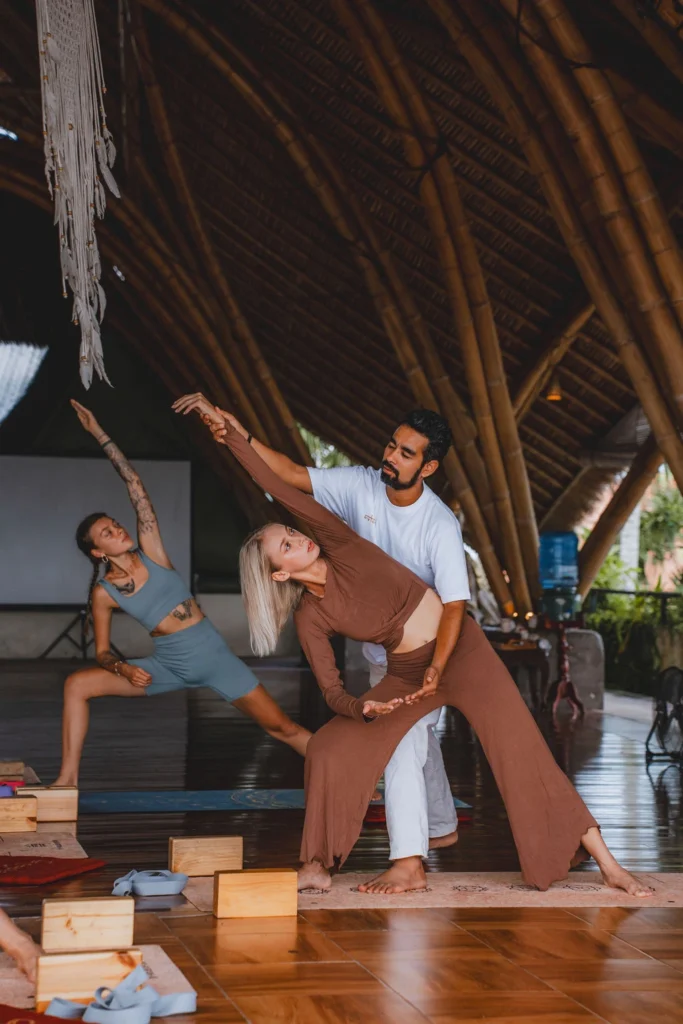
Alignment workshops and hands-on adjustment training, with injury-prevention biomechanics.
Yoga philosophy and Jnana yoga
Jnana yoga is the scheduled theory and study component of the program.
Meditation, Yoga Nidra and mantra
Meditation, mantra, chanting, and Yoga Nidra are all listed curriculum elements.
Practical teaching and final assessments
Teaching practice is integrated into the program, and the training concludes with practical and theoretical exams.
The Mansion 200-Hour Yoga Teacher Training Curriculum at a Glance
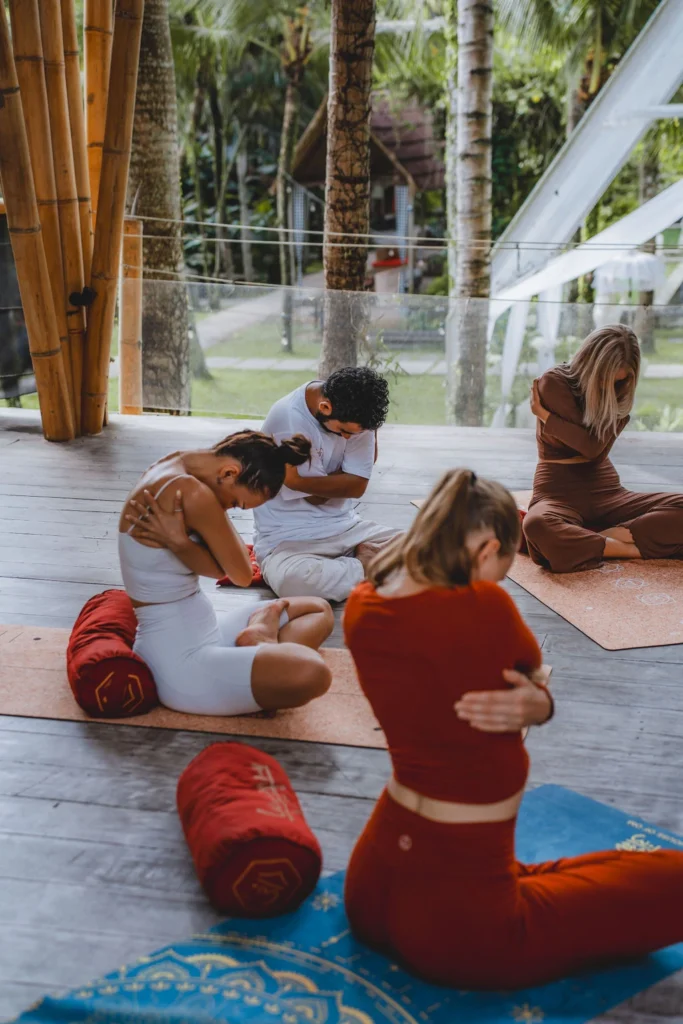
| Detail | Information |
|---|---|
| Program | 200-Hour Yoga Teacher Training |
| Location | The Mansion, Ubud, Bali, Indonesia |
| Duration | 20 nights, approximately three weeks |
| Training style | Multi-style — Hatha, Vinyasa Flow, and Ashtanga |
| Experience level | All levels welcome, including complete beginners |
| Progression | Hatha, then Vinyasa Flow, then Ashtanga and teaching development |
| Assessment | Practical and theoretical exams at the end of training |
Program: 200-hour yoga teacher training
A foundational 200-hour program covering practice, theory, and teaching skills.
Location: The Mansion, Ubud, Bali
The Mansion is House of Om’s most-requested campus in Bali, with training delivered on the property where students also stay.
Duration: three-week residential training
Twenty nights, which works out at approximately three weeks from arrival to completion.
Training style: multi-style yoga education
The program is multi-style rather than single-lineage. It is rooted in Hatha and Vinyasa Flow, with elements of Ashtanga.
That matters when comparing programs. A single-lineage training goes deeper into one method; a multi-style program gives you exposure to three and lets you work out which you want to pursue afterward.
Experience level: beginners and experienced practitioners welcome
House of Om states that all levels are welcome, including complete beginners. Teaching ambitions are not required to join.
Training progression: Hatha to Vinyasa to Ashtanga and teaching practice
The sequence is deliberate. Foundations first, then flow, then structure and teaching development.
How Is the 200-Hour Curriculum Structured Across Three Weeks?
| Stage | Focus |
|---|---|
| Week 1 | Hatha yoga foundation |
| Week 2 | Vinyasa Flow exploration |
| Week 3 | Intro to Ashtanga yoga and teaching development |
| Final stage | Practical and theoretical exams |
Week 1: Hatha yoga foundations
The opening week establishes foundations through Hatha. The pace is deliberate, which is what makes the program workable for beginners.
Week 2: Vinyasa Flow exploration
The second week moves into Vinyasa Flow, applying the first week’s foundations to breath-led movement.
Week 3: Ashtanga yoga and teaching development
The final week combines Ashtanga-focused practice with teaching development. The emphasis shifts from learning postures to learning to lead them.
Practical and theoretical assessments
The program concludes with both a practical exam and a theoretical exam, held at the end of the training.
What Do You Learn About Hatha Yoga?
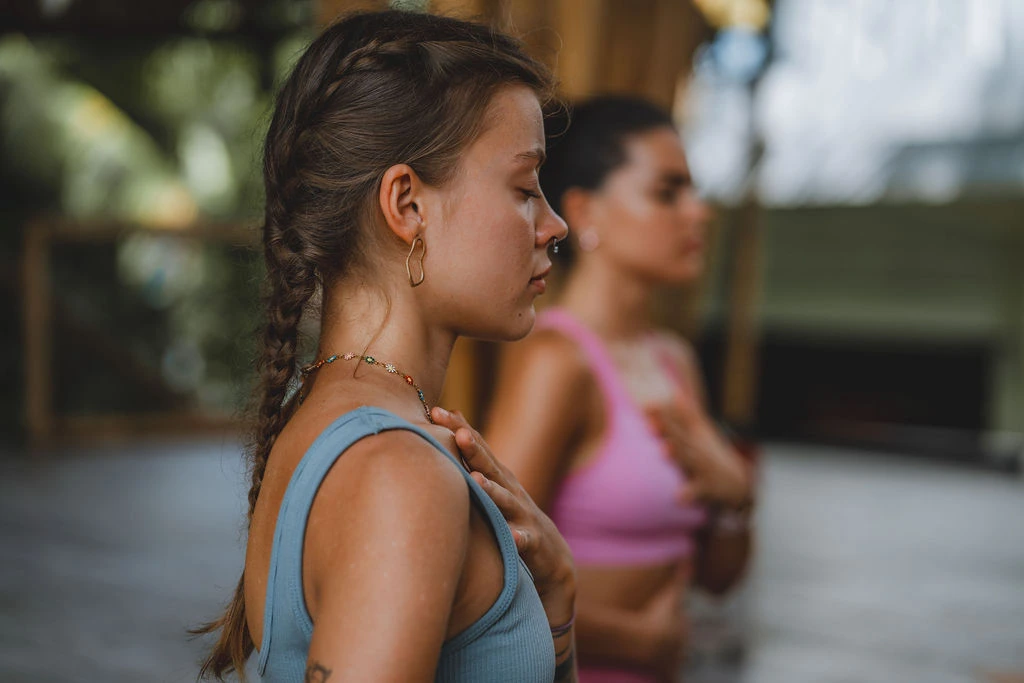
Hatha is the foundation stage of the House of Om curriculum, covered during week one. What follows describes what Hatha practice generally involves and how it functions as a foundation.
Building a foundation in asana practice
Hatha work centers on individual postures held and studied rather than flowed through. That makes it the natural starting point for a curriculum that later moves into faster styles.
Understanding alignment
Alignment is a dedicated part of the House of Om curriculum, covered in workshops and applied sessions. Studying postures individually gives you time to understand how each one is structured.
Developing body awareness
Working slowly through postures builds the awareness you need before you can observe it in anyone else. Teaching requires noticing what a body is doing, and that starts with your own.
Connecting breath and movement
Pranayama is paired with asana in the daily morning session, so breath and movement are taught together from the first week rather than separately.
Using Hatha foundations in teaching
Foundational postures are what most general classes are built from. Understanding them well is what allows you to teach a mixed-level room, whatever style you eventually favor.
What Do You Learn About Vinyasa Flow?
Vinyasa Flow is the main focus of week two. The following describes what Vinyasa practice generally involves, applied to where it sits in the program.
Linking movement with breath
Vinyasa is characterized by movement linked to breath. Week two applies the breath work established in week one to continuous sequences.
Building flow sequences
Where Hatha studies postures individually, Vinyasa is concerned with how they connect. Sequencing is covered within the daily teaching methodology session.
Transitions between postures
In a flowing practice, the movement between postures matters as much as the postures themselves. This is generally where alignment knowledge from week one becomes most useful.
Pacing a Vinyasa class
Pace is a teaching decision rather than a fixed property of the style. Class planning and sequencing are part of the teaching methodology work.
Applying Vinyasa principles to teaching practice
Teaching practice is integrated throughout the program with mentor feedback, so what you study in week two feeds directly into how you lead sessions in week three.
What Do You Learn About Ashtanga Yoga?
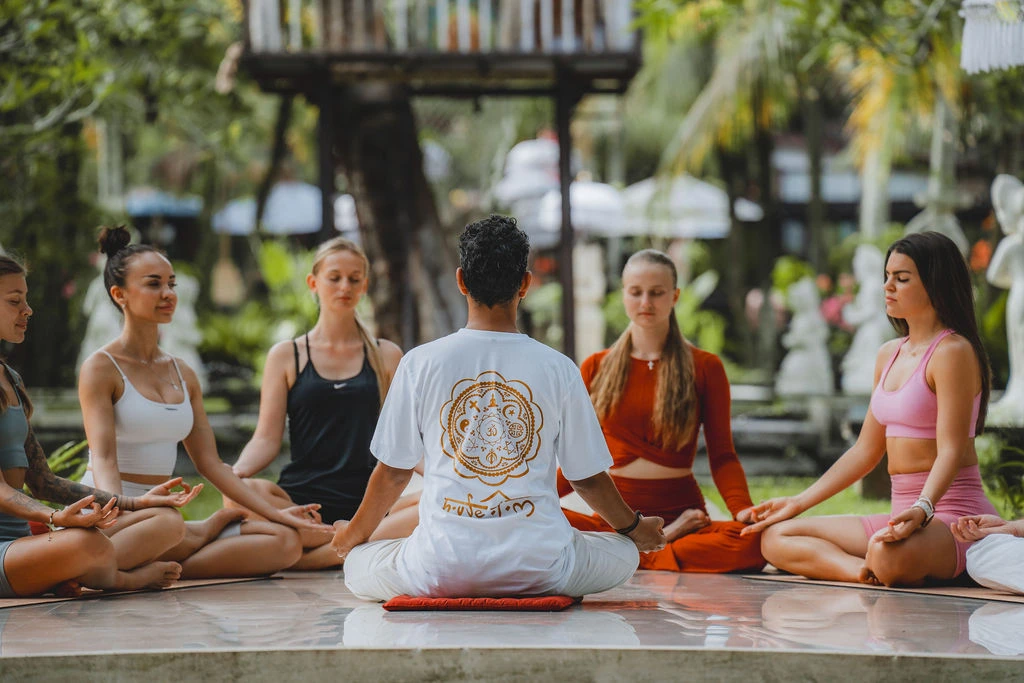
Ashtanga is included during week three. House of Om describes the program as rooted in Hatha and Vinyasa Flow with elements of Ashtanga, so this is one component of a multi-style curriculum rather than a dedicated Ashtanga training.
Understanding the role of Ashtanga in the training
Ashtanga appears in the final week alongside teaching development. It is a part of the curriculum rather than its center, which is worth knowing if a dedicated Ashtanga program is what you are looking for.
Developing a more structured practice
Ashtanga is generally characterized by an established sequence practiced consistently. That structure is a useful contrast after two weeks of foundational and flowing work.
Exploring sequence and discipline
Encountering a set sequence after studying postures individually and then in flow shows you three different relationships between structure and movement.
Applying Ashtanga elements during week three
Week three runs Ashtanga-focused practice alongside teaching development, so the final week is where practice and teaching come together.
What Do You Learn About Asana and Pranayama?
Daily asana practice
Asana is the daily physical practice of the program, scheduled each morning and changing in character as the styles progress across the three weeks.
Pranayama techniques
Pranayama is included with the morning asana practice as a listed curriculum element.
Breath awareness
Breath awareness underlies both the physical practice and the meditation work. It is also what connects the morning session to the evening sadhana.
Integrating breath into physical practice
Pairing pranayama with asana in the same session rather than teaching them separately means breath is part of movement from the beginning.
Using pranayama within a yoga class
You experience these practices as a student and learn them as something you may guide for others. Both purposes run at once, which is true of most sessions in the program.
What Do You Learn About Alignment and Adjustment?
Alignment and adjustment run as a dedicated daily session and are among the most practical parts of the curriculum.
Understanding functional alignment
Alignment workshops are a dedicated part of the program rather than something touched on during practice.
Hands-on adjustment practice
Hands-on adjustment training is listed as part of the curriculum. This is a skill that is difficult to learn any way other than in a room with a teacher, which is one argument for in-person training.
Injury-prevention principles
Injury-prevention biomechanics are covered as part of the program.
Observing different bodies in practice
Alignment knowledge is what makes observation useful. Understanding why a posture is structured a particular way is what allows you to see when someone needs it structured differently.
Giving clear and appropriate guidance
Adjustment is both a physical and a communication skill. Mentor feedback is built into the program, so this is practiced rather than only explained.
What Do You Learn in Teaching Methodology?
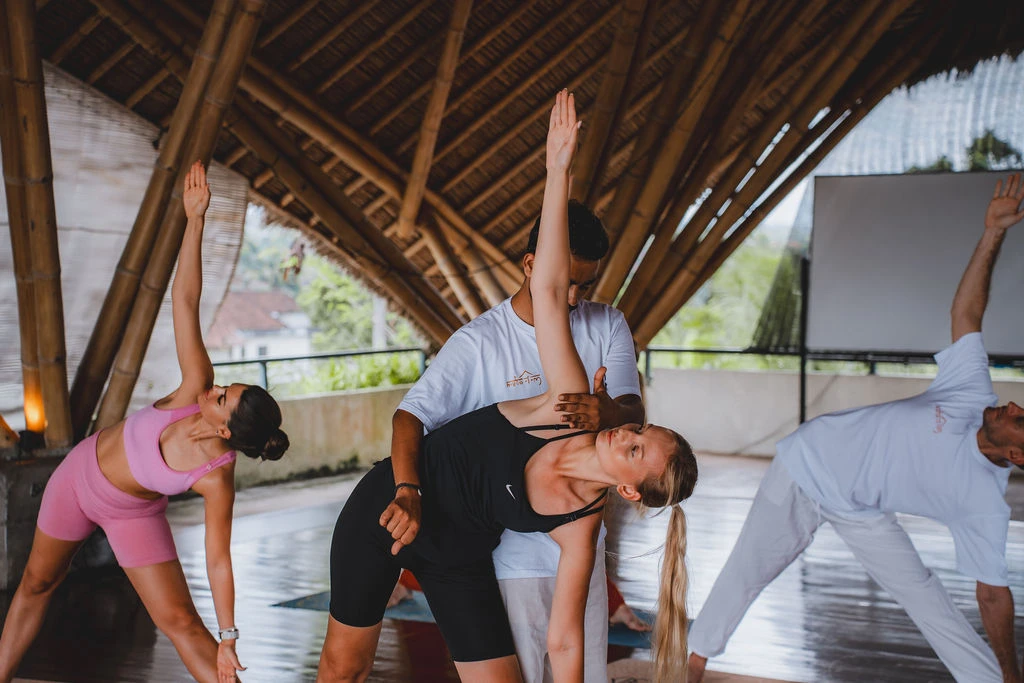
Teaching methodology runs as a dedicated daily session. For anyone intending to teach, this is the core of the program.
How to structure a yoga class
Class planning is covered within the methodology work, progressing across the three weeks as the styles change.
How to sequence a class
Sequencing is what holds a class together. Knowing postures and knowing what order to put them in are separate skills.
How to give clear verbal instructions
Cueing is part of the session. Being able to do a posture and being able to talk a room through it are different things, and the second is what a teacher training is for.
How to demonstrate and guide practice
Demonstration and guidance are practiced as part of teaching methodology and applied during teaching practice.
How to develop a teaching voice
Voice Activation covers this directly, and is described in its own section below.
How to receive and apply teacher feedback
Supportive mentor feedback runs throughout the program. Receiving feedback usefully is its own skill, and three weeks of it is more valuable than a single assessment at the end.
How Do You Practice Teaching During the 200-Hour YTT?
Teaching practice is integrated into the program rather than saved for the final days.
Guided teaching practice
Teaching practice is built into teacher development across the training, with mentor feedback.
Working with other students
Everyone in your intake is on the same schedule for the same three weeks, which is what makes practicing on each other possible.
Practicing class instructions
Cueing and instruction are rehearsed rather than only studied. This is where the gap between knowing a sequence and leading one becomes obvious, usually in the first attempt.
Applying alignment and adjustment knowledge
The daily alignment session and the teaching practice feed each other. What you learn about observation in one you apply in the other.
Preparing for the practical assessment
Because teaching practice runs throughout with feedback, the practical exam comes after weeks of preparation rather than as a first attempt.
What Yoga Philosophy Do You Study?
Jnana yoga
Jnana yoga is the scheduled theory and study component, running through the middle of each training day.
Connecting yoga philosophy with daily practice
Theory is placed after the morning practice, which gives it something concrete to attach to. You have already moved through the material being discussed.
Understanding yoga beyond physical postures
The curriculum treats yoga as more than asana. Shatkarma, mantra, meditation, Yoga Nidra, Ayurveda, and kirtan are all listed elements, and the daily schedule reflects that shape — cleansing and chanting at the start, evening practice at the close.
Applying philosophy to teaching and personal practice
Theory sessions feed into the theoretical exam at the end of the training and into the teaching methodology work each afternoon.
For the specific texts and topics covered within the Jnana yoga component, check the current program page or ask the school directly — curricula vary between intakes.
What Do You Learn About Meditation and Mantra?
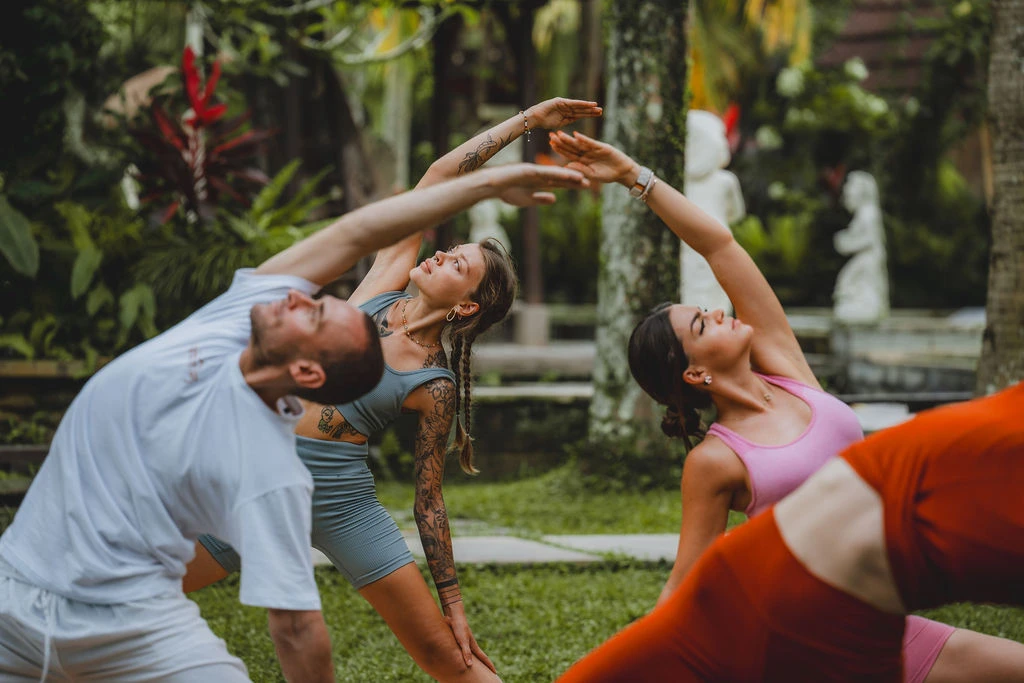
Daily meditation practice
Meditation is a listed curriculum element. Evening sadhana closes each training day.
Mantra and chanting
Mantra is part of the curriculum, and chanting runs as a daily morning component between shatkarma and the main practice.
Developing attention and awareness
These practices are placed at the beginning and end of the day, which gives the schedule its shape: quiet opening, demanding middle, quiet close.
Experiencing meditation as both student and future teacher
You practice meditation and also learn it as something you may guide. That dual purpose applies across the program.
What Is Yoga Nidra and How Is It Included?
Experiencing guided Yoga Nidra
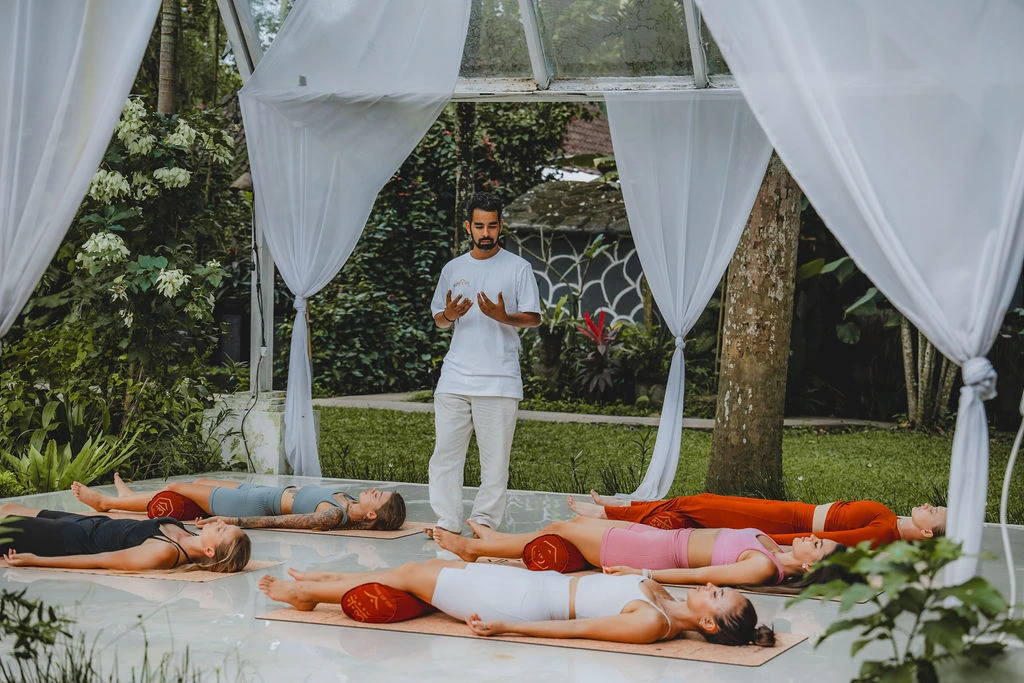
House of Om describes Yoga Nidra as guided relaxation and meditation. It is scheduled around midday, in the middle of a long training day.
Understanding its place in the training
Its placement is worth noticing. It falls between the theory block and lunch, and it is a practice rather than a break.
Learning through direct practice
Yoga Nidra is learned by being guided through it repeatedly. Daily exposure across three weeks is how the practice becomes something you could lead.
What Do You Learn About Shatkarma?
Introduction to yogic cleansing practices
Shatkarma refers to yogic cleansing techniques. House of Om describes them as supporting physical and energetic purification.
Shatkarma in the morning schedule
It is scheduled daily at the start of the day, as a listed curriculum element rather than an optional extra. The student welcome bag includes a neti pot, which connects directly to this practice.
Understanding its role within traditional yoga practice
For many students this is the least familiar part of the curriculum. Encountering it daily for three weeks is what turns it from unfamiliar into routine.
What Do You Learn About Ayurveda?
Introduction to Ayurvedic principles
Ayurveda is a listed curriculum element, described as an introduction to Ayurvedic principles.
How Ayurveda relates to yoga
House of Om frames it in terms of its relationship with yoga and holistic well-being rather than as a standalone subject.
Exploring holistic lifestyle concepts
This is an introduction within a 200-hour program rather than a qualification in Ayurveda. Treat it as exposure to a subject you may choose to study further.
How Are Kirtan and Sound Practices Included?
Kirtan and group chanting
Kirtan is group chanting, listed as part of the curriculum.
Bhakti-inspired practice
House of Om connects kirtan with Bhakti yoga, oriented around unity and shared practice.
Sound healing sessions
A sound healing journey is included, using restorative vibrations to support relaxation and inner balance.
Experiential learning beyond asana
These are participatory rather than instructional. They are part of why a residential format works — group practices of this kind need a group.
What Is Voice Activation in Yoga Teacher Training?
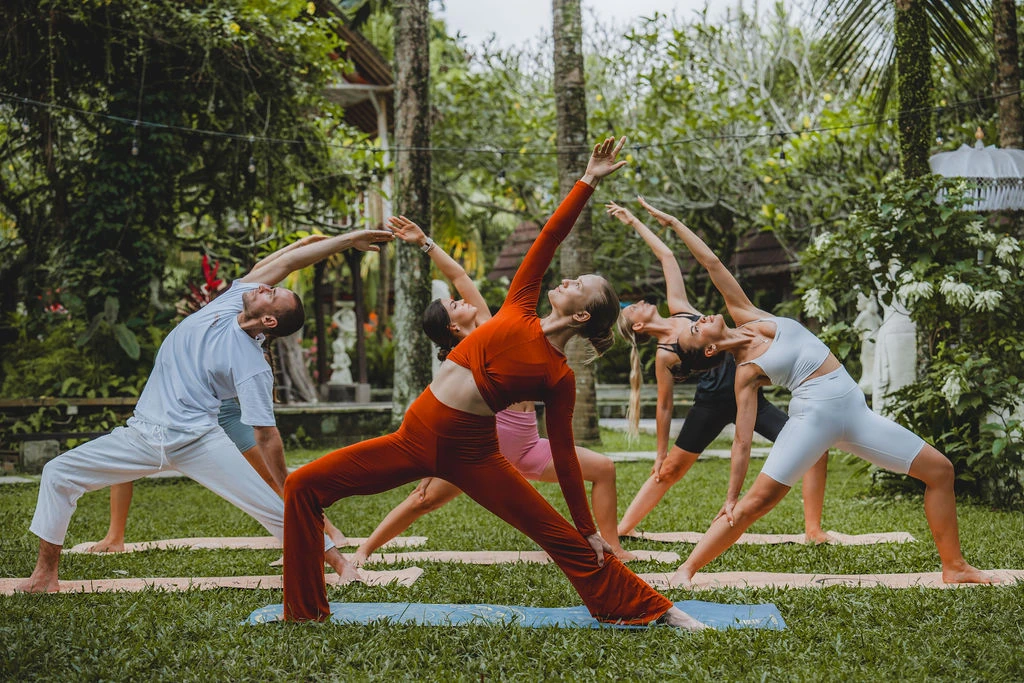
Voice Activation is one of the more unusual elements of this curriculum, and one of the most practically useful.
Developing clarity when speaking
The practice is built around clarity, alongside confidence and intention.
Building confidence in your teaching voice
House of Om describes it as developing a teaching voice that feels natural and authentic rather than performed.
Communicating instructions with intention
Communicating effectively is a stated aim of the practice, which connects it directly to the cueing work in teaching methodology.
Developing presence while leading a class
Teaching presence is named as part of what the practice addresses.
This is worth singling out when comparing programs. Many new teachers know their sequences well and then discover that projection and pacing are the harder part of standing in front of a room. Few 200-hour curricula train it directly.
What Do You Learn About Anatomy and Biomechanics?
Movement and body awareness
Anatomy in this curriculum is framed around movement and injury prevention rather than as abstract study.
Applying anatomy to asana practice
Biomechanics connect to the alignment sessions, where the knowledge becomes something you apply rather than recall.
Supporting safer movement
Injury-prevention biomechanics are a stated part of the program.
Injury-prevention principles
Understanding how movement can go wrong is what allows you to teach in a way that reduces the chance of it.
Connecting anatomy with alignment and teaching
Anatomy, alignment, and teaching are treated as one chain rather than three subjects. That is the practical sequence: understand the body, understand the posture, then teach it to someone whose body is not yours.
What Does a Typical Learning Day Look Like?
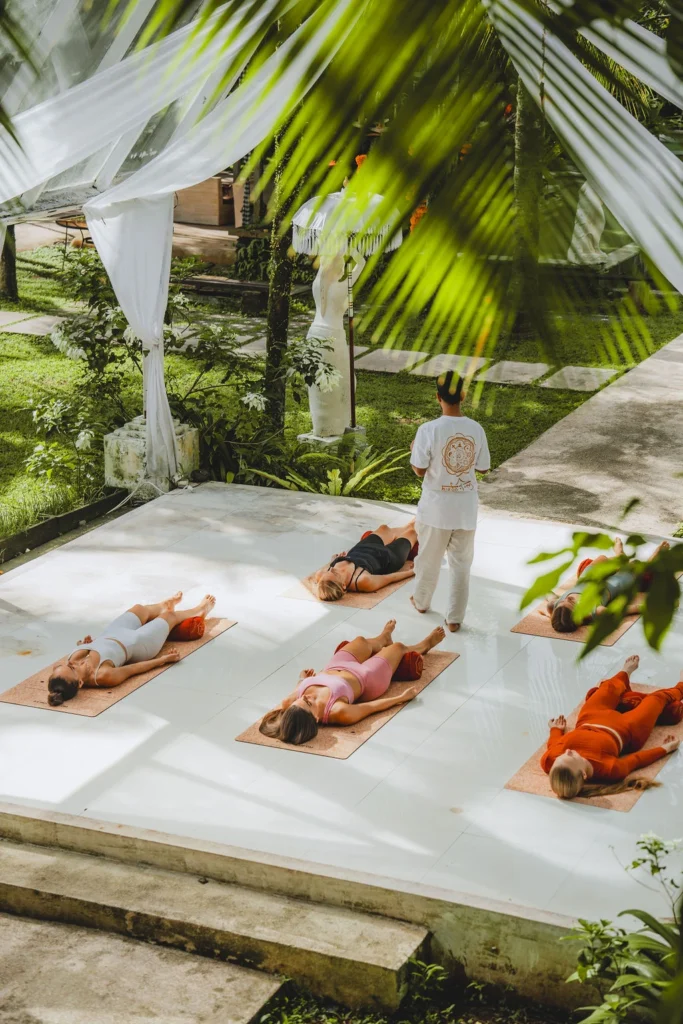
| Time | Session |
|---|---|
| 06:00 – 06:15 | Shatkarma |
| 06:15 – 06:30 | Chanting |
| 06:30 – 07:45 | Asana and pranayama |
| 08:00 – 08:45 | Morning lab |
| 08:45 – 10:00 | Breakfast |
| 10:00 – 12:30 | Jnana yoga |
| 12:30 – 13:15 | Yoga Nidra |
| 13:30 – 15:00 | Lunch |
| 15:00 – 16:00 | Teaching methodology |
| 16:00 – 17:15 | Alignment and adjustment |
| 17:30 – 18:30 | Evening sadhana |
| 18:30 – 19:30 | Dinner |
The daily schedule is subject to change at the teacher’s discretion. Check the program page for the current timetable.
Morning shatkarma and chanting
The day opens with cleansing practice and chanting before any physical work.
Asana and pranayama practice
The main physical practice of the day, combining postures with breathwork.
Morning lab
A shorter applied session directly after practice, while the material is still fresh.
Theory and Jnana yoga
The scheduled study component, running through the middle of the day after breakfast.
Yoga Nidra
Guided relaxation and meditation, scheduled around midday.
Teaching methodology
A dedicated daily hour on class structure, sequencing, and instruction.
Alignment and adjustment
Alignment workshops and hands-on adjustment practice each afternoon.
Evening sadhana
Evening practice closes the training day.
How Are Students Assessed at the End of the Training?
Practical assessment
A practical exam is held at the end of the training.
Theoretical assessment
A theoretical exam is also held at the end of the training.
Teaching preparation
Teaching practice runs throughout the program with mentor feedback, so the practical assessment follows weeks of preparation.
Completing the required training components
House of Om issues the applicable completion certificate once you have met the program requirements.
What Can Beginners Expect to Learn?

| Direct answer
House of Om states that all levels are welcome, including complete beginners. The curriculum opens with Hatha foundations, teaching methodology is taught from the ground up, and teaching ambitions are not required to join. |
Building a more structured personal practice
Three weeks of daily practice under instruction is different in kind from practicing on your own or in weekly classes.
Learning yoga terminology and teaching concepts
Terms that may be unfamiliar at the start — shatkarma, pranayama, Jnana yoga, sadhana, kirtan — become ordinary vocabulary through daily use rather than through memorization.
Developing confidence gradually
The three-week progression from Hatha through Vinyasa to Ashtanga and teaching is designed to build rather than to test.
Practicing teaching without prior teaching experience
No previous teaching experience is required. Teaching methodology runs as a dedicated daily session across all three weeks.
Learning at your current experience level
House of Om describes the training as designed to meet students where they are. No minimum experience is specified.
Do You Have to Become a Yoga Teacher After the Course?
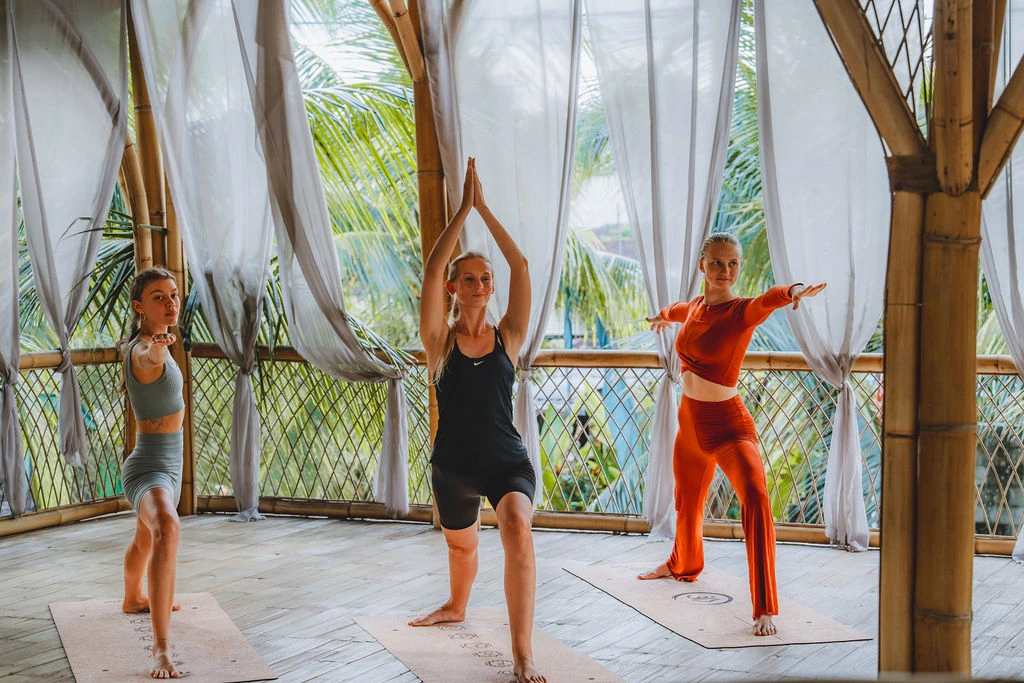
| Direct answer
No. House of Om states that students do not need teaching ambitions to join, and that many enroll to deepen a personal practice rather than to teach afterward. |
Training for future teachers
For those who intend to teach, the daily teaching methodology, alignment work, integrated practice, and final assessments are the structure that prepares them.
Training to deepen your personal practice
For those who do not, the same curriculum delivers three weeks of structured study in a practice they already have. The material does not change; what you do with it afterward does.
Using the course as a foundation for further yoga education
A 200-hour program is the foundational level. It gives you exposure to several areas — anatomy, philosophy, Ayurveda, meditation — any of which you might choose to study further.
What Does the Included 200-Hour Online Training Add?
Under the current campaign terms, a qualifying Mansion booking also includes the complete 200-Hour Online Yoga Training — the full course with live online classes.
Starting your learning before Bali
Access opens when you book. If your training date is months away, you can begin studying immediately.
Live online classes
The online program includes live classes with a teacher alongside its recorded lessons, so questions get answered rather than accumulating.
Revisiting topics after the in-person training
Three weeks covers a great deal of material. Having somewhere to revisit anatomy or philosophy afterward is more useful than it sounds during the training itself.
Continuing your study after returning home
Access continues after the residential program under the current campaign terms. Many graduates find it most useful at that point, bringing questions from their own first classes back to the live sessions.
What Does a 200-Hour YTT Certificate Represent?
| Term | What it means | Who holds it |
|---|---|---|
| YTT 200 | Yoga Teacher Training — the 200-hour course itself | Anyone enrolled |
| RYS 200 | Registered Yoga School at the 200-hour level | The school |
| RYT 200 | Registered Yoga Teacher — an individual registration | The individual teacher |
YTT 200: the 200-hour training program
YTT refers to the course itself — the training you take.
RYS 200: the Registered Yoga School
RYS refers to a school, not to any individual graduate.
RYT 200: individual teacher registration
RYT refers to a person — an individual registration held by a teacher.
Training completion and individual registration are separate steps
Graduating does not automatically create an individual registration. That is an application you make yourself afterward, and the requirements are set by the registry rather than by any school.
If registering matters to you, confirm the current requirements and process directly with Yoga Alliance before enrolling.
What Should You Be Able to Understand Better After the Training?
Your own yoga practice
Three weeks of daily practice under instruction changes how you understand what you have been doing, often more than the teaching content does.
How yoga classes are structured
Sequencing and class planning are covered daily. After the training, other people’s classes become legible in a way they were not before.
How to guide students through practice
Cueing, demonstration, and teaching practice with feedback are what turn knowledge into instruction.
How alignment, breath and movement connect
These are taught together rather than separately — pranayama with asana, alignment with anatomy, both applied in teaching practice.
How philosophy and meditation fit into yoga education
The curriculum treats yoga as more than physical practice, and the schedule reflects it from the 6:00 AM opening to the evening close.
Areas you may want to continue studying
A 200-hour program introduces more subjects than it can exhaust. Most graduates finish with a clearer sense of which one they want to go further into — which is arguably the more useful outcome.
FAQs
What do you learn in a 200-hour yoga teacher training?
At The Mansion the curriculum covers Hatha, Vinyasa Flow, and Ashtanga, alongside asana and pranayama, alignment and hands-on adjustment, injury-prevention biomechanics, teaching methodology, philosophy, meditation and mantra, Yoga Nidra, shatkarma, Ayurveda, kirtan, sound healing, and Voice Activation.
What yoga styles are taught at The Mansion?
The program is multi-style, rooted in Hatha and Vinyasa Flow with elements of Ashtanga. The three weeks are organized around those styles in sequence.
Is Hatha yoga included?
Yes. Hatha forms the foundation of the curriculum and is the focus of week one.
Is Vinyasa included?
Yes. Vinyasa Flow is the main focus of week two, building on the Hatha foundations established in week one.
Is Ashtanga included?
Yes, as an element of the curriculum during week three alongside teaching development. This is a multi-style program rather than a dedicated Ashtanga training.
Do you learn pranayama?
Yes. Pranayama is included with the daily morning asana practice as a listed curriculum element.
Is meditation part of the course?
Yes. Meditation is a listed curriculum element, alongside mantra, chanting, Yoga Nidra, and evening sadhana.
Do you study yoga philosophy?
Yes. Jnana yoga is the scheduled theory and study component, running through the middle of each training day. For the specific topics covered, check the current program page.
Is anatomy included?
Yes. Injury-prevention biomechanics are part of the curriculum, connected to the daily alignment and adjustment sessions.
Do you learn hands-on adjustments?
Yes. Hands-on adjustment training runs as part of the daily alignment and adjustment session.
Is teaching practice included?
Yes. Teaching practice is integrated into the program with mentor feedback, rather than saved for the final days.
Are there exams at the end of the training?
Yes. Both a practical exam and a theoretical exam are held at the end of the training.
Can beginners understand the curriculum?
Yes. House of Om states that all levels are welcome, including complete beginners. The curriculum opens with Hatha foundations and teaching methodology is taught from the ground up.
Do you need to want to teach yoga to join?
No. House of Om is explicit that teaching ambitions are not required, and that many students join to deepen a personal practice.
Is online training also included with The Mansion program?
Under the current campaign terms, yes. Qualifying bookings include the complete 200-Hour Online Yoga Training, with live online classes.
Explore the Full 200-Hour Yoga Teacher Training at The Mansion
A curriculum tells you what a training is actually for. Comparing programs on what they teach — rather than on where they are held — is the more useful exercise.
Review the current curriculum
The full curriculum covers three styles alongside anatomy, philosophy, teaching methodology, and a set of traditional practices.
View 2026 and 2027 training dates
Ten start dates remain in 2026, and the 2027 calendar is published in full. Availability changes by date and by room type.
Compare accommodation options
Four room types are available, all including the same training, meals, equipment, and materials.
Check current campaign rates and booking conditions
Rates vary by room type and change over time. The early-bird rate applies to bookings made 30 or more days ahead of the training start date and paid in full, and a $500 deposit can be used to reserve a place. Check the program page for current pricing.
View The Mansion 200-hour yoga teacher training
The current curriculum, dates, room options, and rates are published on the 200-Hour Yoga Teacher Training at The Mansion.