
Before booking a Vinyasa yoga teacher training in Thailand, there is one question worth settling: is the program actually Vinyasa-specific, or is Vinyasa one component of a broader curriculum?
Both exist, and both can be worthwhile. They prepare you for slightly different things, and course titles rarely make the difference obvious.
| What Vinyasa teacher training in Thailand involves
An intensive program combining breath-led asana practice with sequencing, alignment, anatomy, teaching methodology, philosophy, and supervised teaching. Programs may be Vinyasa-specific or multi-style. House of Om’s Koh Phangan 200-hour training uses a multi-style curriculum rooted in Hatha and Vinyasa Flow, with elements of Ashtanga. |
This guide covers what you would actually study, how demanding it is, what it costs, what certification means, and what to check before you pay a deposit.
What Is Vinyasa Yoga Teacher Training?
Vinyasa refers to linking movement with breath. Each movement is coordinated with an inhale or exhale, so the practice flows rather than pausing between separate postures.
For a teacher, the defining feature is that sequences are designed rather than inherited. Unlike systems built around an established series, a Vinyasa teacher constructs each class — which makes sequencing a genuine skill to learn rather than a set of shapes to memorize.
Vinyasa is not simply fast yoga. A well-built class includes preparation, progressive development toward a peak, appropriate transitions, recovery, and relaxation. Pace and intensity depend on the teacher, the sequence, the students in the room, and what modifications are offered.
What Do You Learn in Vinyasa Yoga Teacher Training?
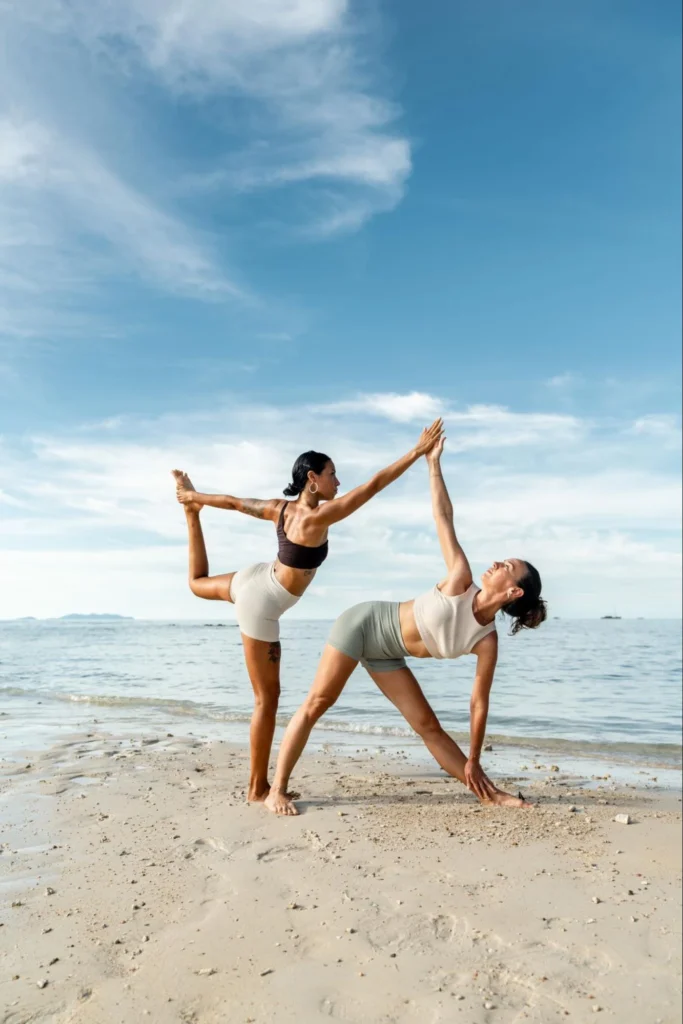
A good program prepares you to teach, not just to practice. These are the areas worth checking for in any syllabus.
| Area | What students learn |
|---|---|
| Asana and alignment | Postures, transitions, alignment principles, and modifications for different bodies |
| Sequencing | Class structure, progression, peak-pose preparation, counterposes, and pacing |
| Teaching methodology | Cueing, demonstration, voice, observation, and class management |
| Anatomy and biomechanics | Joint mechanics, range of motion, individual variation, and safe adaptation |
| Pranayama and meditation | Breath practices and seated practice, as both personal tools and teachable content |
| Philosophy and ethics | Yoga philosophy, teaching responsibilities, boundaries, and consent |
| Teaching practice | Supervised teaching with feedback — the part that builds actual competence |
Sequencing is the skill that matters most
If you take one thing from this article, take this. In Vinyasa, sequencing is what separates a teacher from a practitioner who knows a lot of postures.
A strong program should teach you how to build a logical class arc, prepare the body for a demanding posture, balance effort with recovery, transition safely, sequence around a theme, and adapt the whole thing when a mixed-level group walks in.
It should also give you repeated chances to design a sequence, teach it, receive feedback, and revise it. Ask any school how often that happens. A course that is mostly lectures and personal practice will not prepare you to lead a room.
Anatomy matters more than it sounds
Anatomy in a teacher training is not about memorizing muscle names. It is about understanding that bodies differ, so a single alignment instruction cannot be correct for everyone.
Look for content on functional anatomy, joint movement and range of motion, common limitations, safe use of props, and appropriate language around discomfort. A responsible program will be clear that unfamiliar effort is not the same as sharp pain, numbness, or joint instability.
Teaching practice and feedback
Supervised teaching is the strongest predictor of whether you can lead a class afterward. Ask how many times you will teach, who observes, how soon feedback comes, and whether the lead teacher personally watches. In a large cohort, individual attention can be thin.
What Is a Typical Day Like in Thailand?
Schedules vary considerably between schools, so ask for the full timetable before paying a deposit. As a concrete first-party example, here is the current schedule published for House of Om’s Koh Phangan 200-hour program.
House of Om’s current Koh Phangan 200-hour schedule
| Time | Session |
|---|---|
| 06:00 – 06:15 | Shatkarma |
| 06:15 – 06:30 | Chanting |
| 06:30 – 07:45 | Asana and pranayama |
| 08:00 – 08:45 | Morning lab |
| 08:45 – 10:00 | Breakfast |
| 10:00 – 12:00 | Jnana yoga |
| 12:00 – 13:15 | Yoga Nidra |
| 13:15 – 14:30 | Lunch |
| 14:30 – 15:30 | Teaching methodology |
| 15:30 – 16:45 | Alignment and adjustment |
| 17:00 – 18:00 | Evening sadhana |
House of Om notes that the daily schedule is subject to change at the teacher’s discretion. This is one school’s current structure rather than a universal Thailand timetable.
The shape is what matters for planning. Days start early, practice happens before the heat, classroom work sits through the middle, and teaching methodology and adjustment work fall in the afternoon. Expect a full day with limited free time.
Is Vinyasa Yoga Teacher Training Suitable for Beginners?
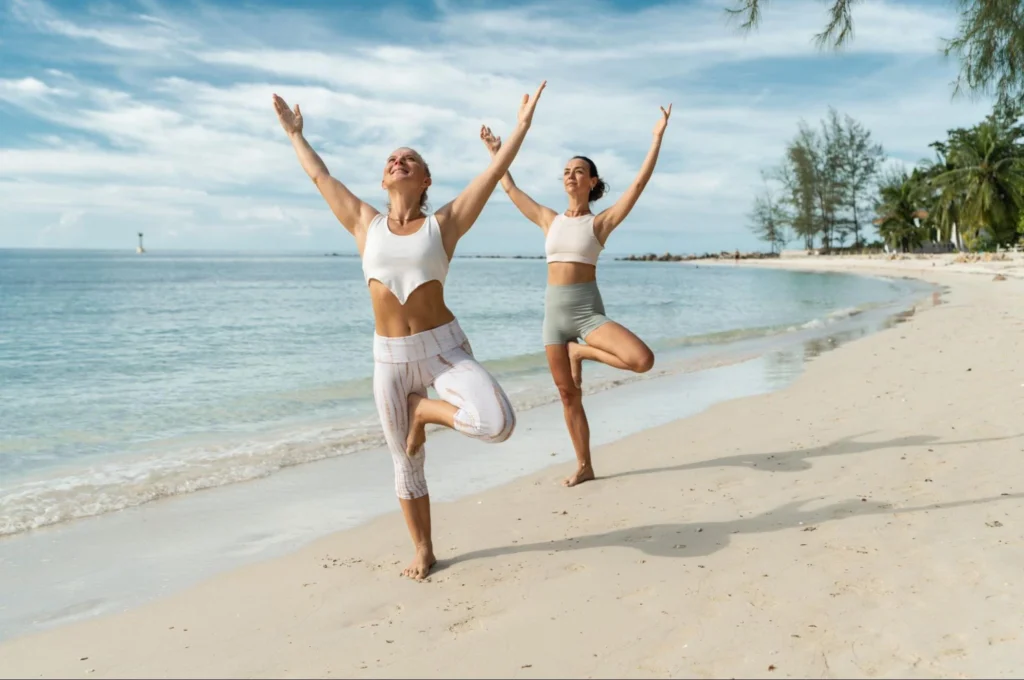
| Direct answer
It can be, but entry requirements vary by school. Some programs accept complete beginners; others expect an established practice. What matters more than the label is whether the program teaches modifications, covers anatomy properly, and offers enough individual attention. |
House of Om’s current Koh Phangan 200-hour page states that all levels are welcome, beginners and beyond, and that the training is designed for complete beginners, dedicated practitioners, and people curious to explore yoga. The school also states that teaching ambitions are not required to join.
That is House of Om’s policy specifically, not a general rule for Thailand. Other schools set their own requirements, so check the program you are considering.
You do not need advanced flexibility or impressive postures to become a good teacher. Body awareness, consistency, and willingness to study count for considerably more.
How Physically Demanding Is It?
More demanding than a weekly class, and how much more depends on several things: how often you practice, session length, the teacher, the sequencing, your own conditioning, what modifications are offered, and the climate.
Vinyasa can range from gentle to vigorous. What makes an intensive residential training demanding is not any single class but the accumulation — practicing and studying for most of the day, repeatedly, over consecutive weeks.
Repetitive flowing practice asks a lot of the wrists, shoulders, and core in particular. Building up gradually beforehand helps more than arriving after a burst of intensive training. Tell your teachers about any injuries or limitations before the course starts rather than during it.
Vinyasa vs. Hatha vs. Ashtanga Teacher Training
| Feature | Hatha | Vinyasa | Ashtanga |
|---|---|---|---|
| Pace | Often slower | Variable, continuous | Steady, breath-linked |
| Structure | Usually teacher-designed | Usually teacher-designed | Established sequences |
| Sequencing | Flexible | Central skill, highly creative | Progressive within a set series |
| Main focus | Foundations and alignment | Flow and class design | Discipline and progression |
| Physical demand | Varies; holds can be demanding | Ranges from gentle to vigorous | Typically demanding |
| Teaching style | Detailed verbal instruction | Creative class construction | Consistent method |
| May suit | Those who value precision | Those who value creativity | Those who value structure |
These are tendencies rather than rules, and individual teachers vary more than the labels suggest.
If you are still weighing styles, our guide comparing Hatha, Vinyasa and Ashtanga covers the differences in more depth. You may also want to read about Ashtanga yoga teacher training in Thailand if structured practice appeals to you.
Dedicated Vinyasa Training vs. Multi-Style Training
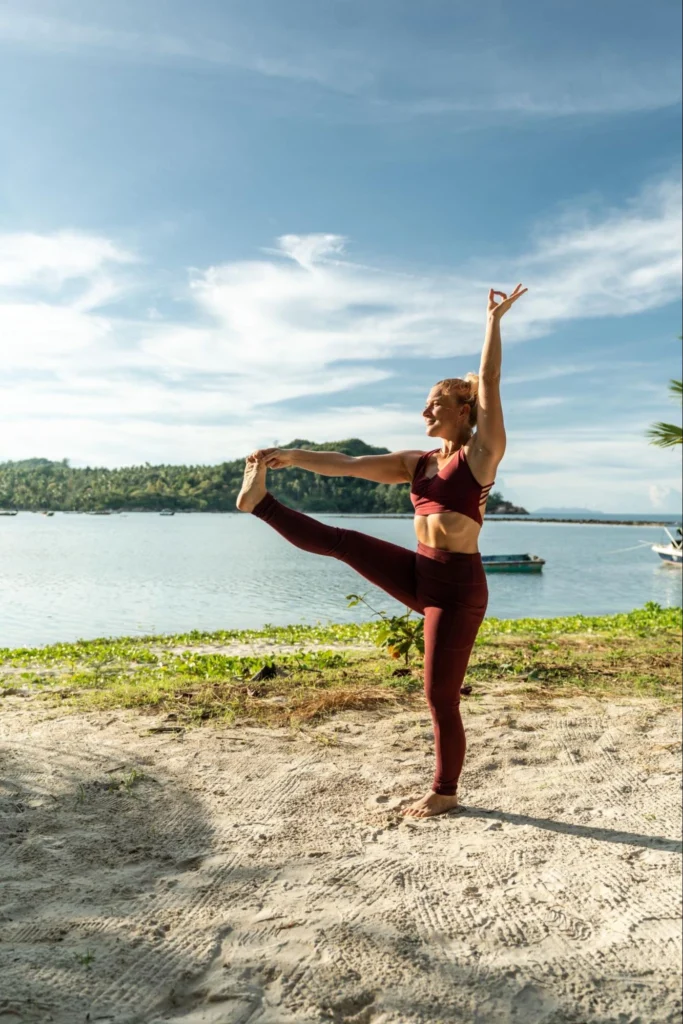
This is the distinction most worth understanding before you book.
| Dedicated Vinyasa training | Multi-style training | |
|---|---|---|
| Primary focus | Vinyasa method and sequencing | Broader yoga education |
| Sequencing depth | Deeper specialization | Included, alongside other approaches |
| Hatha content | Limited, varies | Often a core component |
| Ashtanga content | Limited, varies | Often included |
| Teaching toolkit | Narrower, more specialized | Broader, more adaptable |
| Best for | Those committed to teaching flow classes | Those still exploring or teaching varied students |
| Where House of Om sits
House of Om’s Thailand 200-hour program is a multi-style training rather than a standalone Vinyasa-only certification. The official page describes it as rooted in Hatha and Vinyasa Flow, with elements of Ashtanga. |
||
The word “rooted” is worth noticing. Vinyasa Flow is described as one of the two foundations of the curriculum rather than as an added element which is a meaningfully different position from a program that mentions Vinyasa in passing.
The published structure supports that. The 200-hour program is organized by style across three weeks:
| Stage | Focus |
|---|---|
| Week 1 | Hatha yoga foundation |
| Week 2 | Vinyasa flow exploration |
| Week 3 | Ashtanga yoga and teaching mastery |
| End of training | Practical and theoretical exams |
If you want maximum specialization in Vinyasa sequencing and nothing else, a dedicated program will serve you better. If you want substantial Vinyasa content plus Hatha foundations and exposure to structured practice, a multi-style curriculum is the more useful shape.
Why Koh Phangan?
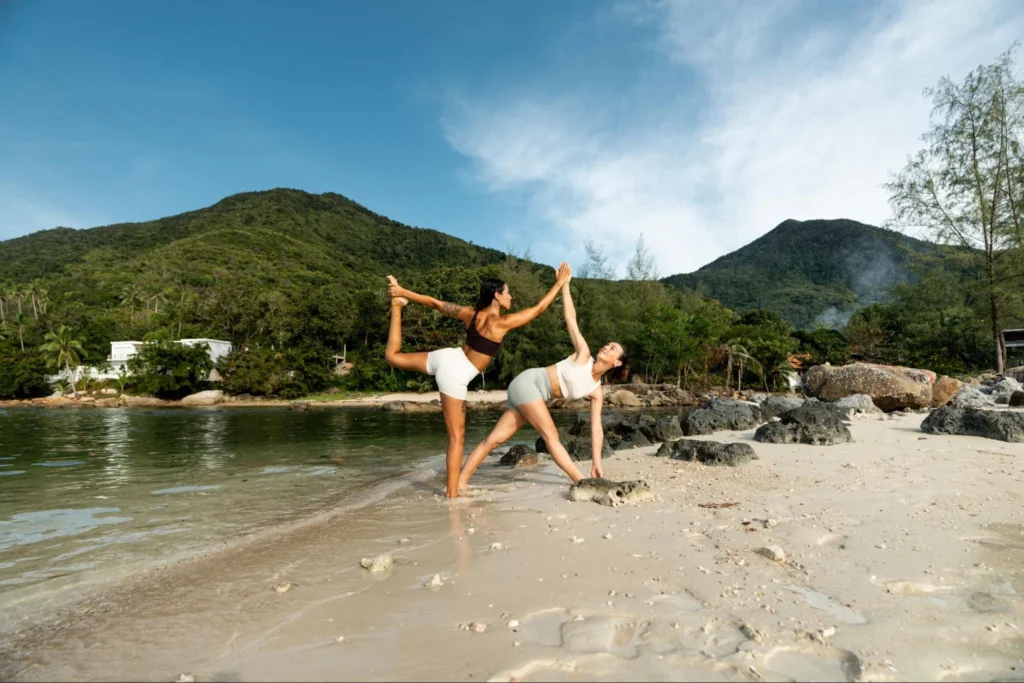
House of Om describes its Koh Phangan location as a beachfront setting on Bovy Beach, with palm surroundings, sea breeze, ocean views, and a laid-back island atmosphere. Rooms are described as offering access directly to the sand.
For a residential training, a beachfront location has a practical benefit: the walk between accommodation and practice space is short, and recovery time between sessions is genuinely restful. Over several weeks of early mornings, that reduces friction.
Koh Phangan suits students who want a retreat-style environment rather than a city one. Whether that is right for you depends on how you concentrate; some people focus better with little around them, others prefer more nearby.
House of Om’s 200-Hour Yoga Teacher Training in Koh Phangan
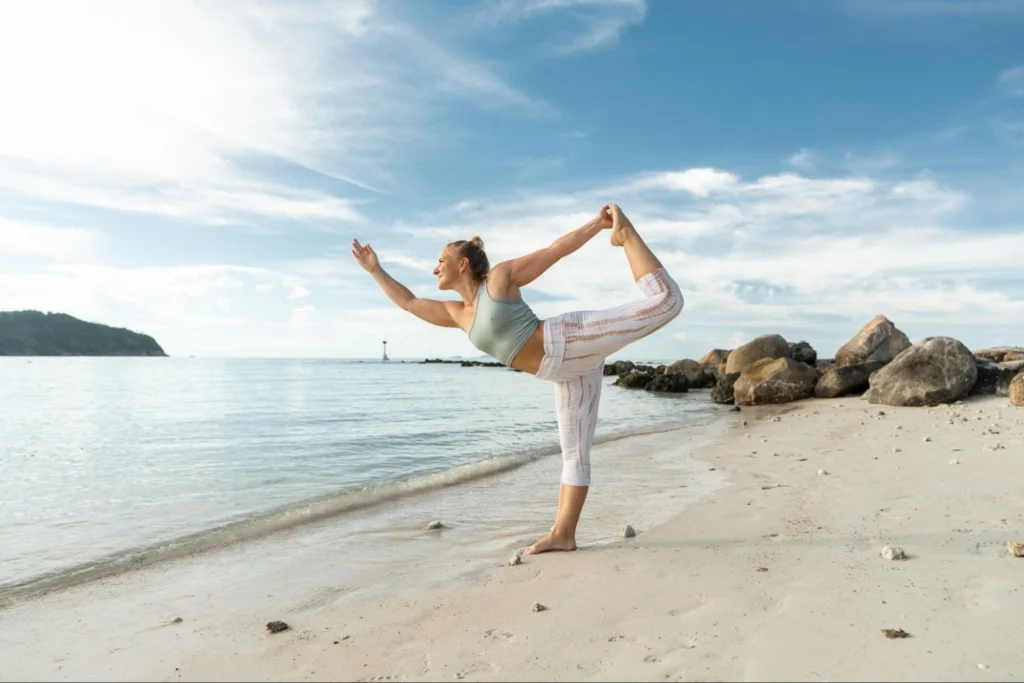
| Detail | Information |
|---|---|
| Program | 200-Hour Yoga Teacher Training |
| Location | Koh Phangan, Thailand |
| Format | In-person residential |
| Duration | 20 days |
| Style approach | Multi-style — rooted in Hatha and Vinyasa Flow, with elements of Ashtanga |
| Structure | Week 1 Hatha foundation, Week 2 Vinyasa flow exploration, Week 3 Ashtanga and teaching mastery |
| Assessment | Practical and theoretical exams at the end of training |
| Entry level | All levels welcome, beginners and beyond |
| Accommodation | 19 nights at a beachfront resort |
| Meals | Fresh, Ayurvedic-inspired vegetarian meals with organic ingredients |
| Certification | Internationally recognized Yoga Alliance certification on successful completion |
The training includes daily practice, alignment workshops, hands-on adjustments, injury-prevention biomechanics, sunrise classes, afternoon labs, and supportive mentor feedback. Additional elements include shatkarma, mantra and meditation, Yoga Nidra, Ayurveda, kirtan, a sound healing journey, and Voice Activation — described as helping students use their voice with confidence, clarity, and intention, and develop a natural teaching voice.
That last component is worth noting for anyone planning to teach flow classes. Vinyasa requires speaking continuously while students move, and vocal delivery is one of the more common early struggles for new teachers.
Pricing
At the time of writing, the 200-hour Yoga Teacher Training in Koh Phangan page lists the training-only option at $1,955, with an early-bird price of $1,615 displayed. Room packages are priced separately. A $500 deposit books a place, and House of Om states that changing dates is free and easy.
Pricing, early-bird offers, and room availability change by intake, so check the official program page for current figures before booking.
House of Om’s 200-Hour Hybrid Yoga Teacher Training
The 200-hour Hybrid Yoga Teacher Training in Thailand combines self-paced online study with a 10-day in-person immersion in Koh Phangan, including 9 nights of accommodation.
The online component includes 200+ hours of video lessons, 250+ lessons, 300+ quizzes, and 20 study modules, accessed through the House of Om app or website. Two meals per day are provided on training days.
Students can start online or start in person. Both components must be completed, and House of Om states that the full 200-hour certificate is issued after both have been finished and verified.
| Relevant if Vinyasa is your priority
The hybrid program’s published in-person module explicitly includes Hatha and Vinyasa asana practice, alongside alignment and hands-on adjustments, functional anatomy, class planning and sequencing, and teaching methodology and practicum. So Vinyasa content is named directly in the in-person portion, not only in the general style positioning. |
This option suits students who want a Thailand immersion but cannot commit to a continuous residential block. It is a separate program with its own dates, pricing, and inclusions — at the time of writing, the training-only option is listed at $1,299 with an early-bird price of $1,045. Compare it on its own page rather than assuming figures carry across from the residential program.
200-Hour Residential vs. 200-Hour Hybrid
| Feature | 200-Hour Koh Phangan | 200-Hour Hybrid Koh Phangan |
|---|---|---|
| Location | Koh Phangan, Thailand | Koh Phangan, Thailand |
| Format | Fully in-person | Online plus in-person |
| In-person duration | 20 days | 10 days |
| Online theory | No | Yes, self-paced |
| Accommodation stated | 19 nights | 9 nights |
| Style approach | Multi-style | Multi-style |
| Vinyasa Flow | Yes — dedicated week in the published structure | Yes — named in the in-person module |
| Starting options | One structure | Start online or start in person |
| Best for | Continuous immersive experience | Students needing flexibility |
The two programs share a style approach but deliver it differently. Do not assume identical curriculum delivery simply because both are 200-hour programs.
How Much Does Vinyasa Yoga Teacher Training in Thailand Cost?
Costs vary widely by school, location, duration, accommodation standard, meals, and whether the program is residential or hybrid. There is no single market rate, and any article quoting one is generalizing.
What matters more than the headline figure is what it covers. Two programs at the same price can differ by a thousand dollars once accommodation and meals are accounted for.
Check whether each quote includes:
- Tuition
- Accommodation, and for how many nights
- Meals, and on which days
- Learning materials and manuals
- Certification and any assessment fees
- Transfers, equipment, taxes, and booking fees
Ask for a written, itemized breakdown. A low advertised price that excludes accommodation is not necessarily cheaper than a higher inclusive one.
What Certification Do You Receive?
| Direct answer
A 200-hour program delivered by a school registered with Yoga Alliance provides the training pathway toward registering as a teacher. The school holds Registered Yoga School status; you hold Registered Yoga Teacher registration, which you apply for yourself after graduating. |
The distinction matters. Registration confirms a program met a shared standard. It does not certify that any individual is a capable teacher, and it is not a license.
Yoga Alliance’s published standards define what a 200-hour program must cover across four categories — Techniques, Training and Practice; Anatomy and Physiology; Yoga Humanities; and Professional Essentials — rather than specifying a style. Two schools can meet the same standard with different style emphases.
Verify any school’s current status in the Yoga Alliance school directory rather than relying on a logo. It takes two minutes.
House of Om states that successful completion of its Thailand program earns an internationally recognized Yoga Alliance certification, following practical and theoretical exams.
How to Choose a Vinyasa Teacher Training in Thailand
- Is the program Vinyasa-specific or multi-style?
- How much time is spent on sequencing specifically?
- How many hours of supervised teaching practice are included?
- Who are the lead teachers for your dates?
- How much anatomy is included, and is it applied to teaching?
- Are modifications taught for different bodies and levels?
- What exactly is included in tuition?
- Is accommodation included, and what type?
- Are meals included, and on which days?
- What certification is awarded, and on what conditions?
- What are the attendance requirements, and what happens if you miss a session?
- What are the cancellation and rescheduling terms?
- Is the school currently registered, verified independently?
- What do recent independent reviews say?
Questions to Ask Before You Enroll
Send these as a single email. How specifically and how quickly a school answers tells you something in itself.
- Is the training Vinyasa-specific or multi-style, and how is time divided?
- How much sequencing instruction is included, and do students design their own classes?
- How many times will I teach, and who gives feedback?
- Who are the lead teachers for my intake?
- Are modifications taught, and how are injuries handled?
- What is included in tuition, and what is excluded?
- Is accommodation included, and for how many nights?
- Are meals included, and how many per day?
- What certification do I receive?
- What happens if I miss a session?
What Should You Pack?
- Comfortable, quick-drying practice clothing — flowing practice means you will sweat
- A light layer for early mornings and seated sessions
- Reusable water bottle
- Notebook and pens
- Sunscreen and insect repellent
- Comfortable sandals or walking shoes
- Modest clothing for shared and cultural spaces
- Personal medication and travel documents
- Light rain protection
Check with your school what is provided — mats, props, towels, and materials vary by program — so you are not carrying duplicates.
How to Prepare
- Establish a consistent practice several weeks before you travel
- Practice Sun Salutations with steady breathing, since flowing practice builds on them
- Build conditioning gradually rather than intensively close to the start
- Prioritize sleep and hydration
- Learn a few common Sanskrit posture names if that helps you
- Tell the school about injuries, limitations, or dietary requirements in advance
- Arrange travel documents and insurance early
Arriving rested and consistent is more useful than arriving fit but exhausted from last-minute training.
Who Is Vinyasa Teacher Training Best For?
It may suit you if you:
- Enjoy continuous, breath-led movement
- Want to design your own classes rather than teach a set sequence
- Like variety in both practice and teaching
- Expect to teach group classes in studios, retreats, or online
- Enjoy adapting sequences for different levels and themes
A Hatha emphasis may suit you better if you prefer longer holds, detailed alignment, and slower pacing. An Ashtanga emphasis may suit you better if you want a set sequence, repetition, and progression within a defined method.
Is Vinyasa Teacher Training in Thailand Right for You?
| If you want | Consider |
|---|---|
| Creative sequencing and class design | Vinyasa-focused training |
| A broad foundation before specializing | Multi-style training |
| Detailed alignment and foundations | Hatha emphasis or multi-style |
| Structured progression within a method | Ashtanga emphasis |
| An island residential experience | Koh Phangan |
| A shorter in-person commitment | Hybrid format |
FAQs
Is Vinyasa yoga teacher training suitable for beginners?
It can be, though entry requirements vary by school. Beginners should choose a program that teaches modifications, covers anatomy thoroughly, and provides progressive teaching practice. House of Om’s Koh Phangan program states that all levels are welcome, beginners and beyond.
How long is Vinyasa yoga teacher training in Thailand?
It varies by provider and format. House of Om’s Koh Phangan 200-hour program runs 20 days in person. Its hybrid option includes a 10-day in-person immersion combined with self-paced online study. Check the official page for current dates.
How much does Vinyasa yoga teacher training in Thailand cost?
Costs vary by school, accommodation, meals, and format. At the time of writing, House of Om lists its Koh Phangan training-only option at $1,955, with an early-bird price of $1,615 displayed. Pricing changes by intake, so verify before booking.
Is Vinyasa yoga difficult?
Vinyasa ranges from gentle to vigorous depending on the teacher, sequence, and modifications offered. An intensive residential training is demanding mainly because of volume — practicing and studying most of the day over consecutive weeks.
What is the difference between Vinyasa and Ashtanga?
Ashtanga follows established sequences with a defined method, emphasizing repetition and progression. Vinyasa sequences are generally designed by the teacher, emphasizing creativity and variety. Both are breath-led, but the structure differs substantially.
What is the difference between Vinyasa and Hatha?
Hatha classes typically hold individual postures with pauses and detailed alignment attention. Vinyasa links postures continuously with the breath. Hatha often suits precision-focused learning; Vinyasa suits those drawn to flow and sequencing.
Does House of Om offer Vinyasa yoga teacher training in Thailand?
House of Om’s Thailand programs include Vinyasa Flow as one of two roots of a multi-style curriculum, alongside Hatha and with elements of Ashtanga. The 200-hour program’s published structure includes a dedicated Vinyasa flow week.
Is House of Om’s Thailand training Vinyasa-only?
No. It is a multi-style program rather than a standalone Vinyasa certification. The official page describes it as rooted in Hatha and Vinyasa Flow, with elements of Ashtanga.
Can I become a yoga teacher after 200 hours?
The 200-hour is the standard entry-level qualification and provides the pathway toward registering as a teacher. It does not by itself make anyone experienced — that comes from teaching afterward — and it does not guarantee employment.
What should I look for before enrolling?
Whether the program is Vinyasa-specific or multi-style, how much sequencing and supervised teaching is included, who teaches your dates, what tuition covers, the certification awarded, and the school’s current registration status verified independently.
Start Your Training in Thailand
If you want to develop Vinyasa sequencing while also building a broader foundation, a multi-style program may serve you better than early specialization — particularly if you have not yet taught a class and are not certain what you want to teach.
House of Om’s 200-hour Yoga Teacher Training in Koh Phangan gives Vinyasa Flow a dedicated week alongside Hatha foundations and elements of Ashtanga. The 200-hour Hybrid Yoga Teacher Training in Thailand offers the same style approach with a shorter in-person block. Review the current curriculum, dates, accommodation, and pricing on each page before enrolling.
You can also read House of Om student experiences or compare all current programs if you are weighing destinations.