
There is no single best month to do a yoga teacher training in Thailand, and any article that gives you one is oversimplifying. The right timing depends on where in the country you are training, what weather you actually enjoy, and which course dates you can realistically commit to.
| Direct answer
The best time depends on the region, your weather preference, and the training dates available to you. Thailand does not have one uniform climate — conditions differ between the north, the Andaman coast, and the Gulf coast. Since course dates are usually the binding constraint, most people are better off starting with the schedule and then planning around the conditions. |
This matters more than it sounds. House of Om’s Thailand training takes place on Koh Phangan, in the Gulf of Thailand, and general advice written for Thailand as a whole does not transfer cleanly to that part of the country.
What Is the Best Time to Do a Yoga Teacher Training in Thailand?
Start with what you actually want from the trip, then check it against the calendar.
- Cooler, drier conditions tend to suit people who want reliable weather for time outdoors between sessions.
- Hotter periods can work well if you are comfortable in heat and humidity, and they often coincide with quieter travel.
- Wetter periods offer a different atmosphere — greener surroundings and, in some places, fewer visitors — in exchange for less predictable plans.
The most practical factor is usually the simplest one: which training dates are available and which of them fit your life. A perfect-weather month you cannot take off work is not useful. A slightly wetter month that fits your schedule is.
Thailand’s Seasons: What Yoga Students Should Know
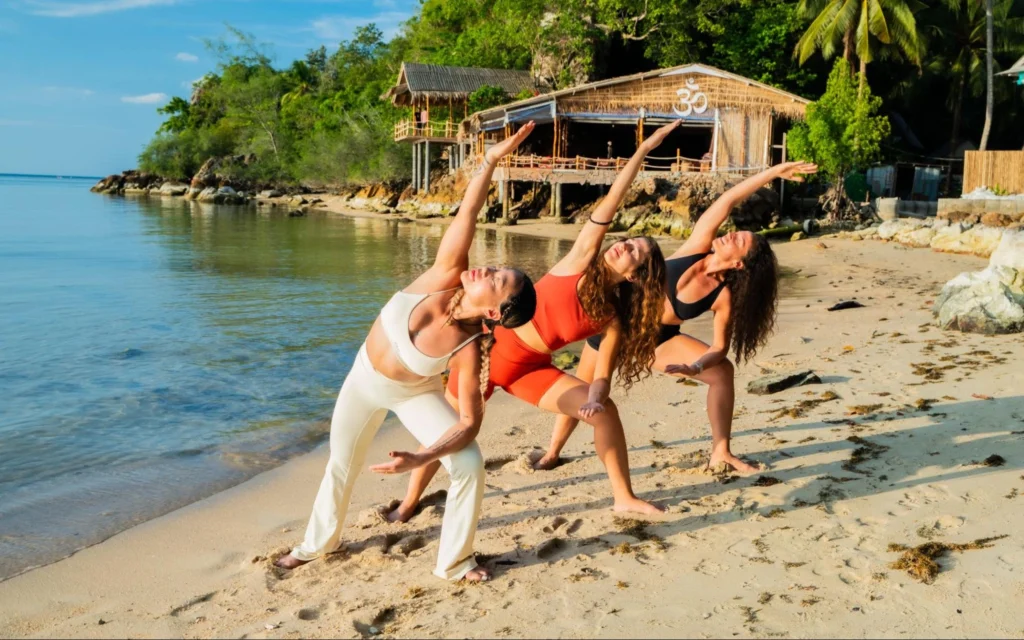
Thailand’s climate is shaped by seasonal monsoons, and the pattern is not the same across the country. Thailand’s National Climate Center notes that the northeast monsoon, which begins around mid-October, brings cool, dry air to much of Thailand while bringing abundant rain along the eastern coast of the southern region.
| The single most useful thing to understand
Southern Thailand has two coasts with different weather calendars. The Andaman side, which includes Phuket and Krabi, follows one pattern. The Gulf side, which includes Koh Phangan, Koh Samui, and Koh Tao, follows another. General “best time to visit Thailand” advice usually describes the first and does not apply to the second. |
Cooler and drier periods
Across much of Thailand, the months following the arrival of the northeast monsoon bring drier, cooler air. This is the country’s most popular travel window in many regions, which can mean higher demand for flights and accommodation, though this varies by destination.
Hot season
The hottest stretch generally falls in the months before the southwest monsoon arrives. Temperatures and humidity rise, and inland areas tend to feel this more strongly than coastal ones, where sea breezes moderate conditions somewhat.
Rainy or green season
The southwest monsoon brings the main rainy period to much of the country. Rain in tropical climates is often concentrated rather than continuous, and the landscape is at its greenest. Where this period falls, and how heavy it is, depends on the region.
Because of the two-coast difference, the same calendar month can be a dry month in one part of southern Thailand and a wet month in another. This is why choosing dates for a specific training means checking the specific location rather than the country.
Does the Rainy Season Matter for a Yoga Teacher Training?
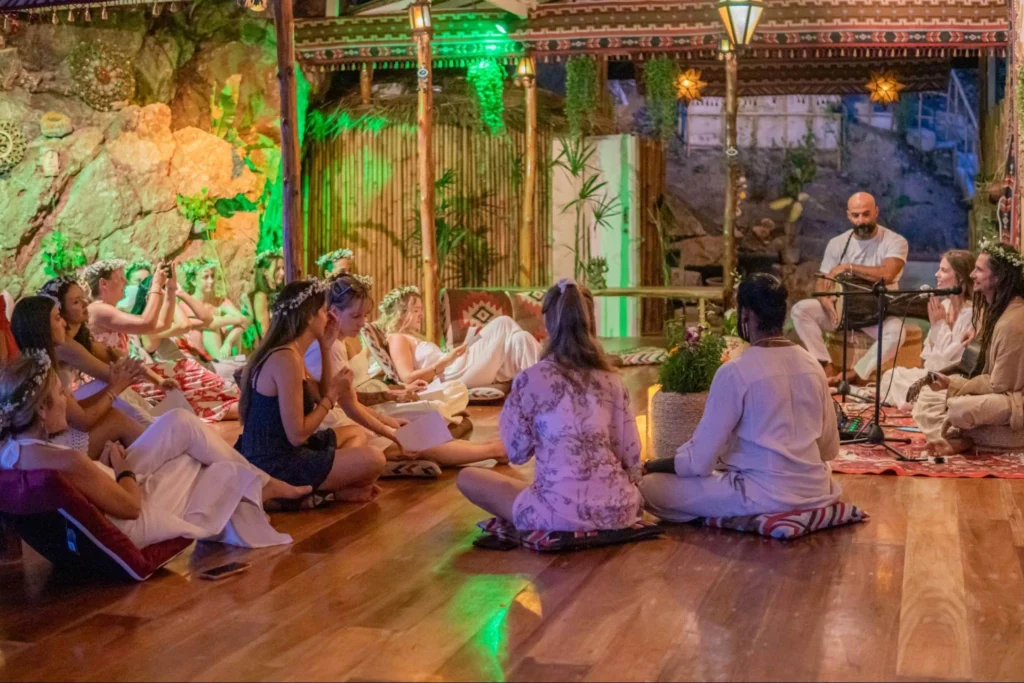
Less than most people expect for the training itself, and more than expected around the edges of it.
Teacher training runs to a schedule in a dedicated space. Rain does not stop a class. What weather affects is everything surrounding the training: how you travel in and out, what you do on rest days, and how quickly laundry dries.
| Potential advantages | Potential challenges |
|---|---|
| Greener surroundings and fuller waterfalls | Rain can interrupt outdoor plans |
| Some destinations may be quieter | Higher humidity can make an intensive schedule feel heavier |
| More course dates may be available | Travel connections can be more weather-dependent |
| Travel costs may be lower in some places, depending on demand | Less predictability when planning free time |
Worth noting: travel and accommodation pricing depends on destination and demand rather than season alone, so treat lower off-season costs as possible rather than guaranteed.
What About Koh Phangan Specifically?
Koh Phangan sits off the east coast of Surat Thani province, in the Gulf of Thailand. Official Thai tourism information describes the island as home to beaches, forest, waterfalls, and protected natural areas including Than Sadet National Park.
For timing purposes, the important point is the one above: Koh Phangan is on the Gulf coast, which means it follows the eastern-coast pattern rather than the Andaman one. The months many travelers assume are dry season for Thailand as a whole fall within the wetter period on this coast.
| A note on the data
Koh Phangan does not have its own published long-term climate record. The nearest station with published normals is Ko Samui, immediately to the south, which shares the same weather system. Long-term averages for Ko Samui show February as the driest month and October as the wettest by rainfall volume, with temperatures staying broadly stable year-round. These figures describe Ko Samui rather than Koh Phangan, and any individual year can differ, so treat them as an indication of the regional pattern rather than a forecast. |
The practical takeaway: if you have flexibility and want the most settled conditions, the earlier months of the year tend to be the more reliable window on this coast. If your dates fall in the later part of the year, the training still runs — pack for rain and allow more buffer around your travel connections.
Training During the Hotter Months
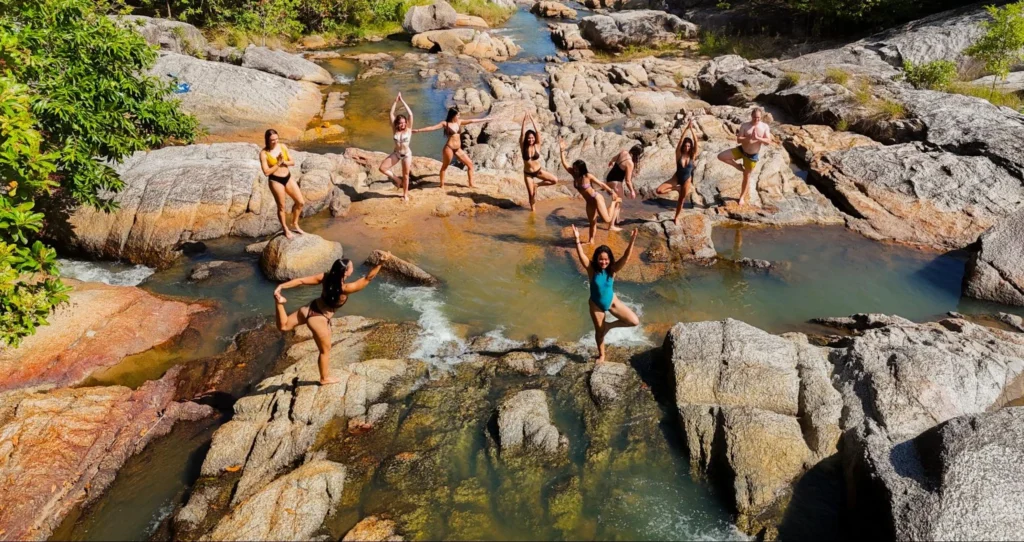
An intensive schedule in heat and humidity asks something of you, and it is worth planning for rather than discovering.
- Hydrate consistently through the day rather than only around practice
- Choose breathable, quick-drying clothing — heavy fabrics stay damp in humidity
- Use rest periods properly; energy management matters more than usual
- Expect the middle of the day to be the hottest part, which is why many schedules place practice early
Coastal locations generally feel more moderate than inland ones because of sea breezes, though this varies day to day. If you know heat affects you significantly, that is a reasonable factor to weigh when choosing dates.
Training During the Cooler Months
More settled conditions make it easier to plan time outdoors on rest days and generally make travel connections more predictable.
The trade-off is demand. Popular travel periods can mean flights and accommodation book up earlier, and courses running in those windows may fill faster. If you want a specific date in a popular month, more notice helps. This varies by destination, so check rather than assume.
Should You Choose Your Dates Around Weather or Around the Schedule?

A straightforward way to decide, depending on what your highest priority actually is:
| If your priority is | Do this |
|---|---|
| Weather | Research the specific region and coast, not the country. Then find a course date that falls within your preferred window. |
| Your schedule | Start with the dates you can genuinely commit to, then plan clothing and travel around the likely conditions. |
| Budget | Compare flight and accommodation costs for your candidate periods. Do not assume any season is automatically cheaper. |
| A quieter experience | Consider periods outside peak travel windows, while recognizing that visitor numbers vary and cannot be guaranteed. |
| Getting a specific room type | Book further ahead, since accommodation options within a course can be limited. |
For most people the schedule wins, and that is a sensible outcome. Three weeks away is difficult to arrange, and a course you can actually attend beats a theoretically better month you cannot.
House of Om Thailand Training Dates
House of Om runs its 200-hour yoga teacher training in Thailand on Koh Phangan, with intakes scheduled across the year. The dates below are those shown on the program page.
| 2026 | 2027 |
|---|---|
| 22 Aug – 11 Sep | 02 Jan – 21 Jan |
| 24 Sep – 14 Oct | 03 Feb – 22 Feb |
| 27 Oct – 16 Nov | 07 Mar – 26 Mar |
| 29 Nov – 19 Dec | 08 Apr – 27 Apr |
| 10 May – 29 May | |
| 11 Jun – 30 Jun | |
| 13 Jul – 01 Aug | |
| 14 Aug – 02 Sep | |
| 15 Sep – 04 Oct | |
| 17 Oct – 05 Nov | |
| 18 Nov – 07 Dec |
These are the dates shown in the supplied program information and availability changes, so confirm current dates and remaining places before planning travel.
Because intakes run through most of the year, the weather guidance above is genuinely usable rather than academic. If settled conditions matter to you, there are dates in the earlier months of the year to choose from.
Why the Training Structure Affects Your Timing Decision
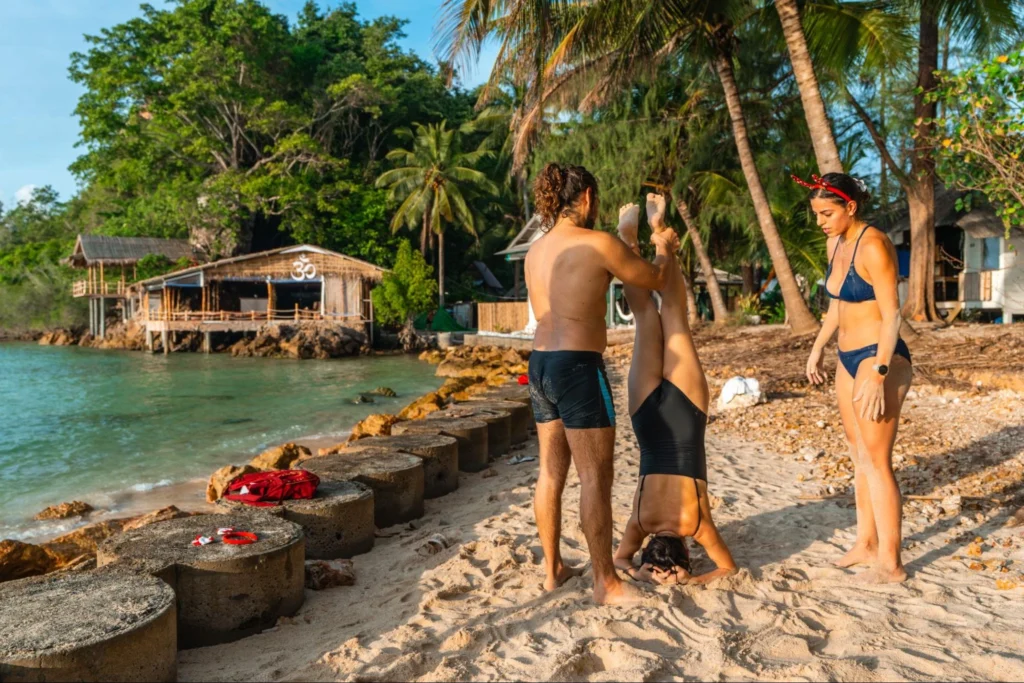
The House of Om Thailand program is organized by style, one focus per week, closing with assessment:
| Stage | Focus |
|---|---|
| Week 1 | Hatha yoga foundation |
| Week 2 | Vinyasa flow exploration |
| Week 3 | Ashtanga yoga and teaching mastery |
| End of training | Practical and theoretical exams |
Two things follow from this for anyone choosing dates. First, the training is continuous — you need the whole period free, not most of it. Second, the exams fall at the end, so booking travel that departs immediately after the final day leaves no margin if anything runs long.
The program also includes alignment workshops, hands-on adjustments, injury-prevention biomechanics, sunrise classes, afternoon labs, and mentor feedback, alongside elements such as shatkarma, mantra and meditation, Yoga Nidra, Ayurveda, kirtan, sound healing, and Voice Activation. House of Om publishes an example daily schedule beginning at 06:00, and notes that it is subject to change at the teacher’s discretion.
The early start is worth factoring into your planning. Arriving jet-lagged the night before a six-o’clock start is a harder beginning than arriving a day or two earlier.
Does Timing Depend on Your Experience Level?
Not really — but preparation time might.
House of Om states that its Thailand training welcomes all levels, beginners and beyond, and that it is designed for complete beginners, dedicated practitioners, and people curious to explore yoga. The school also states that teaching ambitions are not required to join, and that some students attend to deepen a personal practice.
The school advises learning some basic foundation and having a few months of consistent practice before the course, framed as advisable rather than mandatory. If you are starting from very little, choosing a date a few months out gives you room to build that foundation — which is a legitimate reason to pick a later intake over the next available one.
Separately, House of Om states that participants must be at least 18 years old at the time of enrollment, described as a requirement for Yoga Alliance certification.
How Far in Advance Should You Plan?
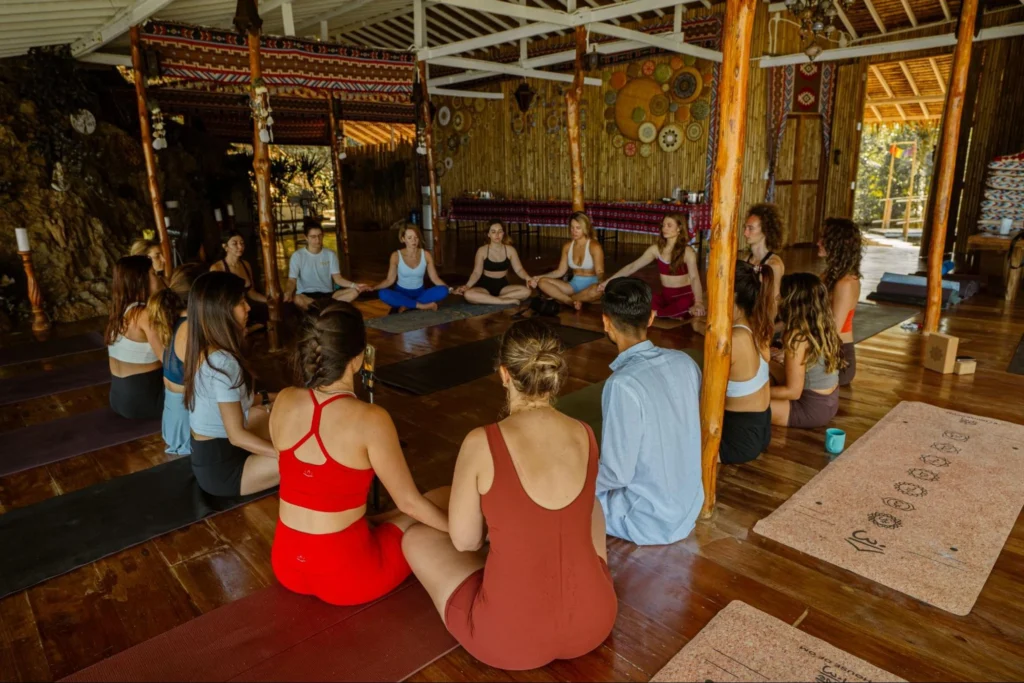
There is no fixed rule, but the sequence matters more than the lead time:
- Choose and confirm your training date first. Everything else depends on it.
- Check your passport validity and confirm current entry requirements for your nationality with official government sources. Requirements change, and this is not something to take from a blog.
- Book flights around the confirmed dates, allowing buffer at both ends.
- Arrange onward travel to the training location and any extra nights either side.
- Arrange travel insurance, and check whether it covers course fees rather than only medical costs.
- Begin building your practice in the weeks before you travel.
Booking flights before confirming a place on a course is the most common and most expensive mistake in this sequence.
How to Choose the Best Training Date for You
❑ Weather preference, checked for the specific region and coast
❑ The full training period fits your schedule, start to finish
❑ Travel budget for that period
❑ Accommodation preference and availability
❑ Travel time and connections, with buffer at both ends
❑ Personal and work commitments
❑ Your comfort with heat and humidity
❑ The kind of travel experience you want around the training
❑ Training format — full in-person or hybrid
❑ Enough preparation time to build a practice beforehand
What If You Need More Flexible Scheduling?
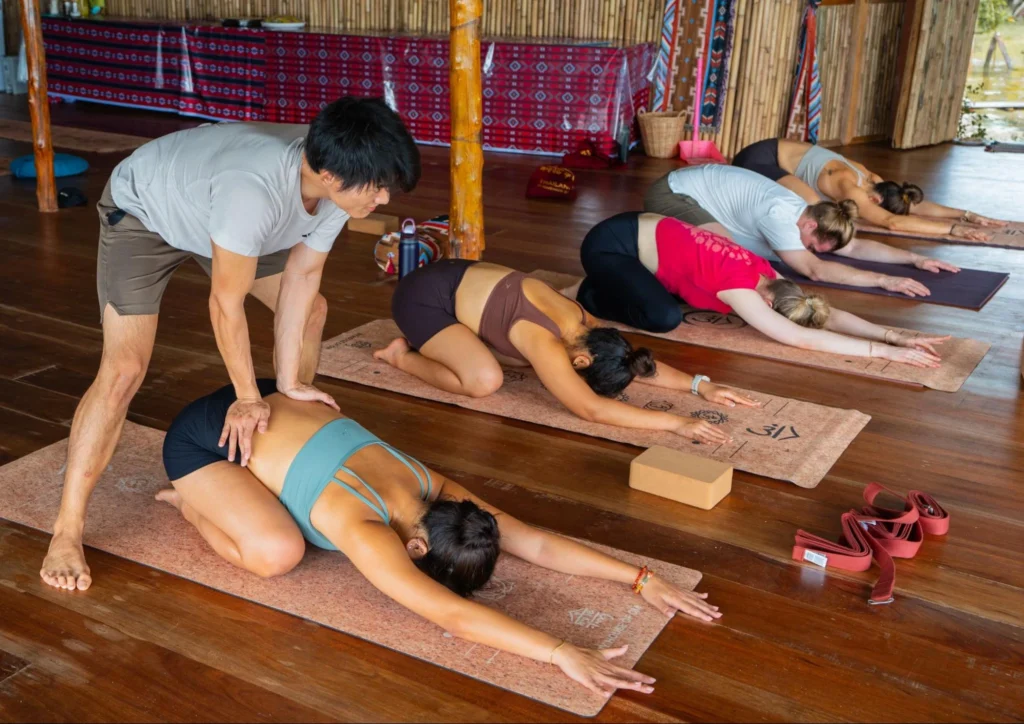
If a continuous three-week period is difficult to arrange, House of Om also offers a 200-hour hybrid yoga teacher training in Thailand, also on Koh Phangan. It combines self-paced online theory with a 10-day in-person immersion and 9 nights of accommodation.
The hybrid offers two starting options: begin online with the theory modules and then join the in-person immersion, or begin with the in-person immersion and complete the theory afterward. Both components must be completed, and House of Om states that the 200-Hour Yoga Alliance Certificate is received after finishing both.
For timing purposes, the shorter in-person block widens your options considerably. Ten days fits into standard annual leave in a way that three weeks often does not, and it reduces the amount of travel weather you need to plan around.
The hybrid is a separate program with its own dates, pricing, accommodation, and meal arrangements. Compare it on its own page rather than assuming figures carry across from the standard training.
What Should You Pack?
Adjust for the conditions in the period you have chosen, but the basics hold year-round in a tropical climate:
- Comfortable, quick-drying practice clothing — two or three sets is usually enough
- Lightweight, breathable everyday clothing
- Rain protection, particularly for wetter months
- Sun protection
- Insect repellent
- A reusable water bottle
- A notebook — you will write more than you expect
- Comfortable sandals or shoes
- Any personal medications you need, in sufficient quantity
- Modest clothing if you plan to visit temples
Check with your school what is provided before buying anything, so you are not carrying duplicates.
So Is There a Best Month?
Not universally. The honest answer is that the best month is the one where three things line up: conditions you are comfortable with, a course date that exists, and a period you can genuinely take off.
For a Gulf-coast location like Koh Phangan, the earlier months of the year tend to bring the most settled conditions based on regional climate patterns. But a training in a wetter month with a group you connect with and a schedule that works will serve you better than a drier month you had to rush or borrow against.
Compare your preferred period against the available Koh Phangan training dates and work backward from there.
If you are weighing other destinations as well as other months, our guide to yoga teacher training in Bali covers House of Om’s Indonesian options.
FAQs
What is the best time to do a yoga teacher training in Thailand?
It depends on the region, your weather preference, and available course dates. Thailand does not have one uniform climate, and the Gulf coast follows a different seasonal pattern from the Andaman coast. Check conditions for the specific location rather than the country.
Which month is best for yoga teacher training in Thailand?
There is no universally best month. For Gulf-coast locations, regional climate patterns indicate the earlier months of the year tend to be the most settled. The practical answer is whichever month combines acceptable conditions with a course date you can attend.
Is Thailand good for yoga teacher training year-round?
Trainings run throughout the year, and the training itself takes place to a schedule regardless of weather. What changes across the year is the experience around the course — travel, rest days, and how comfortable the climate feels.
Is rainy season a bad time for a yoga teacher training?
Not necessarily. Rain rarely disrupts the training itself, which runs indoors to a fixed schedule. It affects rest days, travel connections, and humidity. Some students prefer wetter months for the greener surroundings and quieter atmosphere.
Why does the region matter so much in Thailand?
Thailand’s National Climate Center notes that the northeast monsoon from mid-October brings dry air to much of the country while bringing abundant rain to the eastern coast of the southern region. So the same month can be dry in one part of southern Thailand and wet in another.
Is Koh Phangan a good place for a yoga teacher training?
It is an established location for one. The island sits off the east coast of Surat Thani province in the Gulf of Thailand and includes beaches, forest, waterfalls, and protected natural areas. House of Om runs its Thailand training there.
When does House of Om run its Thailand 200-hour training?
The program page lists intakes across 2026 and 2027, beginning with 22 Aug to 11 Sep 2026 and continuing at roughly monthly intervals. Confirm current dates and availability before booking travel.
Does House of Om offer a hybrid option in Thailand?
Yes. The 200-hour hybrid training in Koh Phangan combines self-paced online theory with a 10-day in-person immersion and 9 nights of accommodation. Students can start online or start in person, and both components must be completed.
How far in advance should I plan?
Confirm your training date first, then book flights around it. Check passport validity and current entry requirements with official government sources, allow buffer days at both ends, and give yourself time to build a practice beforehand.
Should I choose based on weather or on course dates?
For most people, course dates are the binding constraint and should come first. A training you can genuinely attend is worth more than a theoretically better month you cannot take off work.