
If you have decided on Thailand and now need to pick dates, there is one thing worth knowing before anything else: Thailand does not have a single weather season. The Gulf coast and the Andaman coast run on different calendars, and the difference is large enough to change which months you should book.
This matters because most yoga teacher trainings in Thailand sit on one coast or the other. Advice written for Phuket does not apply to Koh Phangan, and following the wrong one can put you in the wettest month of the year by accident.
What Is the Best Time to Do Yoga Teacher Training in Thailand?
| Short answer
It depends which coast your training is on. For the Andaman side — Phuket, Krabi, Koh Lanta — November to March is driest. For the Gulf side, which includes Koh Phangan, Koh Samui and Koh Tao, the driest and sunniest stretch is January to April, and the wettest months are October and November. If your training is on the Gulf coast, February and March are the most reliable months for settled weather. |
That is the whole decision in one paragraph. The rest of this article explains why the two coasts differ, what each season actually feels like during an intensive course, and how to line your dates up with flights and ferries.
Why Thailand Has Two Different Seasons
Thailand sits between two monsoon systems. The southwest monsoon brings rain to most of the country from around May to October. The northeast monsoon then takes over, and this is where the split happens: Thailand’s National Climate Center notes that the northeast monsoon, beginning in mid-October, brings abundant rain along the eastern coast of the southern region while bringing cool, dry air to most of the rest of the country.
So from roughly October to December, northern Thailand, Bangkok and the Andaman coast are drying out and heading into their best months, while the Gulf islands are having their wettest weeks of the year. Two places, same country, opposite weather.
| The mistake worth avoiding
Plenty of general travel advice says “November to February is Thailand’s dry season.” That is accurate for most of the country and wrong for the Gulf islands. Someone booking a Koh Phangan training in November on that basis is booking one of the two wettest months of the local year. |
Thailand’s Seasons at a Glance
| Period | Most of Thailand and the Andaman coast | Gulf coast, including Koh Phangan |
|---|---|---|
| Nov – Feb | Cool and dry. Peak travel season. | Nov is among the wettest. Conditions settle through Dec and Jan. |
| Mar – May | Hot season. Building humidity. | Driest and sunniest stretch, especially Feb and Mar. Warm. |
| Jun – Sep | Southwest monsoon. Wettest on the Andaman side. | Frequent showers but moderate totals. Workable. |
| Oct – Nov | Rain easing; season turning. | Wettest of the year. Rough seas late in the period. |
Month by Month on the Gulf Coast

The figures below are long-term climate averages for Koh Samui, immediately south of Koh Phangan and the nearest station with published normals. They are drawn from 1990–2020 climate data. Any individual year can differ, sometimes considerably.
| Month | Typical conditions | Consideration for a training |
|---|---|---|
| January | Rain easing after the wet peak. Daytime highs around 29°C. | Improving week by week. Reasonable, and quieter than February. |
| February | Driest month — around 44mm across roughly 5 rainy days. | The most settled month of the year. Books up early. |
| March | Very dry and the sunniest month, around 240 hours of sun. | Excellent conditions. Heat starting to build. |
| April | Dry but hot. Transition into the wetter half. | Fine, though the heat is noticeable in an intensive schedule. |
| May | Showers become more frequent. Warmest sea temperatures. | Workable. Rain is usually short rather than all-day. |
| June | Frequent brief showers, moderate totals. | Quieter period. Green and comfortable between showers. |
| July | Similar to June. Around 20 rainy days but light. | Reasonable, and one of the calmer months for visitors. |
| August | Showers continue. Humid. | Workable, with flexibility needed for outdoor plans. |
| September | Cloudiest month, around 145 hours of sun. | Grey stretches. Fine if you do not mind low light. |
| October | Wettest by volume — around 296mm over roughly 20 rainy days. | Expect real rain. Ferries more weather-dependent. |
| November | The other peak wet month. Roughest seas. | The month most likely to disrupt travel plans. |
| December | Rain tailing off through the month. | Improving, though the first half can still be wet. |
Temperature is the one thing that barely moves. Daytime highs sit around 29 to 31°C all year and overnight lows around 26 to 28°C. Choosing a month is a choice about rain and sunshine, not warmth.
Is the Dry Season the Best Time for a Yoga Teacher Training?
On the Gulf coast, January to April gives you the most predictable conditions, and February and March are the standouts.
What works well
- Outdoor and open-air sessions run without weather interruptions
- Rest days are usable — you can actually get to a waterfall or a beach
- Ferry crossings are more reliable, with the calmest seas from January through April
- Laundry dries, which sounds trivial until you are three weeks into a course with two sets of practice clothes
What to weigh against it
- These are the busiest months, so training dates and flights are booked earlier
- Popular intakes fill first, which narrows your choice of dates and rooms
- March and April bring building heat, which is a genuine factor in a six-hour training day
What About the Hot Season?
March through May is the hottest stretch. On the Gulf islands the sea breeze takes the edge off compared with inland Thailand, but an intensive course in April still asks something of you.
Practically, heat changes how a training day feels rather than whether you can do it. Morning practice usually starts early enough to finish before the worst of it — House of Om’s Thailand schedule begins at six — and the middle of the day tends to fall between sessions. Most schools build the timetable around the climate for exactly this reason.
If you know you struggle in heat and humidity, the January and February window is the more comfortable choice. If you are used to hot practice, April is not a problem.
Is Green Season a Bad Time for a Yoga Teacher Training?
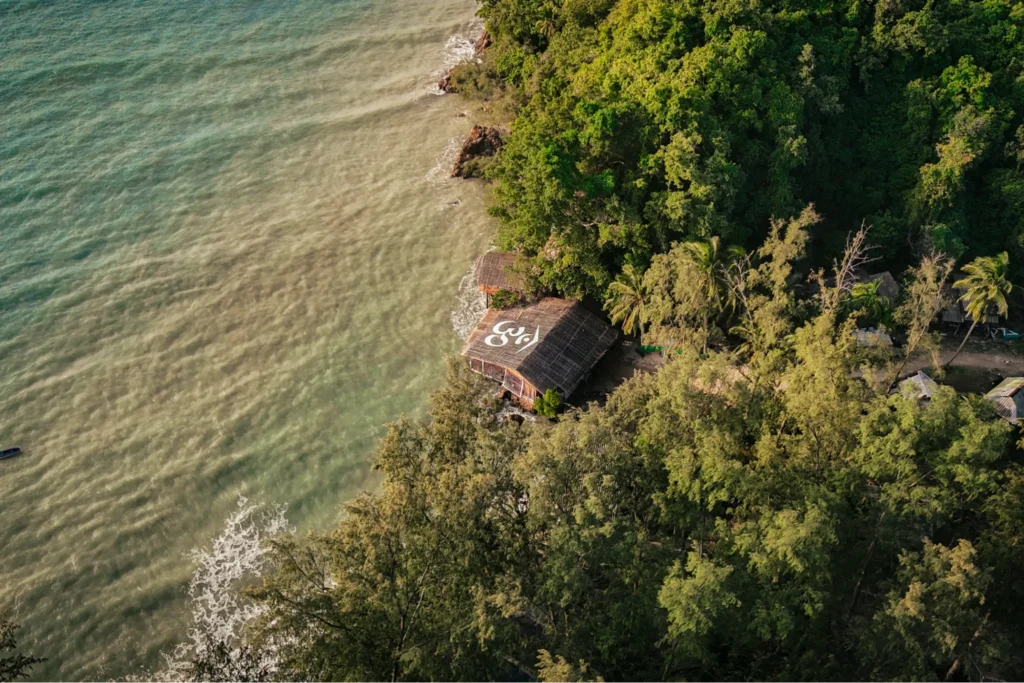
No, and on the Gulf coast the term needs unpacking. The wet months here are concentrated in October and November rather than spread across the whole southwest monsoon. June to September sees frequent showers but moderate totals, which is a different proposition from persistent rain.
Why some students choose it deliberately
- Fewer visitors, so the island is quieter and the training feels less surrounded by tourism
- The landscape is at its greenest and the waterfalls are actually running
- More date availability, and less competition for preferred rooms
- Rain is often brief. A shower that clears in forty minutes barely registers when you are in a shala anyway
What to plan around
- Outdoor plans on rest days need a fallback
- Humidity is higher, and clothes take longer to dry
- October and November are the two months to treat with genuine caution — both for rain volume and for ferry reliability
The honest position: June to September is a reasonable time to train on the Gulf coast if you are flexible. October and November are the months to avoid unless the dates are the only ones that work for you.
Peak Season vs Green Season
| Factor | Jan – Apr (drier) | Jun – Sep (green) |
|---|---|---|
| Rainfall | Low, February lowest | Frequent showers, moderate totals |
| Sunshine | Highest, March peaks | Lower, September cloudiest |
| Sea and ferries | Calmest of the year | Generally fine, occasionally choppy |
| Visitor numbers | Highest | Lower |
| Date availability | Fills earliest | More choice |
| Rest days | Reliable for outdoor plans | Need a plan B |
| Atmosphere | Busier, more social | Quieter, more inward |
| Suits | Anyone wanting predictability, or a first visit to Thailand | Flexible travellers who prefer fewer people |
How Weather Actually Affects a Training
Less than people expect, in the sessions themselves. Training happens in a shala on a fixed timetable, and rain does not stop it. Where weather genuinely shows up is around the edges.
- Arrival and departure. Koh Phangan has no airport, so every arrival involves a ferry. In October and November crossings are more weather-dependent, which is the strongest practical argument for avoiding those months.
- Rest days. Courses build in time off. In the drier months you can use it outdoors; in the wetter months you may be reading instead.
- Recovery. High humidity makes an intensive schedule feel heavier, and washing takes longer to dry. Minor individually, cumulative over three weeks.
- Open-air spaces. Many tropical shalas are open-sided. Rain does not stop practice, but it changes the sound and the light, which some people love and others find distracting.
How to Choose Your Dates
Work through these in order:
- Check which coast your training is on. Gulf and Andaman are different calendars.
- Decide whether predictability or quiet matters more to you.
- Rule out October and November if your training is Gulf-coast and your dates are flexible.
- Look at the school’s actual available dates — they constrain the decision more than weather does.
- Check flights before committing, particularly around Thai public holidays.
- Add a buffer day either side for the ferry connection.
- Confirm your travel insurance covers course fees, not only medical costs.
One point worth stating plainly: available training dates usually matter more than weather. A school running monthly intakes gives you a real choice; if only two dates work with your leave, weather becomes a tiebreaker rather than a decision.
Planning Flights and Ferries Around Your Dates

For a Koh Phangan training, arrival is the part people underestimate. There is no airport on the island. Most routes go via Koh Samui, Surat Thani, or Nakhon Si Thammarat, then by ferry to Thong Sala.
- Allow most of a day for the final leg
- Do not book a flight landing late on the day your course starts — standard ferries run in daylight hours
- Arriving a day early is cheap insurance, and lets you start rested rather than jet-lagged
- Build a buffer on departure too, particularly if you are travelling in the wetter months
What to Book First
- Confirm the training dates and that places are available
- Check entry requirements for your nationality
- Pay the deposit to hold your place
- Book flights around the confirmed dates, not the other way round
- Arrange ferry connections and any extra nights either side
- Sort travel insurance
Booking flights before confirming a training place is the most common and most expensive mistake in this sequence.
House of Om Thailand Training Dates
House of Om runs its Thailand programs in Koh Phangan, on the Gulf coast, so the seasonal pattern above applies. Both the full 200-hour residential training and the hybrid format run on rolling monthly schedules.
| Before publication
Insert the current verified dates from the live program pages. The dates held in the project source data were captured earlier and are time-sensitive. Do not publish dates without checking them against the live pages on the day of publication. |
Because intakes run roughly monthly, most months of the year are available. That makes the weather guidance in this article genuinely usable rather than academic — you can pick February or March if you want the settled conditions. Current dates and availability are listed across all House of Om programs.
Who Should Pick the Drier Months?
- First-time visitors to Thailand who want rest days to be reliably usable
- Anyone travelling with fixed onward plans that rain could disrupt
- People who find heavy humidity difficult
- Anyone combining the training with island-hopping or diving afterwards
Who Might Prefer the Green Months?
- Travellers who would rather be somewhere quiet than somewhere busy
- Anyone booking later, when the popular dates have gone
- People who genuinely do not mind rain, and there are more of them than the travel industry assumes
- Students who want the training to be the whole trip, with little sightseeing attached
Frequently Asked Questions
What is the best time to do yoga teacher training in Thailand?
It depends on the coast. For Gulf-coast locations including Koh Phangan, January to April is driest, with February and March the most settled. For Andaman-coast locations such as Phuket, November to March is the drier window.
What is the best month for yoga teacher training in Koh Phangan?
February and March. February is the driest month by rainfall, with around 44mm across roughly five rainy days, and March is the sunniest with around 240 hours of sunshine. Both fall inside the calmest period for ferry crossings.
What is the wettest month in Koh Phangan?
October by volume, with around 296mm across roughly 20 rainy days, followed closely by November. November also brings the roughest seas, which affects ferry reliability more than the rain itself does.
Is Green Season a bad time for yoga teacher training?
Not on the Gulf coast, if you mean June to September. Showers are frequent but usually brief, the island is quieter, and dates are easier to get. October and November are the two months genuinely worth avoiding if your dates are flexible.
Is Thailand too hot for yoga teacher training?
No. Temperatures are stable year-round, with daytime highs around 29 to 31°C. March to May is the hottest stretch. Training schedules generally start early and place the hottest hours between sessions.
Does the weather in Thailand vary by region?
Considerably. The Gulf coast and the Andaman coast have close to opposite wet seasons. Advice written about Phuket does not apply to Koh Phangan, which is the single most common planning error.
Should I book my training or my flights first?
The training. Confirm dates and availability, pay the deposit, then book flights around those dates. Booking flights first is the most expensive mistake in the sequence.
How far in advance should I plan a Thailand yoga teacher training?
There is no fixed rule, but the drier months fill earliest, so more notice helps if you want February or March. Allow time for entry requirements, flights, and building up a regular practice before you arrive.
Does rain interrupt yoga teacher training?
Rarely the sessions themselves, which run to a fixed timetable in a shala. Weather affects the edges — rest days, ferry crossings, and how quickly laundry dries.
Can I do a yoga teacher training in Thailand year-round?
Yes. Schools including House of Om run intakes throughout the year in Koh Phangan. Weather shapes what the trip feels like around the training rather than whether it runs.
Choosing Your Month
If you want the most settled conditions and can book ahead, February or March. If you would rather have a quieter island and more choice of dates, June to September. If your leave falls in October or November and your training is on the Gulf coast, it is still perfectly possible — pack for rain, allow more buffer around the ferry, and expect the sessions to run exactly as scheduled.
When you have a month in mind, check it against the available Koh Phangan dates and work backwards from there.