A 200-hour yoga teacher training is the entry-level credential for teaching yoga professionally. In Bali, residential programs typically run 20 days and include accommodation and meals. Whether it’s worth the cost depends on what you want from it — a teaching career, a deeper personal practice, or a credential you can use flexibly. This guide covers all three honestly, including who shouldn’t enroll.
Bali has long been a gathering point for serious practitioners and aspiring teachers.
If you have been researching where to deepen your practice, House of Om offers programs built around that very goal. This guide covers everything you need to evaluate your options with confidence.
Why Bali Is a Premier Destination for Yoga Training
Bali’s appeal is practical as much as spiritual: residential programs include accommodation and meals, which most Western programs don’t, so the cost comparison is rarely like-for-like. For the full picture on locations and what each campus is like, see our Bali yoga teacher training guide for beginners.
What a 200-Hour Yoga Teacher Training Actually Covers
A 200-hour certification is the global standard for entry-level yoga instruction. Programs registered with Yoga Alliance follow a curriculum framework that balances practical teaching skills with theoretical foundations.
| Category | Required hours |
| Techniques, Training and Practice | 75 |
| Anatomy and Physiology | 30 |
| Yoga Humanities | 30 |
| Professional Essentials | 50 |
| School’s allocation | 15 |
Here is what a strong program typically includes:
- Asana technique and alignment: learning poses deeply, not just how to do them but how to teach them safely
- Anatomy and physiology: understanding the body, injury prevention, and modifications for different populations
- Pranayama and breathwork: guiding students through breath-centered practices
- Philosophy and ethics: exploring the Yoga Sutras, the Bhagavad Gita, and the code of conduct for teachers
- Teaching methodology: practicum hours, feedback, and sequencing principles
- Meditation and mindfulness: integrating seated practices into a full-spectrum teaching career
Every Registered Yoga School must deliver these hours. If a syllabus gives eight hours to anatomy, ask where the rest are.
How Much Does Yoga Teacher Training Cost?
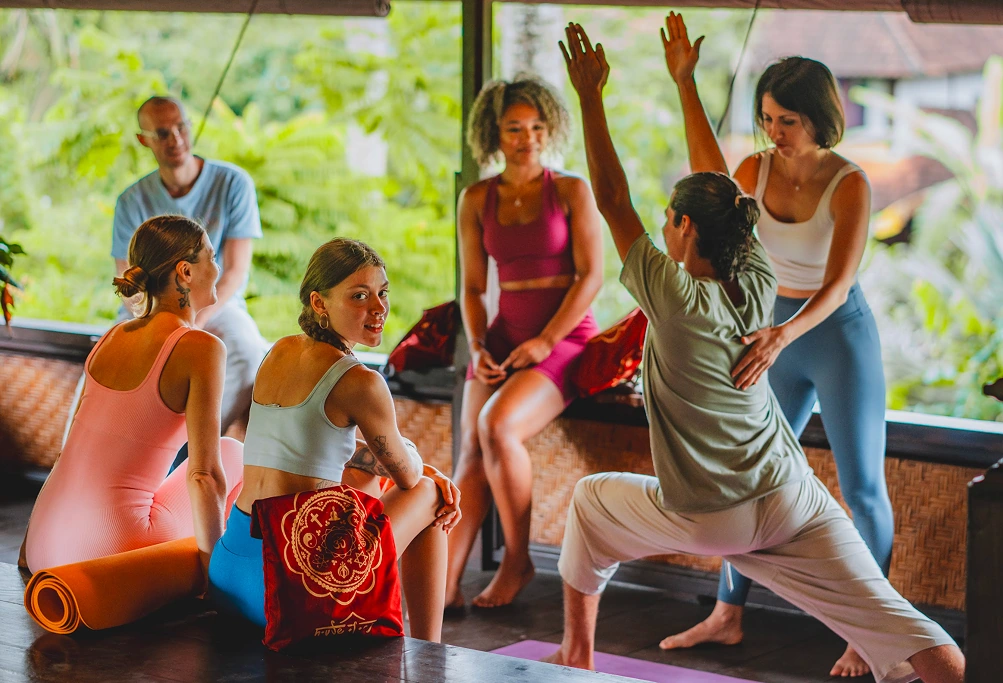
Cost is one of the most common questions for anyone considering this path. If you have been searching for information on how much does yoga teacher training cost, the answer varies by location, program length, and what is included.
| Typical cost | Accommodation | |
| USA / Europe | $3,000–$6,000+ | Rarely included |
| House of Om, Bali (200-hour) | $2,125–$3,315 | 20 nights included, plus meals |
| House of Om, Bali (Hybrid) | $1,500–$2,470 | 9 nights included |
| House of Om, Online | $490–$700 | N/A |
What isn’t in the tuition: flights to Denpasar, the Bali tourist levy (IDR 150,000, about $10), and your Yoga Alliance registration fee, which you pay to Yoga Alliance after graduating, not to the school.
Is Yoga Teacher Training Worth It?
This is a genuine question worth answering directly. Is yoga teacher training worth it depends on what you are seeking from the experience.
For People Who Shouldn’t Enroll Yet
Training isn’t right for everyone at every moment. Reconsider the timing if:
- You’re hoping the certificate will produce income quickly. It qualifies you to apply for work. Building a teaching practice usually takes a year or more.
- You’re dealing with an acute injury. Six to eight hours of daily practice is not a recovery environment.
- You can’t take the time off properly. Trying to work remotely through a residential training tends to mean doing both badly — the hybrid format exists for this reason.
- You’re expecting the training itself to resolve something personal. It’s an education program, not therapy. Many people do find it clarifying, but that’s a side effect, not the design.
What to Expect During Your Training Month
A typical training day is structured and intentional. Students follow a schedule that begins before sunrise and continues into the evening, with designated rest periods and self-practice time built in.
| Time | Session |
| 6:00 | Shatkarma |
| 6:15 | Chanting |
| 6:30 | Asana and pranayama |
| 8:00 | Morning lab |
| 8:45 | Breakfast |
| 10:00 | Jnana yoga |
| 12:00 | Yoga Nidra |
| 13:30 | Lunch |
| 15:00 | Teaching methodology |
| 16:00 | Alignment and adjustment |
| 17:30 | Evening sadhana |
For a visual walkthrough of the experience, the House of Om program overview video gives a genuine look at what daily life looks like during training, from morning practice to community meals.
Life in Bali During Your Training

The training environment extends beyond the studio walls. Bali offers a pace of life that supports recovery, reflection, and genuine connection with fellow students.
On days off and during free time, trainees explore local markets, visit temples, and engage with the cultural life of the island. Many students develop friendships during yoga teacher trainings in Bali that last long after graduation.
House of Om includes Ayurvedic-inspired vegetarian meals on training days, prepared with organic produce.
Global Standards and Certification Recognition
Understanding how yoga certifications are recognized internationally helps you make a more informed decision. According to Yoga Alliance, registered schools must meet specific training hour requirements, curriculum standards, and instructor qualifications to carry an RYS (Registered Yoga School) designation. Graduating from an accredited program means your credential is portable and respected in studios worldwide.
The World Health Organization recognizes the role of mind-body practices like yoga in supporting mental health, wellbeing, and stress reduction. This recognition has helped drive global interest in certified yoga instruction across healthcare, education, and corporate wellness sectors.
Frequently Asked Questions
Will I actually make money teaching yoga?
Most new teachers start with cover classes and off-peak slots, and build from there. Full-time studio work is uncommon early on. Many teachers combine studio classes, private clients, and corporate or community sessions. Treat the certificate as the qualification to start, not a salary.
Can I do a 200-hour just for myself, without teaching?
Yes, and plenty of people do. House of Om explicitly welcomes students with no teaching ambition. If that’s your goal, the online 200-hour at $490 is a lower-cost way to get the same curriculum.
Do I need prior teaching experience to enroll in a 200-hour program?
No prior teaching experience is required. A 200-hour yoga teacher training is the entry-level certification and is designed for practitioners who have a personal yoga practice and want to learn how to share it with others. Most programs recommend at least one to two years of personal practice before enrolling.
How long does a 200-hour yoga teacher training take?
Most residential 200-hour programs are structured as intensive courses lasting 20 to 30 days. This full immersion format allows students to complete all required training hours within a single month. Some schools also offer part-time or modular formats that spread the hours over several months, though immersive formats tend to produce stronger skill retention.
What certification will I receive after completing training?
Upon successful completion of a Yoga Alliance-registered 200-hour program, graduates receive a certificate that qualifies them to apply for RYT 200 (Registered Yoga Teacher) status with Yoga Alliance. This credential is recognized by studios, gyms, and wellness centers internationally and is the standard requirement for employment as a yoga instructor.
Can I work as a yoga teacher internationally after training in Bali?
Yes. A 200-hour certification from a Yoga Alliance-registered school is internationally portable. Graduates have gone on to teach in Europe, North America, Southeast Asia, and the Middle East. The certification itself does not carry geographic restrictions. What matters is that the school was an accredited RYS at the time of your training.
Ready to Begin? Take the Next Step.
A 200-hour training is worth it if you want the credential, want structured time with the practice, or want both. It’s not worth it if you’re expecting it to produce income on its own, or to fix something a course can’t fix.
If you’re weighing it up, the free 1:1 call is the most useful next step — it costs nothing and you’ll get straight answers about whether the timing is right.