Bali has become one of the world’s most popular destinations for yoga teacher training, attracting students from around the world. This guide explains what to expect from a yoga school in Bali, what you’ll learn, and how to choose a program that aligns with your learning goals.
This guide covers everything you need to know before choosing a yoga school in Bali, from what makes the island so special to what a real curriculum looks like to how to pick a program that’s actually worth your time.
Why Bali Is a Popular Destination for Yoga Teacher Training
A Culture Rooted in Spiritual Practice
Few places on earth blend daily life and spirituality as seamlessly as Bali. The Balinese philosophy of harmony between people, nature, and the divine shapes everything from architecture to mealtimes to how neighbors greet each other.
When you study at a yoga school in Bali, this philosophy isn’t background noise; it becomes part of your education. Watching daily offerings placed at doorways, hearing temple bells at dawn, and witnessing entire villages pause for ceremony all may help students develop a deeper appreciation of mindfulness and local culture.
Nature as an Extension of the Classroom
Bali’s volcanic peaks, terraced rice paddies, and warm ocean air aren’t just a scenic backdrop; they can contribute to the training experience. Practicing in an open-air shala with jungle sounds instead of air conditioning changes how students breathe, move, and settle into stillness. Many students appreciate the opportunity to practice in a natural outdoor environment.
A Truly International Community
Bali draws students and instructors from every continent, which means your teacher training cohort might include people from Australia, Germany, Brazil, and Japan, all learning side by side. That kind of cross-cultural mix doesn’t just make training more interesting; it helps students build connections with fellow practitioners from different countries.
What a Yoga School in Bali Actually Teaches
Curriculum: More Than Just Poses
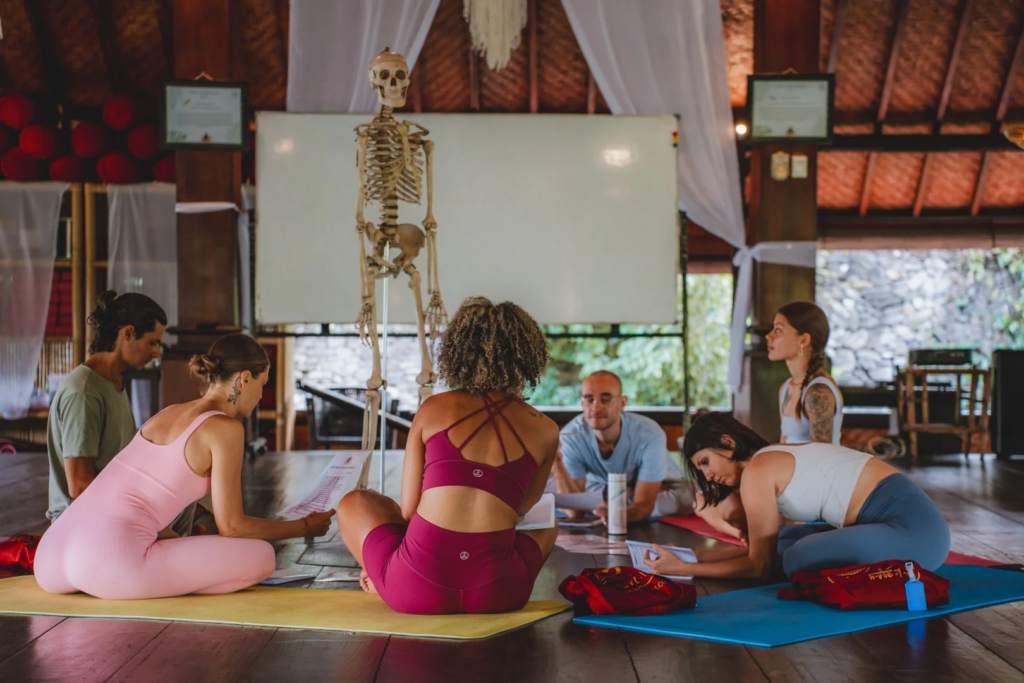
A well-run program does far more than drill alignment cues. Solid curricula typically cover the following:
- Asana – technique, alignment, and hands-on adjustments
- Pranayama – breathwork drawn from multiple traditions
- Anatomy and physiology – built for movement professionals, not just enthusiasts
- Philosophy – Patanjali’s Yoga Sutras, the Bhagavad Gita, and the Eight Limbs
- Teaching methodology – sequencing, cueing, and class management
- Practicum hours – real teaching practice with feedback from senior instructors
A solid grounding in anatomy also supports safer teaching once graduates step into a classroom of their own; Cleveland Clinic’s overview of yoga therapy is a useful reference for understanding how movement, breathing, and body awareness connect to physical wellbeing.
Graduates of a strong yoga school in Bali leave with more than a certificate; they leave with the actual tools to run a class confidently from day one.
Certification That Travels With You
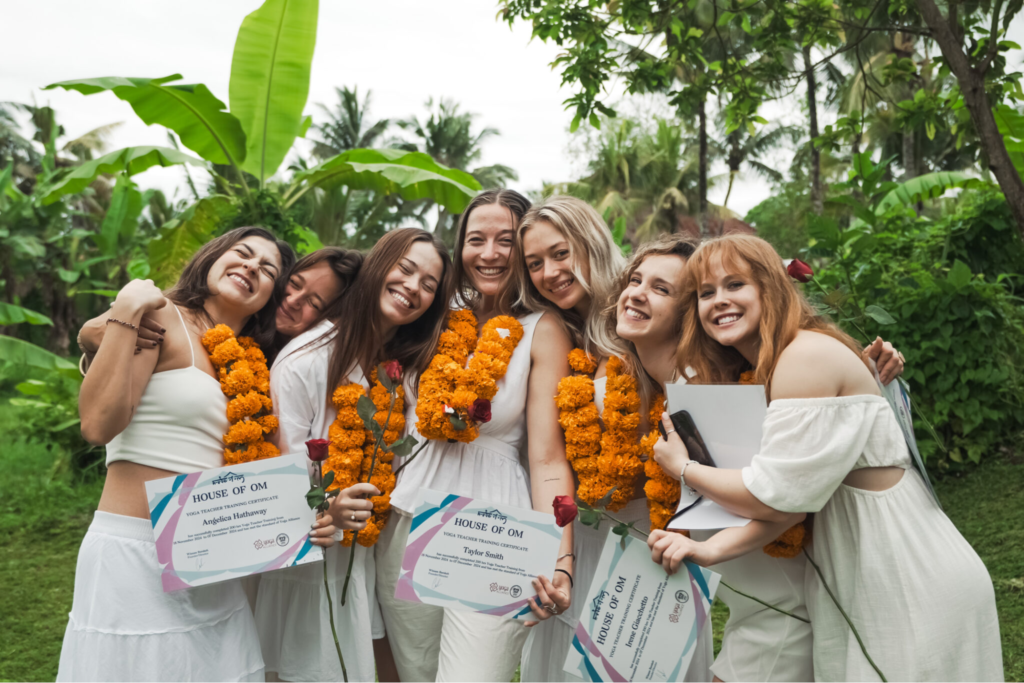
Accreditation matters more than almost anything else when evaluating a program. A course registered with Yoga Alliance leads to the RYT-200 credential, the most widely recognized yoga teaching qualification in the world. That means you can support teaching opportunities in many countries. Whether you end up teaching in Bangkok, Berlin, or your hometown studio.
To qualify, Yoga Alliance–registered programs must deliver training that spans all the core curriculum areas listed above. Always confirm a school’s registration status directly before enrolling; schools sometimes advertise “certification” loosely, so it’s worth double-checking.
A Typical Day in Training
Most residential programs follow a similar rhythm: early meditation, a long morning asana practice, a shared breakfast, philosophy or anatomy lectures, an afternoon teaching-methodology workshop, and a gentler evening practice to close the day. Some programs also include optional cultural activities or excursions, rice-terrace walks, or a Balinese cooking class. Many residential programs include accommodation and meals, although inclusions vary by provider.
House of Om’s programs are designed around a structured residential learning experience that combines yoga practice, theory, and cultural activities.
How to Choose the Right Program
Check Credentials First
Before you commit, verify two things: that the school itself is Yoga Alliance registered and that its lead instructors have real teaching experience and a clear lineage. A well-run program will be transparent about instructor bios and should provide clear information about accreditation and instructor qualifications.
Match the Style to Your Practice
Bali hosts training in a wide range of yoga styles: Hatha, Vinyasa, Ashtanga, Yin, Kundalini, and trauma-informed approaches. If you love dynamic, flowing sequences, look for a Vinyasa-heavy curriculum. If you’re drawn to stillness and long holds, a Yin-focused program will suit you better. Many schools blend styles, so graduates are prepared to teach a wider range of student populations.
Ask About Teaching Support and Community
A strong learning environment allows students to feel guided, supported, and encouraged as they develop both their personal practice and teaching skills.
Before enrolling, consider asking about:
- The teaching approach of the instructors
- How students receive feedback and guidance throughout the training
- Opportunities for connection, collaboration, and shared learning
These details often matter more to your long-term success as a teacher than the marketing photos on a school’s website.
Begin Your Journey at House of Om: A Leading Yoga Teacher Training School in Bali
From your first sun salutation to your final teaching practicum, our yoga school in Bali is designed to help you develop technical knowledge, philosophical understanding, and greater confidence in teaching.
If you’re considering Yoga Teacher Training in Bali, explore House of Om’s programs to learn more about the curriculum, schedule, and enrollment process. You can also read more about us and our story.
Frequently Asked Questions
Do I need prior teaching experience to enroll in a yoga teacher training in Bali?
No. Most programs are built for practitioners with a consistent personal practice, not prior teaching experience. The curriculum is designed to build teaching skills progressively, from basic cueing to full class sequencing, so no formal background is required.
How physically demanding is a residential yoga teacher training?
It varies by school, but most programs include a substantial asana practice each morning plus additional movement sessions throughout the day. Students with a regular personal practice generally adjust well, though it’s worth asking a school directly about daily physical intensity before enrolling.
Will my certification allow me to teach outside of Indonesia?
Yes, as long as the school is properly registered. A Yoga Alliance–accredited program results in a credential widely recognized by many studios and wellness providers, meaning graduates can teach in studios, gyms, and wellness centers anywhere in the world, not just in Bali.
What styles of yoga can I expect to learn at a Bali teacher training?
Most trainings centre on a primary style, such as Hatha or Vinyasa, while introducing students to complementary approaches like Ashtanga, pranayama, and restorative techniques. This allows graduates to develop a well-rounded understanding of yoga and adapt their teaching to support different student needs
What should I pack for a residential training in Bali?
When preparing for your training, we recommend packing practical essentials that will support you in a tropical environment:
- Lightweight, breathable clothing suitable for hot and humid weather
- Comfortable yoga clothes for daily practice
- A reusable water bottle
- Sun protection, such as sunscreen, sunglasses, and a hat
- A light rain layer for tropical showers
- Personal practice items, such as a favourite yoga mat towel or any items that support your practice
Many schools provide yoga mats and props during the training, but we recommend checking what is included before you travel.